Bustle - Definition of undergarments for the Apparel Industry presented by Apparel Search
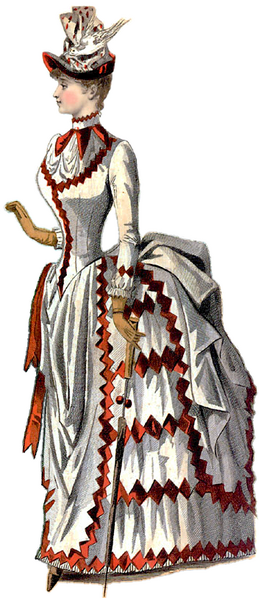 Bustles
were originally worn (in the period from 1825 to 1867) under the
skirt
in back, just below the waist, to keep the skirt from dragging down, especially
if the fabric was heavy. Heavy fabric tended to pull the back of a skirt
down and flatten it, so a
petticoated or
crinolined skirt would be out of shape
from sitting down or just from moving. The bustle later developed into a
feature of fashion on its own after the overskirt of the late 1860s was
draped up toward the back and some kind of support was needed for the new
draped shape. Fullness of some sort was still considered necessary to make
the waist look smaller and the bustle eventually replaced the crinoline
completely. The bustle was worn in different shapes for most of the 1870s
and 1880s with a short period of non-bustled, flat-backed dresses from 1878
to 1882. It reappeared in 1883 and survived into the 1890s and early 1900s
as a skirt support was still needed and the stylish shape dictated a curve
in the back of the skirt to balance the curve of the bust in front. The
bustle had completely disappeared by 1905 as the long corset of the early
twentieth century was now successful in shaping the body to protrude behind.
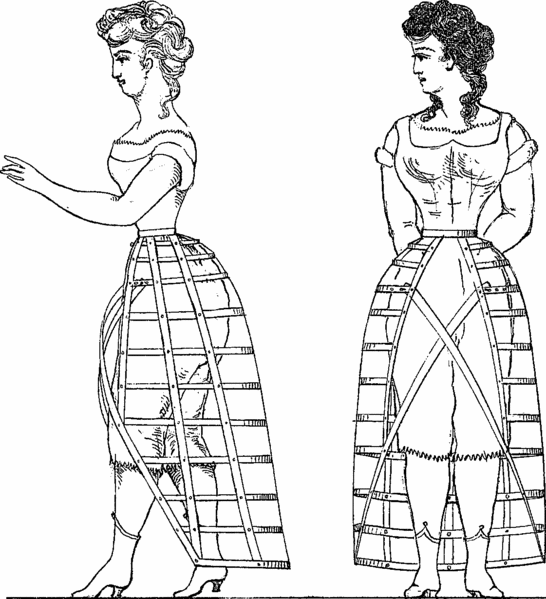
Bustles
were originally worn (in the period from 1825 to 1867) under the
skirt
in back, just below the waist, to keep the skirt from dragging down, especially
if the fabric was heavy. Heavy fabric tended to pull the back of a skirt
down and flatten it, so a
petticoated or
crinolined skirt would be out of shape
from sitting down or just from moving. The bustle later developed into a
feature of fashion on its own after the overskirt of the late 1860s was
draped up toward the back and some kind of support was needed for the new
draped shape. Fullness of some sort was still considered necessary to make
the waist look smaller and the bustle eventually replaced the crinoline
completely. The bustle was worn in different shapes for most of the 1870s
and 1880s with a short period of non-bustled, flat-backed dresses from 1878
to 1882. It reappeared in 1883 and survived into the 1890s and early 1900s
as a skirt support was still needed and the stylish shape dictated a curve
in the back of the skirt to balance the curve of the bust in front. The
bustle had completely disappeared by 1905 as the long corset of the early
twentieth century was now successful in shaping the body to protrude behind.- See also 1870 in fashion
See also:
Farthingale (sixteenth century)
Panniers (eighteenth century)
Crinoline (nineteenth century)
Evening Dress (White Tie)
 |
|
|

| The above article is licensed under the GNU Free Documentation License. From Wikipedia, the free encyclopedia ( https://en.wikipedia.org/wiki/bustle). 1/6/06 |
|
|
| Discussion boards are a great place to meet other members of the fashion industry, get advice, and share information. This forum was created to discuss the topic of this page. If you have questions, or information to improve this page, please join in the community discussion below. Please keep the communication on topic and for the purpose of education. |
|
|