Hat Factories Hat Wholesalers Hat Retail Stores Definition List Fashion Industry News Fashion Felt Hat Machinery
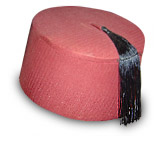
About AD 980, the haj was interrupted, and the pilgrimages of those living west of the Nile were directed to Fez as to the Holy City. A manufacturer in Fez supplied a new style of headdress that started to be widely used by the students of a particular school. The hat became a mark of intelligence, and came to worn all along the northern shores of Africa. Fezzes of this original form, still worn in Tunisia, Tripoli and Morocco, are two or three times longer than the ones most people think of, and have much longer and heavier silk tassels.
In 1826 Sultan Mahmud II of the Ottoman Empire was looking to break with tradition and update the official dress of the empire's civil service. He originally looked at a three-cornered hat of European descent, but his advisors pointed out that the three corners represented the holy trinity and he reconsidered. A shipment of fezzes had recently arrived from Tunisia, so they were selected instead. It was considered the special badge of a Turkish subject and all, even if not Muslims, were obliged to wear it. Women wore fezzes as well, but the women's were smaller and without tassels. The transition to the fez was resisted for some time, but by the end of the century Turkey was swept up by a "Europeanization" wave and the fez became a loved symbol of nationality.
Kemal Atatürk, leader
of the Young Turks, felt
the fez was backward and
dressed only in western,
notably British, suits and
styles. On August 30, 1925
he banned the fez in an
attempt to push Turkey into
the "modern world".
This effort was resisted
with some fury, to the point
that several riots broke
out and fezzes were seized
as illegal contraband. By
the 1930s the fez was almost
gone in Turkey when one
last attempt was made to
re-introduce it by a group
who planned to overthrow
Atat
rk. This ended with a total
of some nine people shot
down the streets of Menemen,
Turkey.
| The above article is licensed under the GNU Free Documentation License. From Wikipedia, the free encyclopedia https://en.wikipedia.org/wiki/fez Modified by Apparel Search 5/13/05 |
 |
 |
|
Learn about additional fashion or textile industry topics: Fabric & Textile Industry Definitions Embroidery Industry Definitions Hat & Headwear Industry Definitions Shoe & Footwear Industry Definitions |
|
|
| Discussion boards are a great place to meet other members of the fashion industry, get advice, and share information. This forum was created to discuss the topic of this page. If you have questions, or information to improve this page, please join in the community discussion below. Please keep the communication on topic and for the purpose of education. |
|
|