Fur Directory Feather & Down Suppliers Definition List Fashion Industry News Trade Leads
North American fur trade
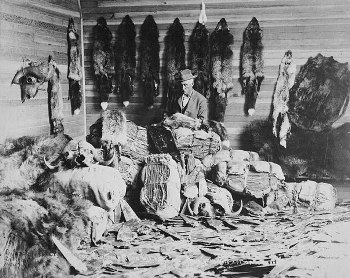
The North American fur trade (also called the Indian trade) was a huge part of the early history of contact in The New World (North America) between European-Americans and American Indians (now often called Native Americans in the United States and First Nations in Canada). French explorers, ( Radisson and Groseilliers, La Salle, La Sueur) originally seeking routes through the continent, established relationships with Amerindians and found they were willing to trade fur pelts for items considered 'common' by the Europeans. Fur (especially beaver) was prized and very expensive in European markets. In the southern colonies, based on the export hub of Charleston, South Carolina, the system was mainly one of deerskin trade. Word spread amongst Native hunters that the Europeans would exchange pelts for European-manufactured goods that were highly desired in native communities. Axe heads, knives, awls, fish hooks, cloth of various type and color, woolen blankets, linen shirts, kettles, jewelry, glass beads, muskets, ammunition and powder were some of the major items exchanged on a 'per pelt' basis. The trading posts also introduced many types of alcohol (especially brandy and rum) for trade. European traders flocked to the continent and made huge profits off the exchange. A metal axe head, for example, was exchanged for one beaver pelt (also called a 'beaver blanket'). The same pelt could fetch enough to buy a dozens of axe heads in England, making the fur trade extremely profitable for the European nations.
Often, the political benefits of the fur trade became more important than the economic aspects. Trade was a way to forge alliances and maintain good relations between different cultures and as marriages were the currency of diplomatic ties of that time. Consequently, there was much rivalry between different European-American governments for control of the fur trade with the various native societies. Native Americans sometimes based decisions of which side to support in time of war upon which side provided them with the best trade goods in an honest manner. Because trade was so politically important, it was often heavily regulated in hopes (often futile) of preventing abuse. Unscrupulous traders sometimes cheated natives by plying them with alcohol during the transaction, which subsequently aroused resentment and often resulted in violence.
The fur trade came to a close as game was depleted by overhunting. John Jacob Astor (who controlled the largest American fur trading company) recognized that all fur-bearing animals were becoming scarce and retired in 1834. Expanding European settlement displaced native communities from the best hunting grounds, and demand for furs subsided as European fashion trends shifted. The Native American's lifestyle was forever altered by the trade, in order to continue obtaining European goods on which they had become dependent and to pay off their debts, they often resorted to selling land to the European settlers, which caused resentment on the side of the aboriginals (Native Americans) that would help ignite future wars.
After the United States became independent, trading with Native Americans in the U.S. was nominally regulated by the Indian Intercourse Act, first passed on July 22, 1790. The Bureau of Indian Affairs issued licenses to trade in the Indian Territory, which in 1834 consisted of most of the United States west of the Mississippi River, where mountain men and traders from Mexico freely operated.
Russian fur trade
Before the colonization of the Americas, Russia was a major fur supplier of Western Europe and parts of Asia. Fur was a major Russian export since the early middle-ages. Originally the majority of furs exported from Russia were pelts of martens, beavers, wolves, foxes, squirrels and hares. Between the 16th and 18th centuries Russians tamed Siberia a region rich with various valuable kinds of fur-bearing animals such as arctic fox, sable, sea otter and stoat . In search of sea otter the Russian Empire expanded into the Americas, notably Alaska. Between the 17th and second half of the 19th century, Russia was the biggest supplier of fur in the world until the U.S. and Canada joined the fur market. Fur trade played a vital role in the development of Siberia, the Russian Far East and the Russian colonization of the Americas. To this day sable is a regional symbol of Ural Sverdlovsk oblast and Siberian Novosibirsk, Tyumen and Irkutsk oblasts of Russia.
|
|
 |

|
| The above article is licensed under the GNU Free Documentation License. From Wikipedia, the free encyclopedia (https://en.wikipedia.org/wiki/fur_trade). 10/13/06 Article modified by Apparel Search |
|
|
| Discussion boards are a great place to meet other members of the fashion industry, get advice, and share information. This forum was created to discuss the topic of this page. If you have questions, or information to improve this page, please join in the community discussion below. Please keep the communication on topic and for the purpose of education. |
|
|