Men's Vintage Pants Guide
Vintage pants for men include wool dress trousers, chinos, corduroys, work pants, and denim alternatives cut to the styles of earlier decades. Expect higher rises, pleats, wider or straighter legs, and cuffed hems more often than in modern low, slim trousers. Fabrics tend toward natural fibers with real weight, which drape differently and often outlast thin modern blends. A good pair offers classic proportions and long service, provided the cloth is sound and the measurements suit your build.
Shop Men's Vintage Pants Now
Shop Men's Vintage Pants on Amazon Shop Men's Vintage Pants on eBayThe Amazon and eBay links on this page are affiliate links. If you make a purchase through them, Apparel Search may earn a commission.
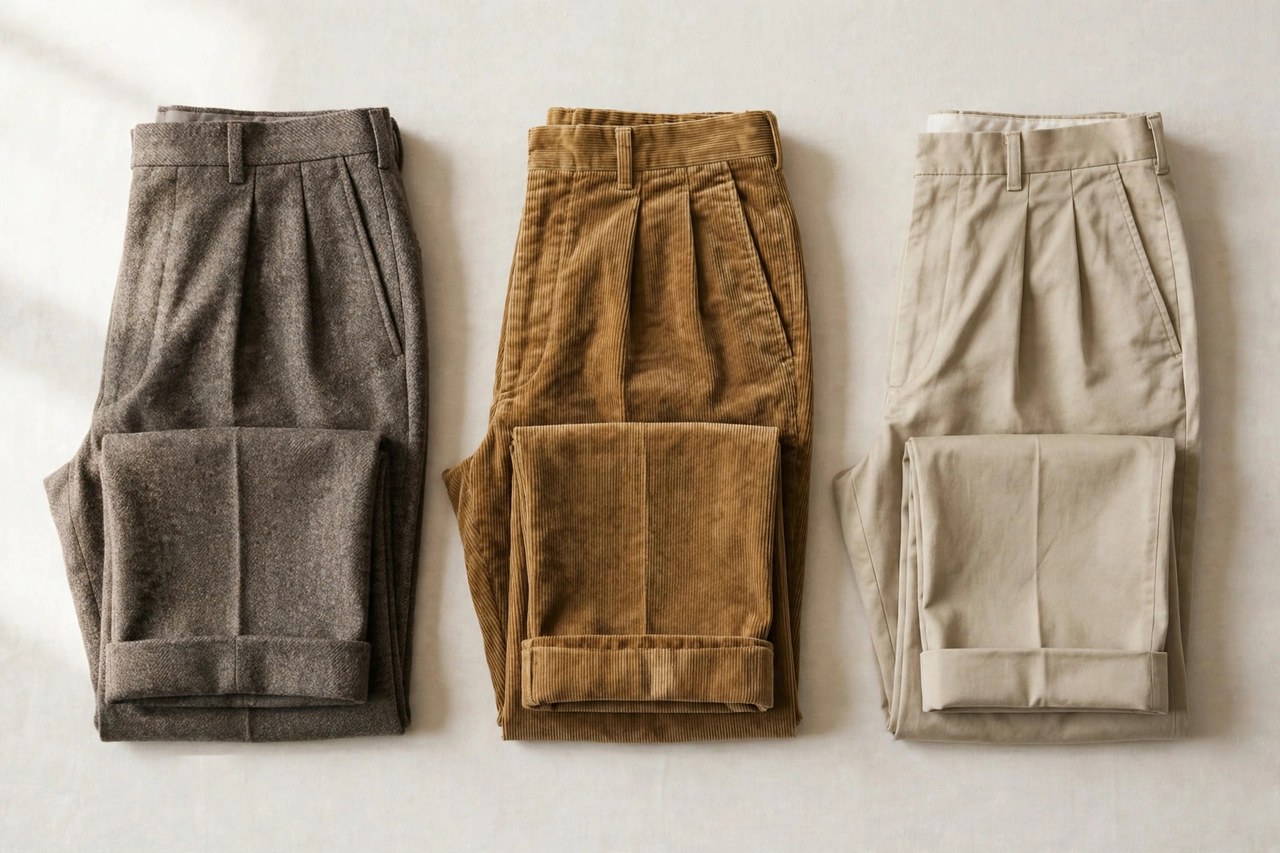
Vintage pants for men include wool dress trousers, chinos, corduroys, work pants, and denim alternatives cut to the styles of earlier decades. Expect higher rises, pleats, wider or straighter legs, and cuffed hems more often than in modern low, slim trousers. Fabrics tend toward natural fibers with real weight, which drape differently and often outlast thin modern blends. A good pair offers classic proportions and long service, provided the cloth is sound and the measurements suit your build. This guide is built around the questions buyers actually ask: which style, which size, which fabric, and what will it look like after a year of real use - answered in order, with the trade-offs stated plainly.
Styles and Construction
Check the seat, inner thighs, knees, and pocket edges for shine, thinning, and repairs, since trousers wear hardest where fabric rubs. Inspect waistbands for stretched stitching, moth holes in wool, and broken zippers or missing buttons. Turn cuffs out to look for trapped grit and fraying, and check whether hems were raised or lowered, which shows as a crease line. Confirm both legs match in length and that pleats and creases sit evenly before buying.
For any leg garment the rise is the first specification, because it decides sitting comfort before fabric gets a vote: measure from front waistband through to back and compare it with a pair that already works. Then audit the stress points - bar-tacked belt loops and pocket corners, double-stitched inseams, hems finished evenly - and the pocketing, which should be deep, smooth and strong enough to carry what the garment's pockets invite you to carry.
Fit and Sizing
Judge fit by measured waist, inseam, rise, thigh, and leg opening, because vintage labels predate modern vanity sizing and trousers were often tailored to an individual. A higher rise should sit comfortably at your natural waist without digging when seated. Trousers can usually be taken in modestly, let out if seam allowance remains, or re-hemmed, but changing rise or thigh is impractical. Try the fit with the shoes and belt you intend to wear.
Measure where the waistband will actually sit, plus inseam to your preferred break, and thigh and seat for closer cuts. Then sit, squat and climb a step in the fitting room - a leg garment that only works standing still does not work. Waistbands relax roughly half an inch in wear and inseams shrink most in early washes, so buy the fit you want after those changes rather than the fit in the mirror.
Wearing and Care
Brush wool trousers after wear and hang them by the cuffs or folded over a hanger bar to rest between outings, cleaning them only when needed. Wash sturdy cotton pants gently in cool water and press pleats and creases back into place while slightly damp. Store clean trousers away from sunlight, with moth protection for wool, and never leave them crumpled. Mend loose hems and buttons early, before a caught cuff tears the cloth.
Wash leg garments inside out and cool; heat is the agent that fades dye, tires elastic and shortens inseams. Dry low or on the line, hang or fold promptly, and crease deliberately or not at all. Walk the stress points each season - hem edges, pocket corners, seat and inner thigh - and mend the small fray while it is still small: leg garments fail gradually, then suddenly, and the two-minute October repair prevents the November replacement.
Common Questions
Why do vintage trousers have a higher rise?
Earlier trouser patterns were designed to sit at the natural waist, following the proportions and tailoring conventions of their time. Many wearers find the result comfortable and flattering with tucked shirts and jackets. When buying, measure the rise on trousers you like and match it, since rise cannot be altered easily later.
What wear should I look for in vintage pants?
Focus on the seat, inner thighs, knees, cuffs, and pocket edges, where friction thins fabric first, and check wool for moth holes. Shine on dark cloth can signal advanced wear. Also inspect zippers, waistband stitching, and previous alterations, and ask for photographs taken in bright, even light before you buy.
Can vintage trousers be tailored to fit?
Waist adjustments, modest taking in, and hemming are usually straightforward if enough seam allowance remains, but rise, hip shape, and thigh width are set by the original cut. Buy trousers that already match your rise and thigh measurements, then use a tailor only for finishing adjustments to waist and length.
More in Men's Clothes Guide V
Background
Pants which are also referred to in some countries as trousers are an item of clothing worn from the waist to the ankles, covering both legs separately. Many different styles exist including jeans, dress pants, cargo pants, sweatpants, etc. Vintage clothing is a generic term for garments originating from a previous era. Therefore, vintage pants are trousers from a previous era. You may want to also learn the difference between vintage, antique and retro . A few types of vintage pants may include tap pants, bell-bottoms, parachute pants, etc. Again, it is not the style of pant that makes it vintage it is relevant to the year the garment was produced. You may find the following pages to be of interest: Vintage Jeans for Men Vintage Levi's for Men Some vintage pants may become collectable. For example certain brands or popular fashion designer vintage clothing can be collectable and financially rewarding. Technically, rare vintage fashion can be an asset to collectors.
Looking for Men's Clothing Stores?
This guide explains men's vintage pants. To browse where to buy, visit our men's clothing store directory, where you can find retailers that carry them.