Women's Green Jeans Guide
Denim beyond blue — green jeans keep the ease of jeans and add the freshness of a garden palette.
Shop Women's Green Jeans Now
Shop Women's Green Jeans on Amazon Shop Women's Green Jeans on eBayThe Amazon and eBay links on this page are affiliate links. If you make a purchase through them, Apparel Search may earn a commission.
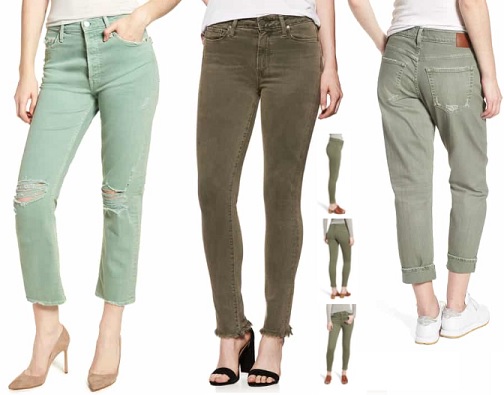
Green jeans are the easiest way to wear color on the bottom half, because they borrow all the habits of the blue jeans you already live in. Same five pockets, same weekend ease, same goes-with-everything attitude — just in a palette that runs from neutral olive to jewel emerald. Olive denim functions almost like khaki, quietly replacing blue in autumn outfits, while sage jeans bring a soft spring note to white t-shirts and sandals. Deeper forest and colored-denim emerald make more of a statement and reward simple tops. Because jeans are bought for fit above all, this guide treats shade and cut together: which greens suit which rises and legs, how colored denim fades, and the combinations that make green jeans a weekly regular rather than a one-season experiment.
Shades of Green for Jeans
Olive is the bestseller for a reason — a warm, muted green that pairs with the black, white, cream and denim-blue tops already in your wardrobe and hides everyday marks well. Sage jeans are paler and softer, suiting spring and summer outfits with white and pastel tops, though they show dirt more readily. Forest green denim is the dressiest of the group, dark enough for smart-casual settings with a blazer and loafers. Emerald and kelly colored denim sit at the bright end, best in simple cuts where the color is the feature. Garment-dyed greens have a soft, slightly faded character from day one, while saturated piece-dyed denim starts bolder and mellows with washing. Choose the shade by season first: olive and forest for autumn-winter, sage and mint-tinted denim for spring-summer. A little denim history: blue jeans were invented by Jacob W. Davis in partnership with Levi Strauss & Co. in 1871 and traditionally dyed with natural indigo; for other colors of denim, including green, other dyes must be used, and today jeans can be produced in any color achievable with cotton.
Choosing the Right Green Jeans
Fit colored denim exactly as you would blue: the waistband should sit flat without a belt’s help, the rise should let you sit and bend comfortably, and the fabric should recover after a squat rather than bagging at the knee. Stretch content is a trade-off — a little elastane (around two percent) adds comfort and holds the green’s shape, while high-stretch jegging styles can fade and thin faster. Straight and relaxed cuts show green most evenly and age best; skinny styles concentrate fading at the thigh and seat. Match shade to your coloring and tops: warm olive flatters golden skin and cream knitwear, cool forest pairs with navy and grey. Check the inside seam and pocket bags — on pale sage jeans, dark pocket linings can shadow through the front.
How to Wear Green Jeans
Treat olive jeans as you would your favorite chinos: a striped Breton top, a black tee or a cream sweater all work without thought. Sage jeans shine in warm weather with white t-shirts, tan sandals and a light denim jacket in classic blue — the blue-green contrast is fresh rather than clashing. Forest jeans take a step up: add a navy blazer, a white shirt and loafers for dinners and creative offices. Emerald denim wants restraint on top — black, white or navy basics and minimal accessories keep it chic instead of costumey. Cuffing green jeans to show ankle boots or sneakers lightens the look, and a half-tucked top defines the waist on straight and wide-leg cuts. One green piece per outfit is the rule; a green top plus green jeans rarely looks intentional.
Styling Combinations
Cream and white are the safest, freshest partners for every green jean, from a white tee with olive to a cream cable knit with forest. Tan and brown leather — belts, boots, a crossbody bag — build the earthy palette that makes olive jeans look rich. Navy tops sharpen forest and emerald denim, while classic blue denim jackets layer over green jeans in a double-denim arrangement that works precisely because the colors differ. Gold jewelry warms all the greens, and a gold-buckled belt ties a tucked top together. Black is fine with deep greens but can look stark against sage; choose charcoal or soft brown instead. For pattern, stripes, small checks and autumn plaids containing cream or tan sit happily above green denim without competing with it.
Caring for Green Jeans
Colored denim fades by design, but green needs a little management so it fades evenly rather than blotchy. Wash green jeans inside out in cold water with like colors, and expect some dye release in the first few washes — keep new emerald and forest pairs away from white upholstery and pale shoes until the water runs clearer. Wash less often overall; spot-clean marks and air jeans between wears to preserve both color and shape. Use a small amount of detergent and skip fabric softener, which coats stretch fibers and dulls garment-dyed finishes. Dry flat or line-dry in shade, since direct sun bleaches the exposed side of olive and sage noticeably. Fold rather than hang by the waistband if storage is long, and your green jeans will mellow into a personal, even fade. For more options, explore Women's Jeans and Women's jean colors.
More Green Clothing Guides
Looking for Women's Clothing Stores?
This guide helps you choose green jeans by shade, fit and style. To browse where to buy, visit our women's clothing store directory, where you can find retailers that carry them.