Women's Green Turtlenecks Guide
A column of green that frames the face — the turtleneck is winter’s most flattering layer.
Shop Women's Green Turtlenecks Now
Shop Women's Green Turtlenecks on Amazon Shop Women's Green Turtlenecks on eBayThe Amazon and eBay links on this page are affiliate links. If you make a purchase through them, Apparel Search may earn a commission.
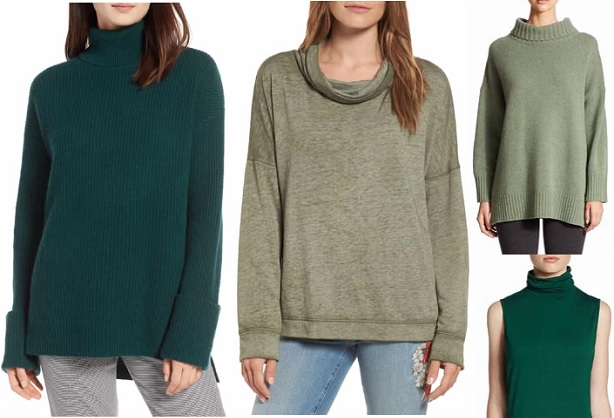
A green turtleneck puts color exactly where it does the most good: framing the face. The high, clean column of a turtleneck makes green read as intentional and polished, whether it is a fine forest knit under a blazer, an emerald sweater with a skirt, or a sage layer beneath a winter coat. Turtlenecks also earn their keep practically, replacing a scarf indoors and giving dresses and sleeveless tops a second, colder season. Shade choice matters more here than in most garments because the color sits directly under the chin — the right green brightens skin and eyes, the wrong one can cast a tired shadow. This guide explains the green shades for turtlenecks, neck and body fits from fine-gauge to chunky, and the layering combinations that make one green turtleneck work across a whole winter wardrobe.
Shades of Green for Turtlenecks
Forest green is the classic — deep, cool and tailored, it suits fine-gauge knits worn under coats and blazers and flatters fair, cool complexions beautifully. Emerald is the radiant choice in soft knits and cashmere blends, bringing jewel color to winter outfits that otherwise run dark and plain. Sage turtlenecks soften the style’s formality, lovely in lighter knits for the shoulder seasons and kind to a wide range of skin tones. Olive leans warm and casual, at home in ribbed and chunky knits with denim and boots. Mint turtlenecks are uncommon and fresh in fine spring knits, best on cool complexions. Because the neck band is the most visible part, check the shade against your face in daylight and with your usual makeup; a turtleneck is essentially color worn as a frame. The same garment travels under other names — polo neck or roll-neck in the United Kingdom, skivvy in Australia and New Zealand — and the mock turtleneck is its simpler, lower-necked variant.
Choosing the Right Green Turtleneck
The neck itself is the first fit test: it should stand or fold smoothly without squeezing, sagging or rolling unevenly, and you should be able to turn your head comfortably. Fine-gauge knits in merino, cotton or silk blends layer cleanly under blazers, coats and dresses; chunkier ribs and cables are standalone tops for jeans and skirts. Body fit should skim — a turtleneck that clings in a saturated green shows every layer beneath, while a slightly relaxed fit drapes more kindly. Sleeve length and cuff recovery matter for layering, since pushed-up sleeves that stay put are genuinely useful. Quality signs include a neck knitted with enough elasticity to recover after wear, even stitching at the shoulders, and fabric dense enough that pale sage and mint do not turn sheer. Try it under your coat before deciding; the combination is how it will live.
How to Wear Green Turtlenecks
Layering is the turtleneck’s home ground. A fine forest turtleneck under a navy blazer or charcoal suit offers a calm, modern alternative to a shirt. Under a sleeveless dress or jumper, a sage or forest knit extends summer pieces into winter and adds the outfit’s color note at the neck and arms. Worn solo, an emerald turtleneck with black trousers or a leather skirt and gold earrings is a complete evening look. Chunky olive turtlenecks pair with jeans and boots for weekends, the volume balanced by a slim bottom half. Tuck fine knits into high-waisted trousers and skirts to keep the line long, and let longer, relaxed styles fall over slim pants. Jewelry sits outside the neck — a longer pendant or bold earrings work where short necklaces cannot.
Styling Combinations
Navy and green turtlenecks are natural allies: a forest knit under a navy coat, or a sage knit with navy trousers, reads composed and classic. Cream softens every shade — cream skirts, trousers or a coat over emerald or forest create the green sweater’s most elegant frame, lifted further by gold earrings. Classic denim grounds olive and sage turtlenecks for daily wear, while black tailoring sharpens emerald after dark. Tan and camel outerwear warms olive and deepens forest into a rich autumn palette. Charcoal is the softer partner for pale greens where black would look harsh. For pattern, a plaid coat or scarf containing a thread of green ties a plain green turtleneck into the outfit, and striped skirts or trousers beneath a solid green knit keep the pattern away from the face where the color should rule.
Caring for Green Turtlenecks
Turtleneck necks collect makeup and skin oils faster than any other knit, and green shows both — pale marks on forest, dark smudges on mint. Protect the neck with a light scarf on makeup-heavy days and treat the inner band gently and promptly when washing. Wash green turtlenecks inside out in cool water on a gentle cycle, in a mesh bag, with similar depths; fine emerald knits deserve hand washing if the yarn is delicate. Reshape the neck while damp, folding it as it will be worn, and dry the garment flat in shade to prevent both stretching and the shoulder fading that sunlight causes on green knits. Store folded, never hung, with the neck band smooth. At season’s end, store clean with cedar against moths, which favor the soft, undisturbed folds of knitwear. For more options, explore Women's Turtleneck Colors and Women's Fashion.
More Green Clothing Guides
More to Explore
Looking for Women's Clothing Stores?
This guide helps you choose green turtlenecks by shade, fit and fabric. To browse where to buy, visit our women's clothing store directory, where you can find retailers that carry them.