Women's Orange Turtlenecks Guide
A column of warmth at the throat — rust and burnt orange turtlenecks are layering pieces that earn their drawer space.
Shop Women's Orange Turtlenecks Now
Shop Women's Orange Turtlenecks on Amazon Shop Women's Orange Turtlenecks on eBayThe Amazon and eBay links on this page are affiliate links. If you make a purchase through them, Apparel Search may earn a commission.
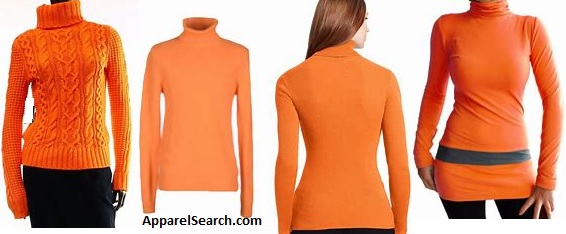
An orange turtleneck concentrates the color where it flatters most: in a clean frame around the face, worn alone as a complete top or layered under coats, blazers and dresses. Rust and burnt orange turtlenecks have a particular autumn rightness, echoing turning leaves while warming the skin tones of the season, and a fine apricot roll-neck carries the idea into spring layering. Because the turtleneck is a close-fitting, hardworking basic, the details that matter are neck comfort, yarn quality and a fit that skims without constricting. A good one will be worn under everything you own from October onward. This guide covers the orange shades suited to turtlenecks, how to judge neck and body fit, yarn choices for warmth without bulk, styling for work and weekends, and knit care that preserves both shape and saturated color.
Shades of Orange for Turtlenecks
Burnt orange is the definitive turtleneck shade, deep enough to wear as a neutral with black, navy or brown tailoring while still warming every outfit it joins. Rust leans redder and suits finer, dressier knits and evening layering under velvet or satin. Terracotta in cotton or a cotton blend makes a lighter roll-neck for milder days and transitional weather. Apricot and peach turtlenecks in fine gauges serve as soft layering pieces under darker jackets, gentler near the face than any deep shade and flattering to cooler complexions that find rust harsh. Marigold brightens weekend knits. Tangerine turtlenecks are rare and bold, best kept to thin layers under substantial coats so only a column shows. Hold the knit to your jaw in daylight before buying: no garment sits closer to the face, and the shade must flatter skin directly.
Choosing the Right Orange Turtleneck
Neck fit decides everything: the collar should fold or stand smoothly, hugging without strangling, and it should recover its shape after being pulled over the head — test this gently in the shop. A mock neck offers the look with less commitment for those who find full rolls warm. Body fit should skim the torso with enough ease to layer over a camisole, in a length that tucks securely or ends cleanly at the hip. Yarns range from fine merino, the warm, breathable premium standard, through cotton blends for milder weather and sensitive skin, to cashmere for luxury. Check knit density against the light, since thin orange knits show underlayers clearly. Warm, golden complexions glow in burnt orange and rust; cooler complexions do better in apricot, or in rust broken by a scarf or jacket lapels rather than worn bare at the throat. Our terms pages define Turtlenecks and the mock turtleneck in full, for readers comparing neck styles across brands.
How to Wear Orange Turtlenecks
Worn alone with tailored trousers or a skirt, a rust turtleneck is a complete, polished outfit needing only earrings and a belt. Layered, it transforms other clothes: under a navy blazer for work, under a slip dress or pinafore to extend summer pieces into autumn, or under a chunky cardigan with jeans for weekends. A burnt orange turtleneck beneath a camel or chocolate coat creates a tonal warmth that looks expensive in winter light. Tuck fine knits smoothly and let chunkier casual styles fall over the waistband. Because the neck is covered, hair worn up and gold earrings or a pendant on a long chain over the knit become the natural jewelry choices. If a deep shade feels intense at your face, layer a blazer or open shirt over it so the orange shows as a central panel — you keep the warmth with half the commitment.
Styling Combinations
Orange turtlenecks anchor the warm winter palette beautifully. Pair rust with charcoal or brown tailoring for the office, burnt orange with indigo denim and brown boots for weekends, and terracotta with olive or khaki for an outdoorsy register. Leopard-print accessories contain the same tones and look deliberate against plain rust knitwear, while tortoiseshell glasses harmonize quietly. Cream scarves are unnecessary over a turtleneck’s own collar, but a cream coat over a rust knit lightens the whole effect. Avoid red outer layers, which clash at close range, and avoid pairing a bright orange turtleneck with black head-to-toe beneath it in a way that reads seasonal costume; deep shades avoid the trap entirely. Gold jewelry is the metal of choice, echoing the knit’s warmth, and a brown leather watch strap or belt completes the palette without introducing a single cold note.
Caring for Orange Turtlenecks
Turtlenecks suffer two characteristic failures — a stretched, wavy collar and faded shoulders — and gentle care prevents both. Wash only when needed, since wool knits revive with airing; when washing, turn the garment inside out, use cool water with a delicates or wool detergent, and group with warm colors on a gentle or wool cycle, or hand wash fine pieces. Ease the collar back into shape while damp, roll the garment in a towel rather than wringing, and dry flat away from radiators and sunlight, which fades orange shoulders first and weakens elastic fibers in the neck. Never hang a turtleneck to store it; fold it with the collar tucked neatly so it is not stretched by the fold. Use moth protection for natural fibers. Treated kindly, a quality orange turtleneck keeps its clean neckline and rich color through many winters of layering.
More Orange Clothing Guides
More to Explore
Looking for Women's Clothing Stores?
This guide helps you choose orange turtlenecks by shade, yarn and fit. To browse where to buy, visit our women's clothing store directory, where you can find retailers that carry them.