Women's Red Swimwear Guide
Practical guidance on fabric, support, coverage and care for red swimsuits.
Shop Women's Red Swimwear Now
Shop Women's Red Swimwear on Amazon Shop Women's Red Swimwear on eBayThe Amazon and eBay links on this page are affiliate links. If you make a purchase through them, Apparel Search may earn a commission.
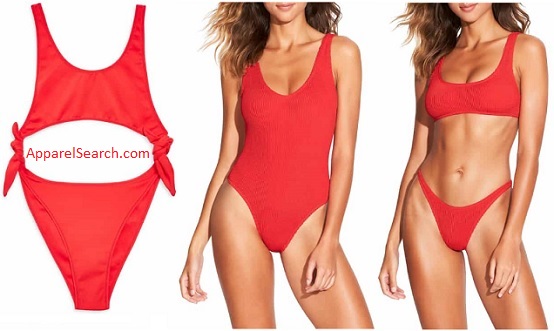
Red is one of the most practical colors in swimwear, for a simple visual reason: it stays visible. Against blue water, white sand and green pool tiles, a red swimsuit is easy to spot, which is why the color has a long association with lifeguard and resort uniforms. For the wearer, that visibility cuts both ways in a purely practical sense — a red suit is distinctive and easy to identify as your own on a crowded beach, and the saturated color tends to look consistent wet or dry, unlike pale shades that turn transparent or dingy in the water.
Choosing a red swimsuit is mainly a matter of fabric quality, support and coverage, because the color itself suits a wide range of skin tones. Deeper reds such as burgundy offer the most coverage-friendly appearance, since dark, saturated colors show less shadowing through wet fabric. Brighter scarlet suits are common in sport and lap-swimming styles, where a simple, secure cut matters more than decoration.
Shades of Red for Swimwear
True red and scarlet are the standard for athletic and one-piece suits: the dye is stable, widely available, and reads clearly at a distance. Burgundy and wine suits are a frequent choice for anyone who prefers a darker garment; the deeper tone is less prone to showing water marks as it dries and coordinates well with black or navy cover-ups and swim shorts. Coral-red is a warmer, softer alternative common in recreational styles.
Color behaves differently in swim fabrics than in ordinary clothing. Chlorine and ultraviolet light both fade red dyes over time, and bright reds show that fading sooner than deep ones — a suit that starts burgundy will stay acceptable-looking longer than one that starts cherry. If you swim laps several times a week, consider a chlorine-resistant fabric in a deep red rather than a fashion shade, and expect any red suit used daily in a pool to be a one- or two-season garment regardless of price.
Fabrics, Support and Coverage
Most red swimwear is a nylon or polyester blend with elastane. Polyester blends generally resist chlorine better and hold red dye longer; nylon blends feel softer and stretch more but fade faster in pools. Look for a fully lined body — lining is what guarantees opacity when wet, and it matters in every shade, including red. A quick check is to stretch the fabric over your hand against a light: if you can see your fingers clearly, the suit will be sheer in the water. For general background on swimwear styles and uses, see our fashion influence section.
Support comes from construction, not color. Underwire, molded cups, wide adjustable straps and a higher back all improve security for swimming and activity, while shelf bras and removable pads suit lower-impact use. Coverage options in red are broad — high-neck and long-sleeve rash-guard styles for sun protection, standard one-pieces, tankini tops for adjustable coverage, and swim shorts or skirts for those who prefer more leg coverage. Seams should lie flat, elastic should feel firm without cutting in, and leg openings should stay in place when you move, sit and bend in the fitting room.
Choosing Red Swimwear for the Activity
Match the suit to what you will actually do. For lap swimming and water exercise, a plain red one-piece with a secure back and chlorine-resistant fabric is the functional choice, and the color's visibility is a genuine plus in a busy pool. For beach days with mixed swimming and walking, a lined suit with wider straps and a cover-up in white, navy or black keeps the outfit simple and coordinated.
For travel, red has a packing advantage: one red suit pairs with neutral cover-ups, sandals and a sun hat without needing color-matched accessories, and it is easy to locate in a suitcase. If sun protection is a priority, look for red swim fabrics rated UPF 50 and consider longer-sleeve styles, remembering that a hat and shade do more than fabric alone. Buy the size that fits your torso length first — a suit that is the right color but pulls at the shoulders will not be worn.
Caring for Red Swimwear
Rinse a red swimsuit in cool, clean water as soon as possible after every wear. Chlorine, salt and sunscreen all degrade elastane and attack red dye, and a prompt rinse is the single most effective care step. Wash gently by hand in cool water with a mild detergent, never bleach, and avoid wringing, which breaks elastic fibers and can streak the color.
Dry the suit flat or hanging in shade. Direct sun fades red swim fabric noticeably over a single holiday, and tumble-dryer heat destroys stretch. Rotate two suits if you swim daily, giving each a full day to recover its shape. Store clean and completely dry, away from pale garments — a damp red suit left in a gym bag against a white towel can transfer dye. With rinsing, shade-drying and rotation, a red suit keeps both its fit and its color for far longer.
More Women's Red Clothing
Looking for Women's Clothing Stores?
This guide helps you choose your red swimwear. To browse where to buy, visit our women's clothing store directory, where you can find retailers that carry them.