Women's Plus Size Sleep Pants Guide
Plus size sleep pants are cut for a fuller waist and hip, with soft drawstring or elastic waistbands, room through the seat and thigh, and inseams that do not pool or ride up overnight.
Shop Women's Plus Size Sleep Pants Now
Shop Women's Plus Size Sleep Pants on Amazon Shop Women's Plus Size Sleep Pants on eBayThe Amazon and eBay links on this page are affiliate links. If you make a purchase through them, Apparel Search may earn a commission.
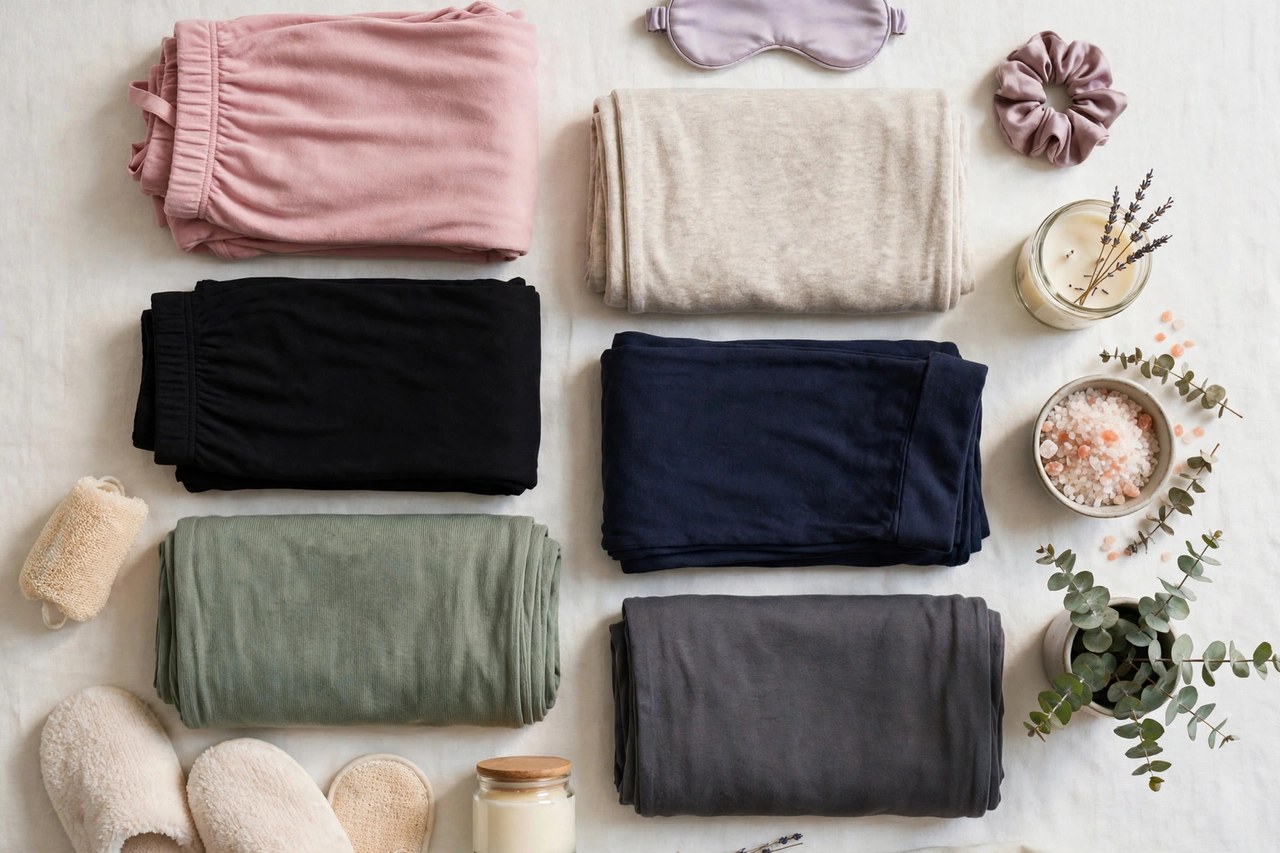
Sleep pants look simple, and that simplicity is exactly why their plus sizing matters. A pair graded only by scaling a smaller pattern tends to run short in the rise, tight through the seat and narrow at the waistband elastic, so it binds when you sit up in bed and twists as you turn. Plus size sleep pants in 1X and beyond add rise length, seat and thigh room and a waistband designed to hold gently at a fuller waist without a deep elastic groove by morning.
This guide treats sleep pants as a product to choose well: waistband types and how each behaves overnight, rise and inseam choices for different heights and seasons, the fabrics that wash and breathe best, and straightforward fitting and care notes. It is a companion to the wider sleepwear guide, focused only on the bottom half, because the waistband and rise of a sleep pant decide more about a comfortable night than any print or color ever will.
Waistbands: Drawstring, Elastic and Combinations
Three waistband designs dominate. Full elastic waistbands are the simplest and need to be wide, flat and moderate in tension; narrow elastic in plus sizes cuts in and rolls, so look for bands around an inch wide with the elastic fully encased. Drawstring waistbands adjust precisely and forgive waist changes, with the best designs adding a short elastic section at the back so the pant stays up before the string is tied and the tie does not carry the whole load.
Combination waistbands, elastic plus a functional drawstring, are the most reliable for plus wearers because fit can be tuned nightly. Flat woven drawstrings stay tied better than round cords, and aglets or knotted ends should survive repeated washing. Whichever type you choose, the band should sit at the natural waist or just below by preference, stay in place when you bend to make the bed, and release without leaving deep marks, the practical test of correct tension on a fuller midsection.
Rise, Inseam and Leg Shape
The rise is where plus sleep pants most often improve on regular ones. Enough front and back rise lets the pant sit at the waist while you sit propped on pillows, bend and turn, without the back waistband sliding down or the front pulling. A slightly higher back rise, common in better plus patterns, is worth seeking out. Through the seat and thigh, ease should be visible but not ballooning; fabric that pulls across the seat when you sit cross-legged is a size or a cut problem, not a style.
Inseam and leg shape follow season and height. Full-length pants should end near the ankle bone; fabric pooling over the foot is a trip hazard on night-time stairs, so petite-plus wearers often do best in cropped or capri sleep pants, while tall-plus wearers should check listed inseams rather than assume. Straight and gently tapered legs stay tidier overnight than very wide legs, which twist, though wide palazzo-style sleep pants in fluid jersey have devoted fans for warm nights and lounging.
Fabrics for Sleep: Cotton, Jersey and Warm Layers
Cotton and cotton jersey are the default sleep fabrics for good reasons: breathable, soft against skin, tolerant of frequent hot washing and inexpensive to replace. Cotton flannel adds warmth for winter and brushes softer with every wash. Modal and rayon jerseys drape more fluidly, feel cooler on first contact and resist the stiffness cotton can develop, though they prefer gentler cycles. A small percentage of elastane in knit sleep pants helps knees and waistbands recover their shape between washes.
Choose weight by season and sleep temperature: lightweight lawn, voile and thin jersey for summer, midweight jersey for most of the year, flannel or brushed knits for winter. Seams should be flat or soft-finished, tags printed or placed where they cannot irritate, and pockets, when present, set into the side seam without bulk. Fabric that pills quickly roughens against sheets and skin alike, so favor smooth, tightly knit jerseys and woven cottons with a soft hand from the first touch.
Fitting, Rotation and Care
Fit sleep pants by movement rather than mirror: sit, cross your legs, kneel briefly and lie on your side. The waistband should not migrate, the seat should not pull and the legs should not twist around the calf. Buy to your hip measurement and let the drawstring settle the waist, the reverse of daytime trouser fitting, because overnight comfort prizes ease through the seat. If you fall between sizes, the larger size in sleep pants is almost always the better night's sleep.
Sleep pants are washed more often than almost any garment, so care is simple and frequent: warm or cool machine washing, tumble or line drying by fabric, and prompt replacement of waistband elastic that has lost its recovery, which shows as a band that must be tied ever tighter. Rotating three or four pairs spreads the washing load and extends each pair's life. Kept soft and correctly sized, plus sleep pants disappear entirely overnight, which is the highest compliment sleep clothing can earn.
Related Women's Guides
More to Explore on Apparel Search
- Plus Size Clothing
- Plus Size Clothing Stores
- Shop for Plus Sizes
- Women's sleep pants
- Women's Cotton Sleep Pants
- Women's Cotton Poplin Sleep Pants
- fashion
- trendy
- stylish
- plus size fashion model
- plus size fashion definition
- Clothing Stores
- Fashion Designers
- Popular Brands
- Apparel
- Women's Clothing Stores
- Women's Clothing Wholesalers
- Women's Fashion
Looking for Women's Clothing Stores?
This guide helps you choose women's plus size sleep pants. To browse where to buy, visit our women's clothing store directory, where you can find retailers that carry them.