Women's Plus Size Evening Gowns Shopping Guide
Shopping for a plus size evening gown in sizes 14W to 32W and 1X to 5X takes planning — this shopping-focused guide covers budgets, ordering timelines, fittings and alterations so the gown is ready well before the event.
Shop Women's Plus Size Evening Gowns Now
Shop Women's Plus Size Evening Gowns on Amazon Shop Women's Plus Size Evening Gowns on eBayThe Amazon and eBay links on this page are affiliate links. If you make a purchase through them, Apparel Search may earn a commission.
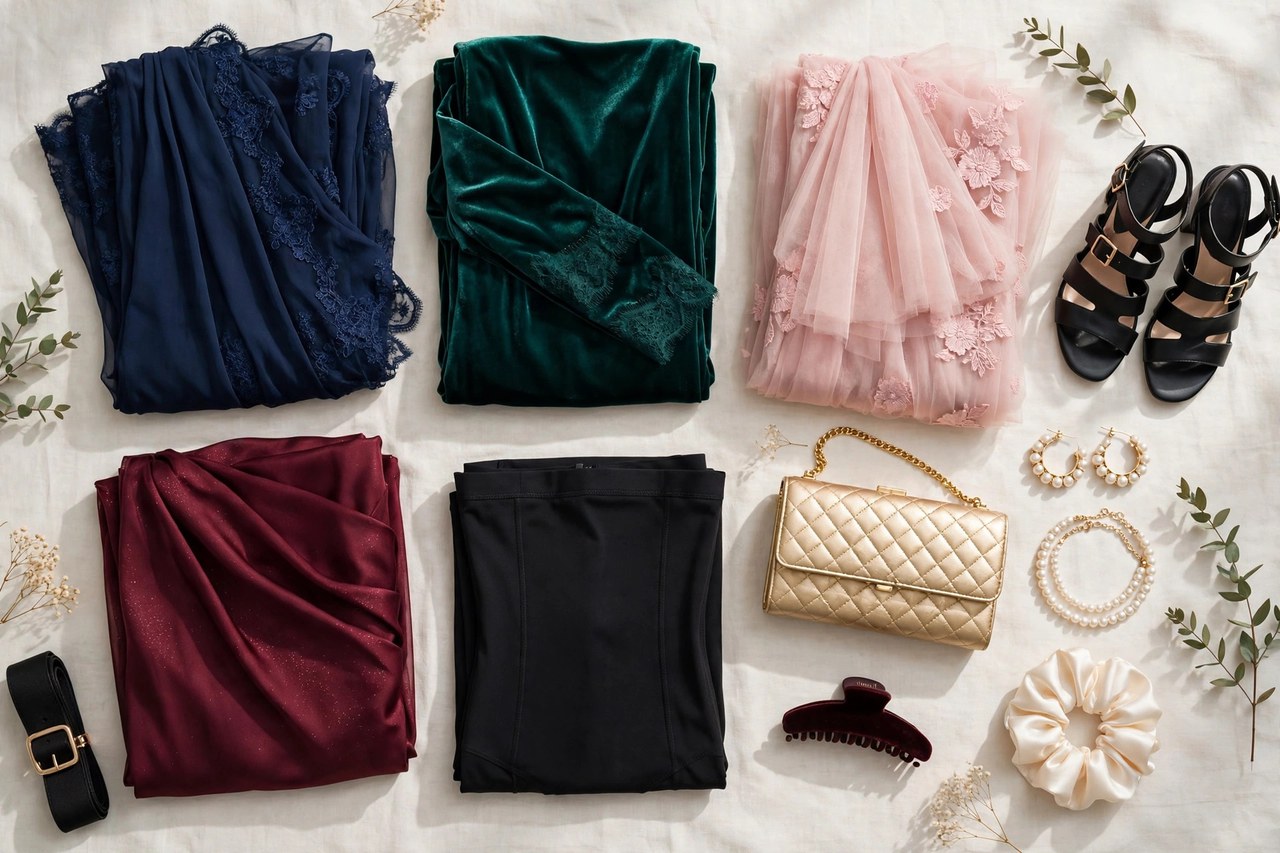
This page is about shopping for a plus size evening gown, not just admiring styles. A formal gown in sizes 14W, 16W, 18W through 32W, or 1X through 5X, is often made to order, sampled in only a few sizes in stores, and altered to your exact bust, waist and hip measurements. That means the calendar, the budget and the fitting schedule matter as much as the neckline. Starting early protects your choice of color, fabric and silhouette.
Plan the purchase around the event date and work backwards. Allow time to research retailers that truly stock extended sizes, to try samples or order swatches, to wait for production and shipping, and to complete two or three alteration appointments. Shoppers who start three to six months ahead can order the gown they want in the size they need. Shoppers who start three weeks ahead are limited to what is hanging in stock or available for rush delivery.
Setting a Realistic Budget
Set a total budget, not just a dress price. The gown itself is the largest cost, but undergarments, shoes, a clutch, jewelry, shipping, rush fees and alterations all add to the final total. Alterations on a lined, beaded or multi-layer gown commonly cost a meaningful share of the gown price, especially if the hem, bodice boning or straps need work. Writing every line item down first prevents a gown that fits the budget on the tag from breaking it at the tailor.
Price differences usually reflect fabric, construction and sizing range. A gown cut specifically on a plus size block, with a supportive inner bodice, wider straps, reinforced seams and a graded hip and bust, costs more to produce than a straight size simply scaled up. That construction is worth paying for at formal lengths, because the gown must support itself, stay comfortable through hours of sitting, standing and dancing, and photograph smoothly without constant adjustment.
Where and How to Shop: Salon, Store and Online
Bridal and formal salons offer appointments, sample gowns and in-house alteration advice, but call ahead and confirm which plus sizes they actually keep as samples. Trying a size 10 sample held closed with clips tells you little about how a size 22W bodice will support the bust or where the waist seam will land. Retailers and online specialists that center plus sizing usually show the gown on plus size models, list bust, waist and hip ranges by size, and publish production times clearly.
Online, order by measurements, never by your usual dress size alone. Measure bust at the fullest point, natural waist, and hips at the fullest point, in the undergarments you plan to wear, and compare all three to the seller size chart. If your measurements fall between sizes or across two sizes, order for the largest measurement, usually the bust or hip, and alter the rest down. A gown that is slightly large can be tailored; a gown that is small across the back or hip cannot be let out if there is no seam allowance.
Timelines, Ordering and Delivery Checks
Made-to-order plus size gowns can take eight to sixteen weeks before shipping, with standard ready-to-wear styles arriving faster and custom color or length changes adding time. Order holiday, prom-season and wedding-season gowns even earlier, when production queues lengthen. Keep written confirmation of size, color, length option and delivery date, and note the return or exchange terms before paying, because many formal gowns are final sale or carry restocking fees that change what a backup plan costs.
Try the gown on the day it arrives. Check the zipper through the waist and hip, seam strength at stress points, bead or lace attachment, hem evenness and whether the bodice stays in place without tugging. Photograph any flaw immediately for the seller. Then book the first fitting at once, while exchange time remains if the size is wrong. Waiting a month to open the box can quietly eliminate every remedy except expensive local alteration.
Fittings, Alterations and Event-Day Readiness
Bring the exact shoes and foundation garments to every fitting, because heel height sets the hem and a different bra changes the bust point, strap length and back closure. Common plus size gown alterations include taking in the bodice sides while preserving bust room, shortening straps, adding a bustle or wrist loop for a train, hemming layered skirts, and adding modesty or support where the design is too revealing or too light for a fuller bust. Ask the tailor what each change will do to the overall proportion before approving it.
Schedule the final fitting about two weeks before the event, close enough that fit is current but early enough to fix surprises. Plan transport and storage as part of shopping: a full gown needs a long garment bag, hanging space where the skirt does not crush, and steaming rather than hard ironing for most formal fabrics. Finish with a small event kit of fashion tape, safety pins and a spare hook. Good shopping is invisible on the night itself, which is exactly the point.
Looking for Women's Clothing Stores?
This guide helps you choose women's plus size evening gowns. To browse where to buy, visit our women's clothing store directory, where you can find retailers that carry them.