Reflective Fabric Stores
Retail reflective buying is a specialty-corner purchase: sew-on fabric, iron-on film and reflective trim, sold by the yard or the strip for safety garments and outdoor gear. This guide explains what retailers stock, how to choose between forms, and profiles the stores preserved from the original guide.
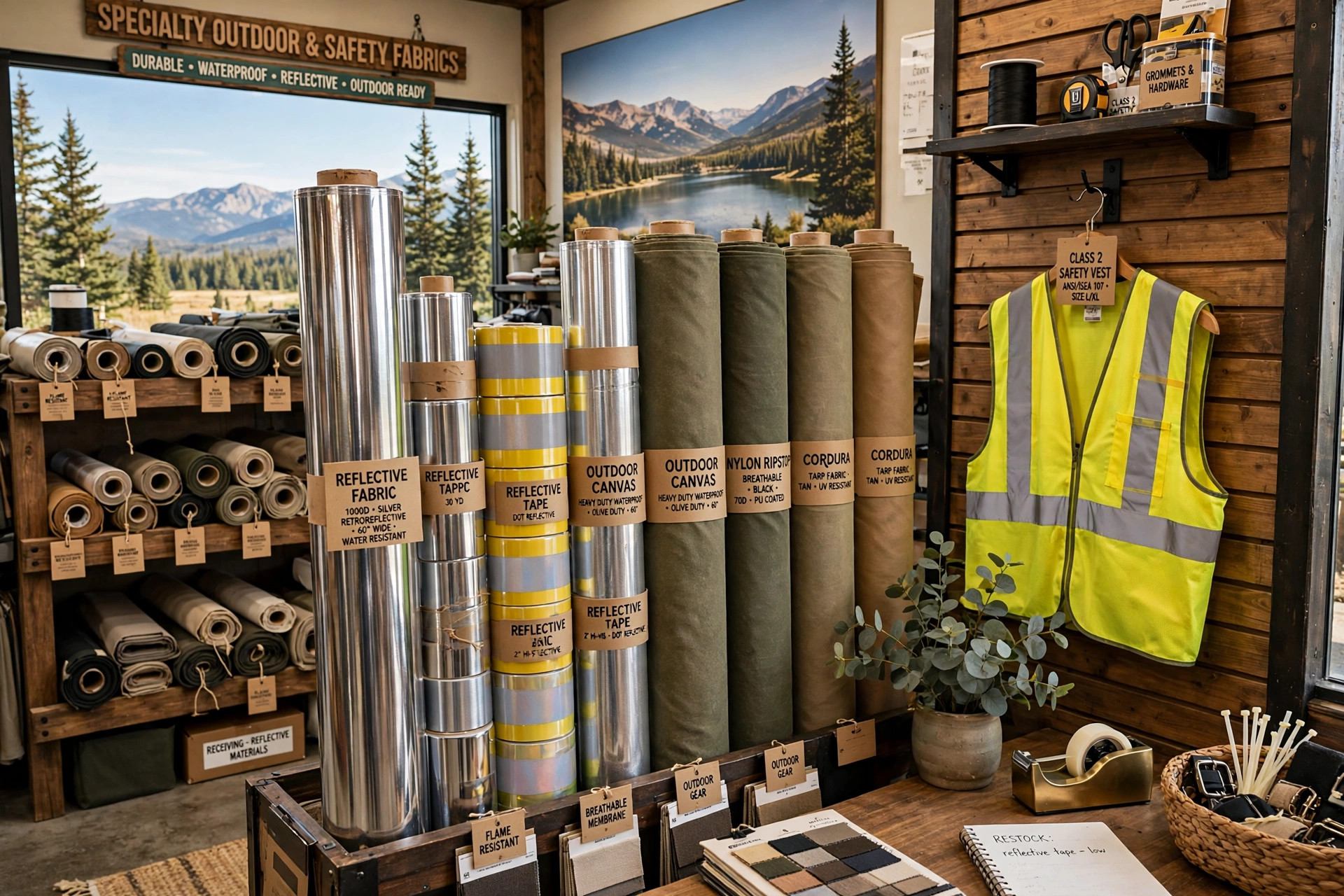
Why Reflective Retail Is a Specialty Corner
Most fabric stores do not stock reflective material beyond, perhaps, a single roll of sew-on tape; the category lives in specialty shops that serve safety garment makers and outdoor gear builders. The two retailers preserved below show both ends of that specialty. One concentrates on reflective products themselves — glass bead and microprismatic heat transfer and iron-on films used in the garment industry worldwide, most popularly for safety garments for firefighters, police officers, highway personnel, offshore workers and others whose visibility at day and night is crucial. The other is an outdoor and technical fabric retailer whose range runs from wicking knits and waterproof breathables to reflective four-way stretch Lycra.
That pairing is instructive for shoppers. If you are producing or repairing safety garments, a reflective specialist holds the films, tapes and fabrics in working widths and quantities. If you are making your own outdoor gear, a technical fabric store puts reflective cloth on the same shelf as the shell fabrics, fleece and hardware it will be sewn into — and its staff can advise on combining them. Searching general fabric retailers by the product name — reflective tape, reflective film, reflective fabric — works better than expecting a dedicated department.
Sew-On, Iron-On and Trim: Choosing the Form
Sew-on reflective fabric is the most forgiving form for home and small-shop use: it stitches like a medium cloth, comes by the yard and in tape widths, and can be replaced when it wears. Heat transfer and iron-on films give a clean, stitch-free application — the listed specialist's glass bead and microprismatic films are applied this way — and suit logos, emblems and large panels, but they demand the right heat and pressure, and a failed application is harder to undo. Reflective piping, binding and pre-made trim bands are the fastest route for adding visibility to seams, edges and existing garments.
Match the form to the base fabric. A stiff sew-on tape can pucker a lightweight shell; a stretch reflective material belongs on stretch garments, as the outdoor retailer's reflective stretch Lycra illustrates. Test on a scrap first: sew or press the material onto the actual garment fabric, wash the sample, and view it under a flashlight or headlights from a distance to confirm it brightens as expected before committing to the finished piece.
How Much to Buy and What to Check
Reflective material is usually an accent, not the garment, so yardage is modest: a vest's bands, a jacket's stripes and piping, or panels on bags and pet gear take strips and part-yards rather than full lengths. Buy a little beyond the layout — reflective tape widths are fixed, mistakes in cutting a strip cannot be pieced invisibly, and matching an existing garment's material later may prove impossible if the store's stock changes. Ask the retailer which backing the sew-on fabric uses and what wash limits the maker states.
Judge quality in the store with a simple test: in a dim corner, shine your phone light at the material from arm's length and from across the shop — a genuinely retroreflective surface flares brightly back at you, while a merely metallic-look fabric stays comparatively dull. Check the surface for cracks, bubbles or peeling edges, confirm the width is consistent, and for films confirm the protective liner is intact. These quick checks take a minute and remove most disappointment before the material ever reaches a sewing machine.
Retail Help Beyond the Counter
Specialist retailers earn their place with application advice: which film temperature a shell fabric can tolerate, whether a tape will survive a workwear wash routine, and how reflective trim combines with the waterproof and breathable fabrics in an outdoor project. The technical fabric store in the listings built its range exactly for makers of their own gear — patterns, hardware and fabrics together — so use that staff knowledge when a project mixes reflective material with coated nylons and breathable laminates for the first time.
If you know of any additional resources that should be added to this section, please do not hesitate to let us know — it would be our pleasure to add beneficial listings to help make this section more informative. When researching fabric retailers, you may also want to visit the fabric store section on Apparel Search, which covers retailers across all fabric categories.
Reflective Fabric Stores Listed Here
Retail listings preserved from the original guide. Confirm current stock and widths with the store before ordering.
Cole Brothers
Reflective products retailer whose glass bead and microprismatic heat transfer and iron-on films are used in the garment industry worldwide, most popularly in safety garments for firefighters, police officers, highway personnel, offshore workers and other applications where high daytime and night time visibility is crucial.
RCT Fabric
Technical and outdoor fabric retailer carrying cutting edge fabrics, notions and patterns — from wicking fabrics and burly nylon Corduras to waterproof breathables, organic cotton Lycra, recycled pop bottle fabrics and reflective 4 way stretch Lycra — described as among the most technically advanced fabrics sold in the market.
Common Questions
What forms of reflective material can I buy at retail?
Sew-on reflective fabric by the yard and in tape widths, heat transfer and iron-on reflective films for stitch-free application, and reflective piping, binding and trim bands for seams and edges.
How can I test reflective fabric in a store?
Shine a phone light at it in a dim corner from arm's length and then from across the shop. A retroreflective surface flares brightly back toward the light; a merely shiny or metallic-look fabric stays comparatively dull.
Should I choose sew-on or iron-on reflective material?
Sew-on fabric is forgiving, stitches like ordinary cloth and can be replaced when worn. Iron-on and heat transfer films give a cleaner finish for panels and logos but need the correct heat and pressure and are harder to remove if an application goes wrong.
More to Explore
References & Further Reading
Looking for Fabric Mills and Suppliers?
Find more retailers in the Apparel Search fabric directory and browse other fabric types from the Fabric Search hub.