Textile Mill 17: The Reality Behind the Wanted Film
Here is the reality: Textile Mill 17 may not actually be a real hideout for assassins. This page separates the fiction of the 2008 film Wanted from the genuine world of textile mills.
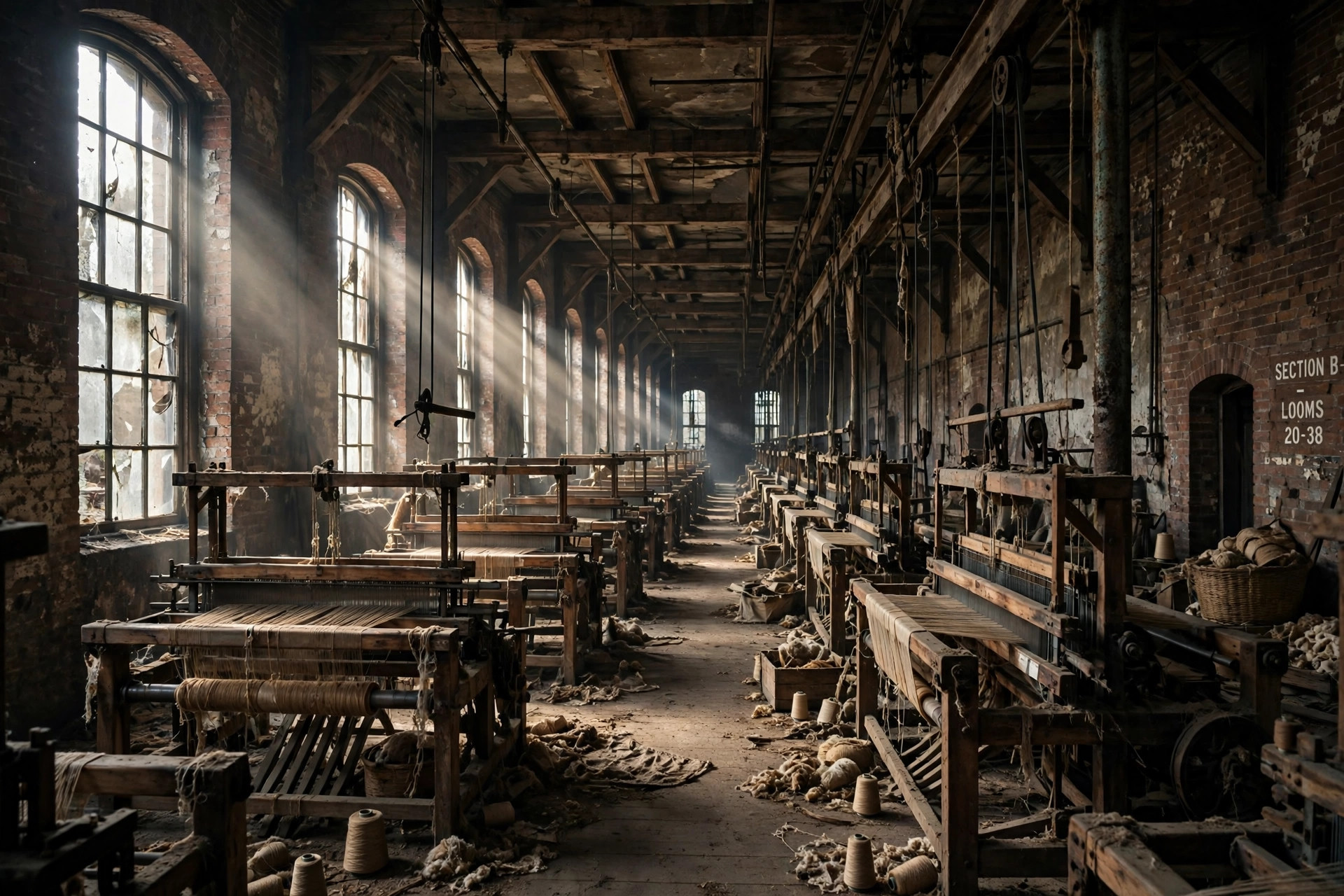
The Reality, Stated Plainly
Here is the reality: Textile Mill 17 may not actually be a real hideout for assassins. That single sentence does the honest work of this whole section of the site. In the film Wanted, a working textile mill serves as the headquarters of the Fraternity, a secret society of weaver-assassins — and the society, its Loom of Fate and its killers are all fiction, however real the mill building on screen may look.
That does not make the idea pure invention from nothing. Filmmakers chose a textile mill as the assassins' home for good atmospheric reasons. Historic mills are vast, echoing buildings filled with rhythmic machinery, long rows of looms, and an air of secrecy that suits a hidden society. A mill also gives the story its central machine honestly: the Loom of Fate is a fantasy built on the real looms that fill real mills.
About the Film Wanted
Wanted was directed by Timur Bekmambetov and written by Michael Brandt, Derek Haas, and Chris Morgan, based on the comic series by Mark Millar and J. G. Jones. Readers who had not seen it should check out the film — that recommendation still stands for anyone curious about why a textile mill ended up at the center of an action movie, and about how its weaver-assassin mythology is constructed.
Understanding the credits matters because it keeps the record straight. The mill, the Fraternity, the Loom of Fate, and characters such as Wesley, Fox, and Sloan belong to the comic and the film adaptation. They are entertainment, presented on this site as entertainment. Apparel Search covers the real apparel and textile industries everywhere else, as fact.
How Real Textile Mills Actually Work
A real textile mill is impressive enough without assassins. Mills take fiber — cotton, wool, linen, or synthetics — and move it through spinning, weaving or knitting, dyeing, and finishing to produce the fabrics that become clothing, upholstery, and industrial textiles. The work is done by spinners, weavers, dyers, finishers and mechanics, and its product leaves the building by the roll, measured in yards rather than in destinies.
Real mills also shaped real history in ways no film needs to exaggerate. Mill towns grew up around water power and later steam and electricity, employing generations of families and driving everything from fashion to labor law. Many historic mill buildings survive today as museums, studios, apartments and workshops — and a few, fittingly, as film locations.
Enjoying the Fiction Responsibly
So the reality is simple and, we think, more interesting than pretending otherwise. Textile Mill 17 is a fictional hideout from a film, presented on Apparel Search because the movie gave the humble textile mill an unlikely moment of action-movie fame. Readers who arrived here from the film are welcome to enjoy the exhibit; readers who arrived looking for a genuine mill should continue into the directories, where the mills are real.
If the movie sparked a genuine interest in how cloth is made, that is a happy ending. Follow the links from this section into the wider fabric guides, where weaving, fibers, and mill directories are covered as fact. The looms there will not assign any targets.
Photos

Common Questions
Is Textile Mill 17 a real place?
No. Textile Mill 17 is the fictional mill headquarters from the film Wanted, directed by Timur Bekmambetov and based on the comic series by Mark Millar and J. G. Jones. Real textile mills exist in many places, but none is an assassin hideout or home to a Loom of Fate.
What is the Loom of Fate supposed to be?
In the film's fiction, the Fraternity believes a great loom encodes the names of future victims through errors in the woven cloth, which the assassins then carry out. Real looms do follow coded patterns — weave drafts and jacquard instructions — but those codes simply describe how to construct fabric.
Why does a fabric directory have pages about a movie?
Wanted put a textile mill at the center of a popular action film, which sent many fans looking for information about the mill. These pages enjoy that connection while clearly labeling the mill and its characters as fiction, separate from the site's factual fabric coverage.
More to Explore
Looking for Fabric Mills and Suppliers?
For the factual side of the industry, browse the fabric directory on Apparel Search or return to the Fabric Search hub for real mills, fabrics, and suppliers.