Digital Fabric Printers
The machinery side of digital textile printing: inkjet systems and the established printing-machine makers behind them, from Zimmer and Stork Prints to MS, Gali, Printtex, and RA Smart.
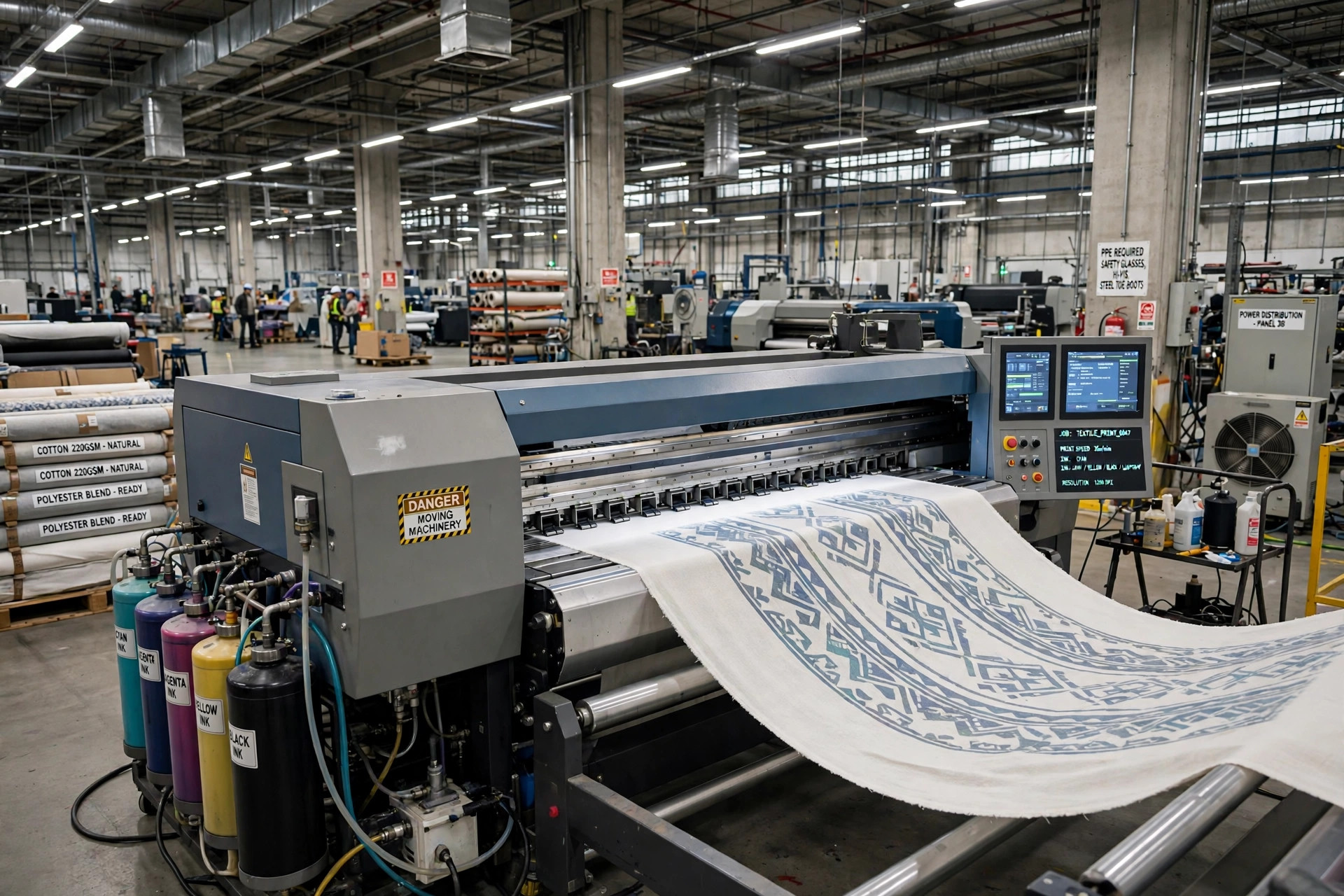
What These Machines Do
A digital fabric printer is an inkjet system built to run textile media rather than paper: fabric must be transported flat and evenly under the printheads, kept at a controlled tension, printed with inks matched to its fiber, and then fixed, steamed, or washed depending on the chemistry. The makers listed here approach that shared problem from different traditions. Some began in screen printing and coating and added inkjet; some built digital systems as their flagship; some combine machinery sales with printing services and supplies. That variety is the point of a directory page. A mill replacing a sampling bottleneck, a fashion printer chasing detail, and a furnishings printer needing width and contract fabrics will not choose the same system, even from this short list.
Colaris is an inkjet printing technology offering significant improvements in digital textile printing. J. Zimmer Maschinenbau, founded in 1874, is a world market leader in digital printing and a global leader in textile printing and coating machines. Zimmer Austria serves the world with representative offices in many countries, with Zimmer Kufstein as the technology center for digital printing machines and Zimmer Klagenfurt responsible for screen printing machines and coating machines. That split is instructive: digital printing grew inside companies that already understood fabric transport, screen production, and coating, and their digital offers carry that mechanical heritage.
European Machine Builders: Gali and MS
Gali Internacional was first set up in 1951 as an enterprise for the manufacture of mechanical construction, in Sentmenat near Barcelona, Spain. It increased its range to include flat screen printing machines for high production, roller printing machines, and digital printing machines for samples and short runs, alongside its other engineering work, with companies in Germany, Italy, France, and China and collaborators worldwide. After more than thirty years of service to printers, Gali was considered expert in this trade. Its profile shows a common pattern: digital machines for sampling and short runs entering a catalogue built on conventional printing, letting a customer digitize development before deciding how much production to move.
MS tells a fuller version of that evolution. Its experience began in Como in 1947 as a specialized textile printing mill working for important Italian manufacturers in the Milan and Como districts. In the seventies it developed innovative technical solutions that competitors wanted; in 1983 it began dedicated production, development, and sale of printing machines; and in the eighties it changed mission from printing operator to supplier of machines and technologies, moving to Caronno Pertusella near Milan. MS produces machinery and complete installations for textile printing, high fashion, garments, and substrates of any kind, with digital inkjet, traditional, and mixed technologies, plus technical assistance, engineering, special solutions, and help with inks and consumables — a turnkey emphasis that matters when a printer is buying a line, not just a machine.
Specialists, Services With Machinery, and Total Solutions
Printtex, in Denmark, was listed as a dealer of digital textile printing equipment and consumables including drapery and upholstery, offering exclusive top-end fashion and decorator fabrics digitally printed, drapery, curtains, bed linen, upholstery, and fashion fabrics, flame-retarded contract fabrics including Trevira CS, cotton, linen, Lycra, and silk printed commercially, with no minimum order and individual designs printed to order. It also supplied inkjet printers, pre- and after-treatment and fixation machinery, and a design collection. RA Smart, based in the silk town of Macclesfield in the UK and describing itself as the home of digital fabric printing, machinery, and supplies, operated a large digital print facility whose work appeared on catwalks and in leading department stores, installed systems across the UK, and offered a complete fabric design and print solution while supporting UK design colleges and Macclesfield's silk heritage.
Stork Prints, now continued under SPGPrints, says it invented digital textile printing and helped bring the technology to its present state. It works with inkjet printer and printing belt manufacturers worldwide, and puts its name on a printer only when it produces high-quality prints at state-of-the-art speeds. Beyond digital, it offered total system solutions across screens, lacquers, inks, digital engraving, rotary screen and digital printing systems, grounded in electroforming expertise and precision metal products. Its argument was runnability: gamut is a basic condition, but unattended printing, few nozzle blockages, and competitive ink cost decide daily production. Judge every maker here by that production standard, not by a sample alone.
Digital Printer Makers in This Directory
The listings below give each maker's details in brief.
Colaris
Colaris inkjet printing technology from the Zimmer group, an innovation offering significant improvements in digital textile printing.
Zimmer Klagenfurt
J. Zimmer Maschinenbau GmbH, founded in 1874 and a global leader in textile printing and coating machines; Kufstein is the digital printing technology center and Klagenfurt handles screen printing and coating machines.
Gali Internacional
Spanish maker set up in 1951 in Sentmenat, Barcelona, offering flat screen and roller printing machines and digital printing machines for samples and short runs.
MS
Italian maker that began as a Como printing mill in 1947 and moved into machine production in 1983, supplying digital inkjet, traditional, and mixed textile printing machinery and complete installations.
Printtex
Danish dealer of digital textile printing equipment and consumables, also printing fashion, drapery, upholstery, and contract fabrics digitally with no minimum order.
RA Smart
UK digital fabric printing, machinery, and supplies specialist based in Macclesfield, operating a large digital print facility and installing systems across the UK.
Stork Prints
Stork Prints, now SPGPrints, which invented digital textile printing and offers total system solutions across rotary screen and digital printing, screens, inks, and engraving.
Common Questions
What is the difference between the Zimmer sites listed here?
Colaris is the inkjet printing technology line, while Zimmer Austria covers the group: Kufstein is the technology center for digital printing machines and Klagenfurt is responsible for screen printing and coating machines.
Did any of these makers start as printers themselves?
Yes. MS began in Como in 1947 as a specialized textile printing mill and only later, in 1983, began dedicated production and sale of printing machines. Printtex and RA Smart also combine machinery with printing services.
What did Stork Prints claim as its digital distinction?
Stork Prints said it invented digital textile printing and judged systems by runnability: reliable unattended printing with few nozzle blockages, alongside color gamut, speed, and ink cost.
More to Explore
References & Further Reading
Looking for Fabric Mills and Suppliers?
For the wider printing and fabric supply world, explore the main Fabric section on Apparel Search, and use the Fabric Search digital hub to compare machinery with printing services.