Silk Yarn Prices
Silk yarn is the product weavers, knitters and embroiderers actually buy, and its price is built from raw silk plus the cost of throwing and twisting. This page explains that structure and the sources used to track silk yarn prices.
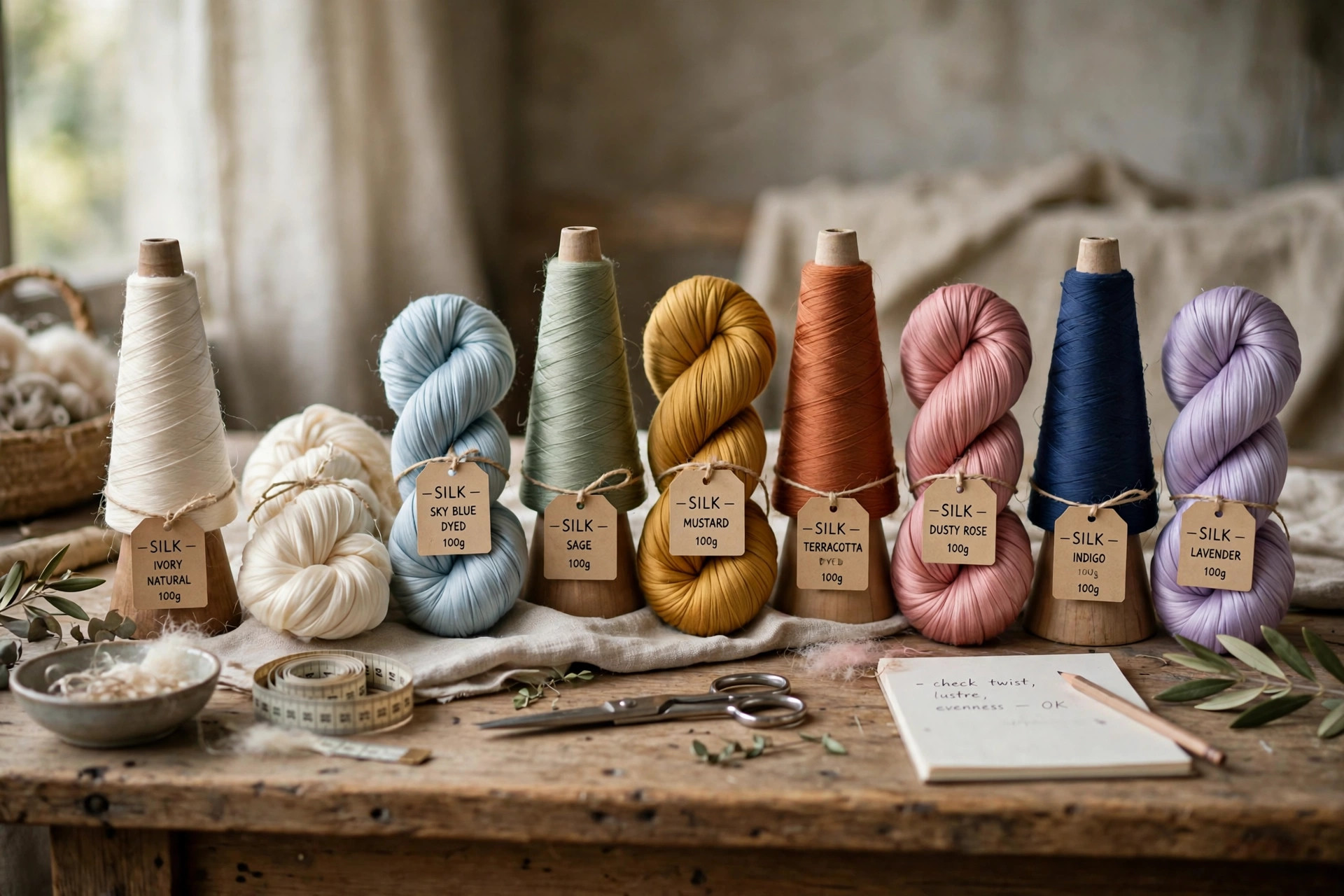
From Raw Silk to Silk Yarn
Raw silk, as it comes from the reeling basin, is not yet a usable yarn for most purposes. Single reeled filaments are combined and then twisted, a process traditionally called throwing, to produce yarns of the thickness, strength and character each end use requires. A fine, low-twist yarn goes into smooth woven fabrics; a harder-twisted crepe yarn gives silk crepe its lively texture; thick, soft spun silk yarn, made from shorter fibres and reeling waste, serves knitting and embroidery. Silk yarn prices therefore sit one step above raw silk prices: they contain the raw material, the throwing or spinning cost, and the grading judgement about which lots suit which yarn.
That intermediate position matters. Fabric buyers sometimes blame mills for prices that were actually set at the yarn stage, and hand knitters or embroiderers buying silk yarn retail meet a price several steps removed from the cocoon. Understanding the chain, cocoon to raw silk to yarn to fabric, lets each buyer see which stage a price movement came from. The two practical windows most buyers have onto this stage of the market are statistical series for Indian silk yarn and marketplace listings for silk yarn from China and elsewhere, both linked in the References below.
What Determines a Silk Yarn Price
The raw silk grade is the largest component. Silk is graded by the evenness, cleanliness, strength and size consistency of the reeled filament, and top grades command a substantial premium because they throw into even yarn with fewer breaks. Yarn construction adds the next layer: denier or count, the amount and direction of twist, whether the yarn is reeled filament or spun from shorter staple, and whether it is supplied natural, degummed or dyed. Dyed silk yarn costs more than natural yarn of the same construction, both for the dyeing itself and because dye houses require minimum lots that raise the effective cost of small colours.
Form and quantity finish the calculation. Yarn on cones for power looms, skeins for dyeing, and small retail hanks for hand work carry very different handling costs per kilogram, and a price quoted for a production quantity cannot be compared with a price for a single skein. When you compare silk yarn prices between sources, convert them to the same basis, per kilogram or per pound, in the same form, and note whether the yarn is filament or spun silk. Failing to separate filament from spun silk is the most common comparison error in this category, because the two products differ in raw material, appearance and value.
Using Statistics and Marketplace Listings
Official statistics, such as the Indian silk statistics linked here, give the reference level for a producing country: recorded prices for silk yarn by type, published by a body that is not trying to sell you yarn. They are the right source for costings, research and for checking whether a supplier quotation is broadly in line with its home market. Marketplace listings give the opposite view: many individual sellers asking prices for silk yarn, including Chinese production offered internationally. Asking prices vary with grade claims, lot size and how urgently a seller wants to move stock, so they show a range and a mood rather than a single reliable figure.
Used together, the two source types bracket the truth. If a quotation sits far above both the official statistics and the marketplace range for the same construction, ask what justifies it: a genuinely finer grade, certified origin, dyeing to a specific shade, or small-quantity handling may all be legitimate answers, but the question should be asked. If a quotation sits far below both, ask the mirror question about grade, filament versus spun content and lot consistency. In silk yarn more than in most textile products, the specification is the price, and any figure detached from its specification should be treated as decoration rather than information.
Silk Yarn Buyers and the Wider Market
The buyers of silk yarn are a varied group: weaving mills making satin, crepe and brocade; knitters producing fine silk jersey; embroidery thread makers; and hand knitters and weavers buying at retail. Each group reads prices differently. A mill watches raw silk statistics to time its yarn purchases, because yarn is its dominant cost. A hand knitter compares finished skein prices between retailers and cares more about shade range and put-up. This page serves both by explaining the structure rather than pretending one number can serve everyone, and the yarn factories directory on Apparel Search extends the search from prices to producers when a buyer is ready to source.
Finally, place silk yarn in the full sequence this section provides. Raw silk prices, covered on the silk prices page, set the floor. Silk yarn prices add throwing and grading. Silk fabric prices add weaving, dyeing and finishing. A movement at any level propagates to the next, usually with a delay of weeks to months, so a buyer who watches the level below their own purchase always sees change coming first. Following that chain — raw silk, then yarn, then fabric — is how professional silk yarn buyers organise their information.
Common Questions
Why is silk yarn more expensive than raw silk?
Silk yarn contains the raw silk plus the cost of combining, twisting or spinning it into a usable yarn, grading the result, and putting it up on cones or skeins. Finer, more even yarns made from high-grade raw silk carry the highest prices.
What is the difference between filament and spun silk yarn?
Filament silk yarn is made from long reeled cocoon filaments and is smooth and lustrous. Spun silk yarn is made from shorter fibres and reeling waste, giving a softer, more matte yarn. They look different, behave differently and are priced differently, so never compare their prices directly.
How should I compare silk yarn prices between suppliers?
Convert every offer to the same basis, price per kilogram or pound, in the same form (cone, skein or hank), and confirm the construction: filament or spun, count or denier, twist, and natural or dyed. Only then are the numbers genuinely comparable.
More to Explore
References & Further Reading
Looking for Fabric Mills and Suppliers?
To move from prices to producers, browse the Apparel Search fabric directory or return to the Fabric Search hub.