Silk Guide
This hub gathers the Apparel Search silk section in one place: what silk is, what its five commercial types are, and how to research silk prices at the raw material, yarn and finished fabric levels.
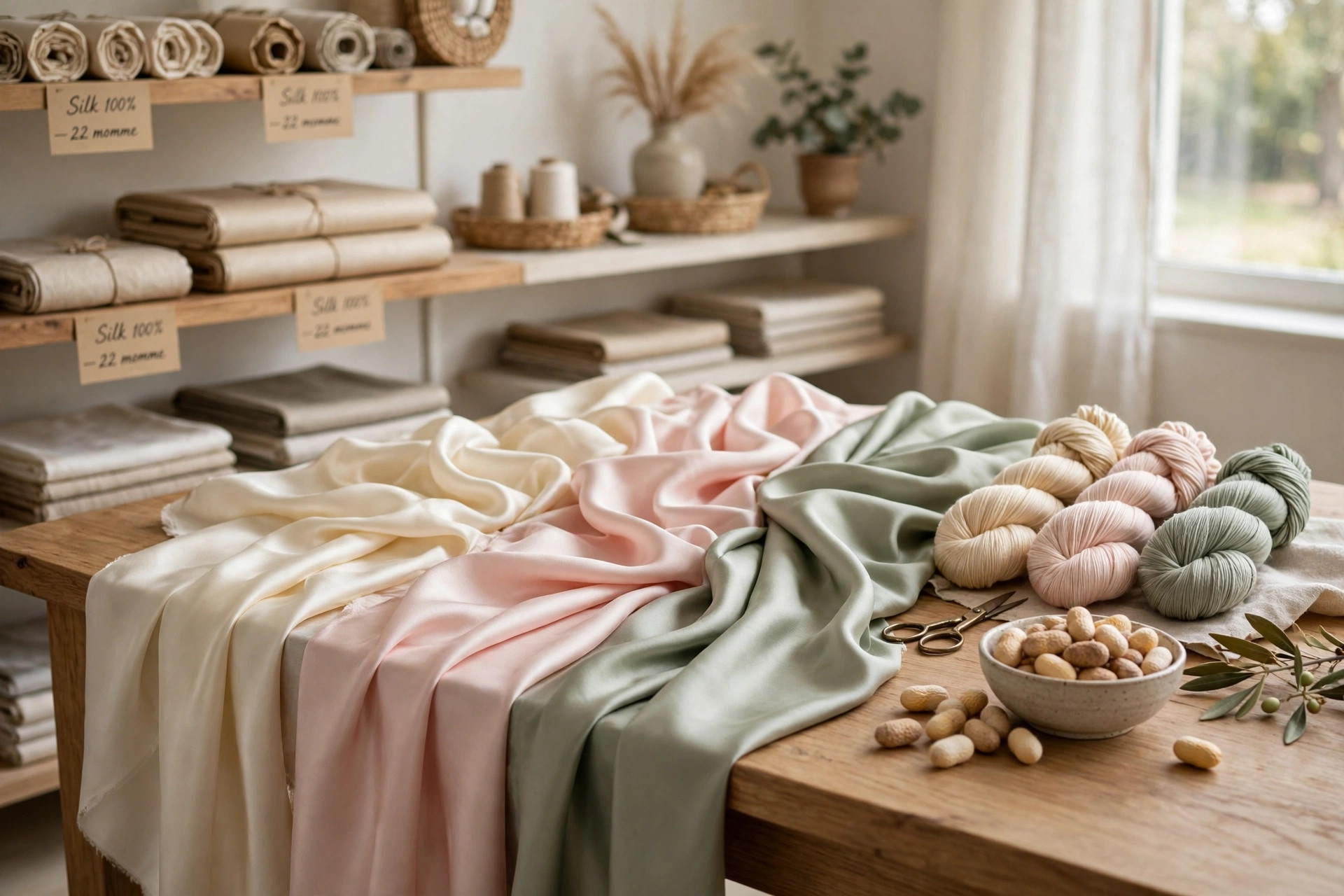
What This Silk Section Covers
This page is the hub of the silk section, and it was designed to assist readers with learning about silk and silk pricing. The section is organised in the order a newcomer usually needs it. First, silk defined explains the fibre itself: a natural protein filament produced by silkworm larvae, the mulberry silkworm above all, and the five commercial types, mulberry, tasar, oak tasar, muga and eri, each with its own silkworm species, food plant, colour and texture. Then three pricing pages take over, covering raw silk prices, silk yarn prices and silk fabric prices, because each level of the trade prices silk differently.
That structure mirrors the real production chain. Cocoons become raw silk, raw silk is thrown and twisted into yarn, yarn is woven into fabric, and fabric becomes garments and furnishings. A question about price is meaningless until you know which level you mean, and a question about quality is meaningless until you know which type and grade you mean. Readers who work through the hub in order, definition first, prices second, build exactly the mental map that people inside the silk trade use, and they can then read any supplier catalogue or market report in this area with far more confidence.
The Silk Fibre in Brief
Silk is a natural protein fibre obtained from the cocoons of silkworm larvae, the best-known being Bombyx mori, reared in captivity on mulberry leaves. Its shimmer comes from the triangular, prism-like structure of the fibre, which refracts light at different angles. India produces all five commercial types and is the largest consumer of silk in the world as well as a leading producer after China, where silk fabric was first developed in antiquity and from where it spread along the trade routes that became known as the Silk Road. Thailand adds its own hand-reeled, hand-woven tradition, and centres from Mysore and Kanchipuram to Banaras remain famous for silk weaving.
For the shopper, the practical translation is that silk is not one product. A fine mulberry satin, a coarse tasar furnishing cloth, a golden muga sari fabric and a matte eri shawl are all silk, with different feels, strengths and prices. The silk fibre resource and silk definition pages linked from this section go deeper into the fibre itself, and the silk news directory follows the trade as it changes. Starting with the defined page in this section is the fastest route to understanding which of those products a given offer actually describes, before any money is discussed.
Researching Silk Prices Through This Hub
From this hub you can reach three distinct pricing guides. The silk prices page collects the raw material level: government board statistics from India, marketplace price references and exchange data, including historical series that show how silk has priced over time. The silk yarn prices page covers the intermediate product that knitters, weavers and embroiderers actually buy. The silk fabric prices page explains why finished silk cloth has no single set price, and lists retailers where yardage prices can be compared directly. The textile price links page extends the same approach to cotton, wool, polyester, nylon and yarn in general.
Use the three levels together. If fabric quotations rise, check whether yarn and raw silk moved first; if raw silk statistics are flat, a fabric increase needs another explanation. Always note the date and grade attached to any figure, and treat exchange data that is labelled historical as history, valuable for range and trend, never as a live quote. That discipline, checking the level, the date and the grade, is most of what separates a reliable silk price reference from a misleading one, and the pages in this section are arranged to make all three easy to check.
Silk in a Changing Market
The silk industry has never stood still. Industry commentary quoted on the original version of this hub described silk as formerly a luxury trade at a crossroads: new sandwashed silk in the 1990s brought a wider range of affordable silk products within reach of millions of consumers, competition from high-tech synthetics ate away market share, and raw silk prices fell sharply enough to threaten the sustainability of the industry itself. That tension remains the story of the modern market: silk must justify a premium over convincing imitations on genuine qualities, handle, breathability, dye depth, longevity, while producers must earn enough from a labour-intensive fibre to keep rearing silkworms at all.
For readers, that context makes the pricing pages more than a directory. A very low silk price is not automatically a bargain; it may reflect a blend, a lightweight construction, or pressure on producers that cannot last. A high price is not automatically a rip-off; it may reflect fine reeled yarn, a heavy momme weight and careful dyeing. Browse the whole section, definition, fibre background, news and the three price levels, and you will be equipped to tell the difference. That was the purpose of this hub when it was built, and the rebuilt section keeps the same purpose with the same structure.
Looking for Fabric Mills and Suppliers?
Beyond silk, explore the full Apparel Search fabric directory or return to the Fabric Search hub for every fibre category.