Silk Fabric Prices
There is no single price for silk fabric, because every mill and retailer prices its own constructions, widths and finishes. This page explains what drives silk fabric prices and lists retailers where current yardage prices can be compared directly.
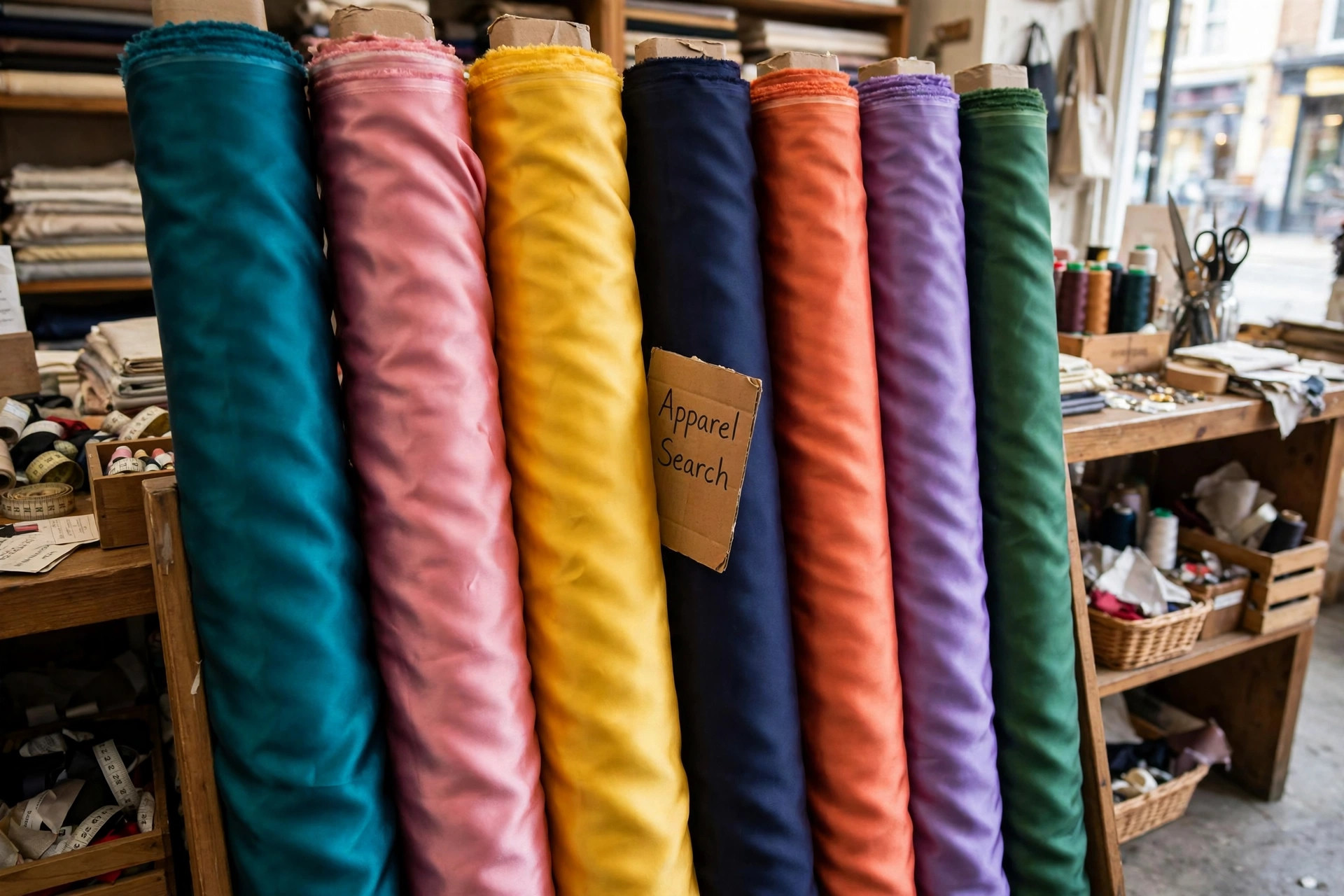
Why Silk Fabric Has No Set Price
Investigating fabric pricing is always a challenge: it is not possible to publish one industry-wide cost sheet for silk fabric. Silk fabric is not a set commodity traded at a single price. Each region, and more importantly each fabric mill, has a different pricing structure, a different set of expenses, and a different requirement for the profit margin it needs to maintain its business. Two fabrics both honestly labelled silk can therefore carry very different prices without either being wrong, because the products behind the label are genuinely different.
What a buyer is actually paying for is a specific construction. The weight of the fabric, often expressed for silk in momme, the weave, satin, twill, plain weave, crepe or jacquard, the width of the roll, whether the yarn was reeled or spun, and whether the cloth is undyed, piece-dyed, yarn-dyed, printed or embellished all move the price. A lightweight silk habotai for lining, a mid-weight dupioni for a formal dress and a heavy embroidered silk are three different products sharing one fibre name. Comparing prices is only meaningful between fabrics of similar weight, width and finish.
What Drives the Price of a Yard of Silk
Raw material is the foundation: silk fabric prices rest on raw silk yarn prices, which move with cocoon harvests, reeling capacity and demand in the major producing countries. Above that base, weaving costs rise with construction complexity: fine warps, slow jacquard looms, and the careful handling silk requires all add cost per yard. Dyeing and finishing add more, since silk is often dyed in small lots, and printing, sandwashing, or treatments for drape and texture each add a process. Finally, the channel matters: a mill price for a full roll, a wholesale price for piece goods, and a retail price by the yard include different services and margins.
Buyers can use that structure to judge whether a price makes sense. A very cheap silk offer deserves questions: is it a narrow width, a light weight, a spun silk rather than reeled filament, a blend with the silk percentage lower than the headline suggests, or a short remnant length? None of those is necessarily a bad purchase, linings and craft projects often suit lighter silk perfectly, but the price should match the specification. Conversely, a high price should come with a specification that justifies it: stated weight, width, weave, fibre content and country of weaving, plus a swatch you can handle before committing to yardage.
Comparing Prices at Retailers
The practical way to learn current silk fabric prices is to compare like with like at retailers who publish their yardage prices openly, and three such sources are listed below. A specialist silk and dyeing supplier sells silk fabric by the yard and by the bolt in many weights and weaves, largely undyed or in core colours, which makes it a useful benchmark for plain silk. A wholesale distributor of silk piece goods shows the trade side of the same market. A large online fabric club selling by the yard at discount prices shows how wide the retail range runs once blends, prints and seasonal stock are included.
When comparing, normalise the numbers before deciding. Convert every offer to a price per yard or metre at the stated width, note the weight in momme or grams, and add shipping for small orders, which can change the ranking between suppliers. Order swatches for any fabric you have not handled, because silk photographs deceptively: lustre, slub and drape do not survive a product photo intact. And record the specification alongside the price in your notes, so that a price you check months later can be compared against the same fabric rather than against a memory of silk in general.
From Fabric Prices Back to Mills
Retail prices answer what a yard costs today; they do not explain the whole market. If you are costing a garment for production, work backwards as well as forwards: take the retail and wholesale fabric prices you find here, then use the silk prices and silk yarn prices pages in this section to see the raw material level underneath them, because a rise in yarn prices today becomes a rise in fabric prices next season. For volume buying, the fabric mill directories on Apparel Search are the next step, since mills quote constructions to order at widths and weights a retailer may never stock.
Whatever your quantity, treat any published silk fabric price as a dated observation, not a promise. Prices change with harvests, exchange rates and stock, and the honest use of a price guide is to learn the structure of the market, establish a realistic budget range for the construction you need, and know which questions separate a fair price from a misleading one. The retailer listings below show that same market at three different levels of the trade.
Silk Fabric Retailers for Price Comparison
Three retailers are listed below: a specialist silk supplier, a wholesale distributor, and a large online fabric store.
Dharma Trading
Retailer offering silk fabric yardage and bolts in a range of weights and weaves, listed here as a source for comparing current silk fabric prices directly.
Exotic Silks
Wholesale distributors of silk piece goods, accessories and lingerie, representing the wholesale level of the silk fabric market.
Fashion Fabrics Club
Online fabric store selling a wide variety of fabrics by the yard at wholesale-level prices, including silk alongside cotton, linen, wool, blends and synthetics.
Common Questions
Why do silk fabric prices vary so much?
Because silk fabric is not a single commodity. Weight, weave, width, whether the yarn is reeled or spun, dyeing, printing and finishing, and the margin of the mill or retailer selling it, all differ. Compare prices only between fabrics of similar specification.
What is momme and why does it affect price?
Momme is the traditional weight measure for silk fabric. A higher momme means more silk per yard, so the fabric is heavier, usually more durable and more opaque, and costs more. Lightweight linings sit at the low end; heavy garment and furnishing silks sit at the high end.
How can I check a silk fabric price fairly?
Order a swatch, confirm the fibre content, weight and width, convert offers to a price per yard or metre at a comparable width, and include shipping. A price is only meaningful attached to a specification you have verified by hand.
More to Explore
References & Further Reading
Looking for Fabric Mills and Suppliers?
For the mills behind retail prices, search the Apparel Search fabric directory, or return to the Fabric Search hub for other fabric categories.