Silk Fabric Factories
Silk is the fiber that built the fabric trade's vocabulary of luxury. This page follows silk from the cocoon to the loom, gathers the site's silk resources, and lists the silk factories below.
Shop Silk Fabric Now
Shop Silk Fabric on Amazon Shop Silk Fabric on eBayThese links open the Apparel Search shopping guides for Amazon and eBay, where the product links are kept in one place.
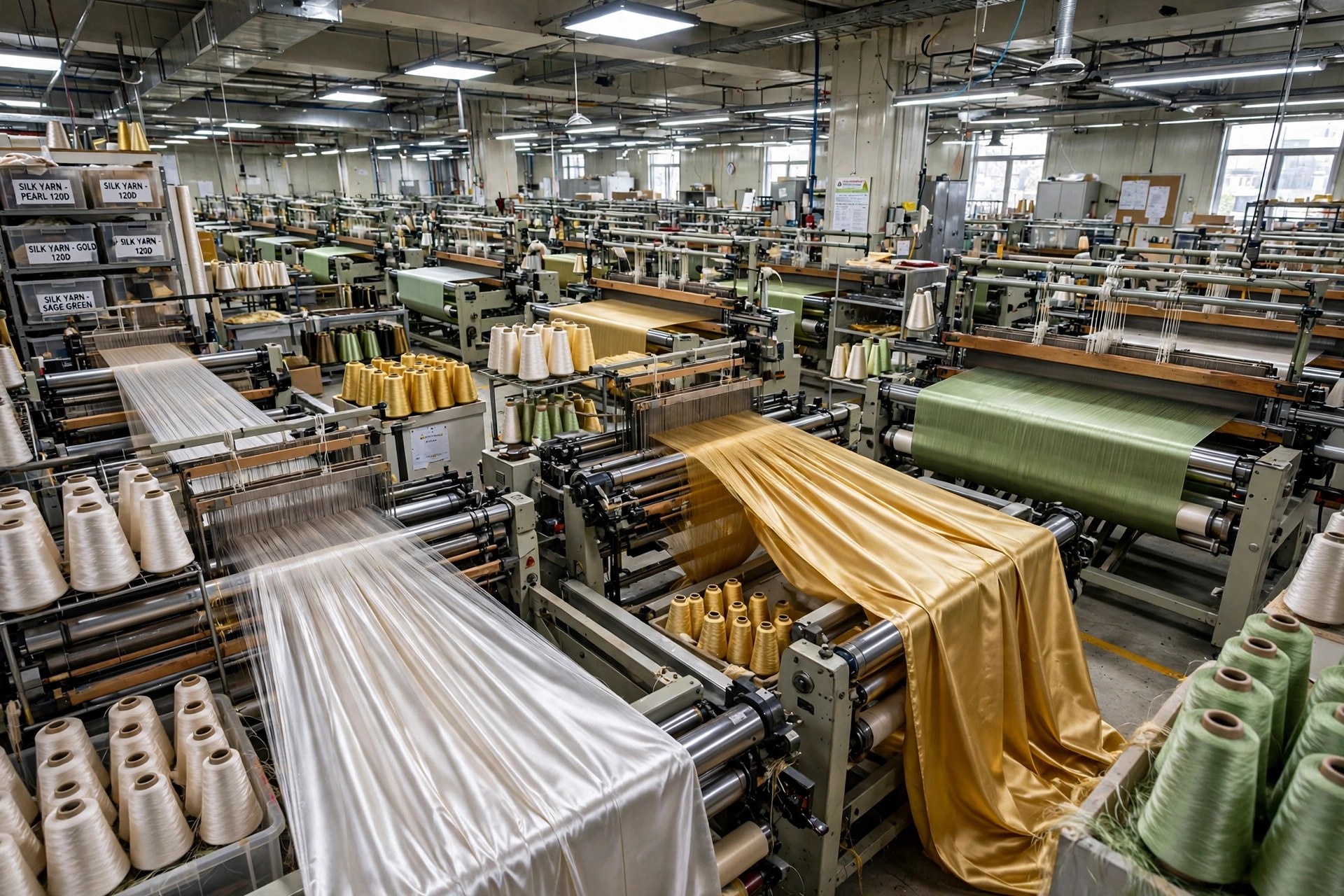
From Cocoon to Cloth
Silk begins as a single continuous filament: the silkworm spins its cocoon from two protein strands cemented with sericin gum, and a reeler can unwind several hundred meters of filament from one cocoon. Throwsters twist filaments into yarn, the gum is boiled off in degumming (which is where silk gets its softness and most of its famous luster), and the yarn is woven on looms that handle its delicacy - silk is strong for its weight but abrades easily and shows every tension fault. China remains the dominant producer of both raw silk and silk fabrics, with India the other great center, weaving much of its cloth from imported yarn as well as its own tasar, eri and muga wild silks.
Apparel Search keeps several silk resources together: the Silk Search for finding silk content across the site, the Silk Fiber Directory for the fiber side of the trade, and the Silk Fabric Guide for a fuller treatment of silk types and care. All three are linked from this page.
The Qualities Silk Mills Weave
Silk fabric weight is quoted in momme: around 12-16 momme for charmeuse and blouse-weight crepe de chine, 19-22 for quality shirting and bedding, 30 and above for heavy suiting and furnishing cloth. The weave names overlap with the satin and crepe families - silk satin, silk twill for scarves and ties, chiffon and organza from high-twist yarns, dupioni from double cocoons with its characteristic slubs, and brocades woven with pattern floats. A silk factory's profile is defined by which of these it specializes in and whether it dyes and prints in-house, because silk's dye affinity is excellent but its wet handling is unforgiving.
Buyers should also ask how a mill handles the wild silks. Tussah (tasar) silk is coarser and naturally tan, eri is spun rather than reeled and feels woolly, and muga - the golden silk of Assam - is among the rarest fibers in commerce. Factories in India in particular build ranges around these fibers that Chinese mills, working mainly with cultivated mulberry silk, do not offer.
The Factories on This Page
Three silk fabric factories are listed below: Cholprapa Group Company Limited of Thailand, where handloom and mill weaving of Thai silk is a signature industry; Sichuan Nanchong Shuncheng Silk Co. Ltd. of China, from one of the country's historic sericulture regions; and Srinidhi Silks of India. Together they represent the three traditions - Thai, Chinese and Indian - that still supply most of the world's woven silk.
Silk sourcing rewards patience and testing. Ask for the mill's degumming loss figure - silk loses roughly a fifth to a quarter of its weight when the sericin gum is removed, and cloth priced by weight before and after degumming is not the same cloth. Confirm whether metallic weighting has been applied, an old practice that restores weight cheaply but makes silk brittle and short-lived. For printed silk, request a washed strike-off, because silk's surface shows registration faults and dye migration more clearly than cotton does. And store and ship silk away from prolonged sunlight: ultraviolet light yellows and weakens it faster than almost any other apparel fiber, a fact that matters as much in a warehouse as it does in a wardrobe.
Finally, allow for silk's natural variation. Slubs in dupioni, slight shade bands across a piece, and small differences between dye lots are characteristics of a natural filament woven at commercial speed, not automatic defects; mills grade their cloth and price the grades, and a buyer who specifies the grade in writing avoids most disputes.
Fabric Mills and Factories in This Directory
The mills below are the factories listed on this page. Each name opens that company's profile in the Fabric Mills by Name directory.
Cholprapa Group Company Limited
A fabric mill based in Thailand, profiled in the Apparel Search Fabric Mills by Name directory and listed among the mills supplying this fabric type.
Sichuan Nanchong Shuncheng Silk Co. Ltd.
A fabric mill based in China, profiled in the Apparel Search Fabric Mills by Name directory and listed among the mills supplying this fabric type.
Srinidhi Silks
A silk house based in India, profiled in the Apparel Search Fabric Mills by Name directory and listed among the silk fabric factories.
Common Questions
What does momme mean for silk fabric?
Momme is silk's traditional weight measure. Light blouse silks run about 12-16 momme, good shirting and bedding 19-22, and heavy suiting or furnishing silks 30 or more.
Which countries produce the most silk fabric?
China is the largest producer of raw silk and silk cloth, followed by India, which is also the largest consumer and the center for wild silks such as tasar, eri and muga.
Why is silk fabric expensive?
Sericulture is labor-intensive: thousands of cocoons yield a kilogram of yarn, reeling and weaving are slow and skilled, and degumming and dyeing silk takes careful handling at every stage.
More to Explore
- Antibacterial Fabric
- Bamboo
- Basalt
- Boucle
- Breathable
- Broadcloth
- Brocade
- Burlettes
- Canvas
- Carbon
- Chambray
- Chenille
- Chiffon
- Cholprapa Group Company Limited
- Circular
- Clothing Industry Employment
- Clothing Industry Factories
- Conversion Charts
- Corduroy
- Cotton
- Crepe
- Crochet
- Damask
- Denim
- Dobby
- Double Knit
- Drill
- Duck
- Dyed Fabric
- Embroidered
- Embroidery Directory
- Fabric
- Fabric Definitions
- Fabric Directory
- Fabric Retail
- Fabric Wholesalers
- Fashion Industry News
- Fiberglass
- Fibers Directory
- Fil-a-Fils
- Filter Cloth
- Flame Retardant
- Fleece
- French Terry
- Gabardine
- Gauze
- Georgettes
- Ginghams
- Greige Fabric
- Herringbone
- Horse Hair
- Interlining
- Interlock
- Jacquard
- Jersey Fabric
- Lace
- Lacoste
- Linen
- Lining
- Long Fiber Reinforced Thermalplastics
- Mesh
- Metallic
- Muslin
- Narrow
- Net
- Non Woven Fabric
- Novelty
- Nylon
- Ottoman
- Oxford
- Percale
- Pile
- Pique
- Pointelle
- Polar Fleece
- Polyester
- Poplin
- Printed
- Printing Directory
- Quilted
- Raschel
- Reflective
- Rib
- Sateen
- Satin
- Seersucker
- Sichuan Nanchong Shuncheng Silk Co. Ltd.
- Silk Fabric Guide
- Silk Fiber Directory
- Silk Search
- Single Jersey
- Smart Fabrics
- Srinidhi Silks
- Stretch
- Suede
- Taffeta
- Tassars
- Terry
- Textile Machinery
- Textiles
- Thermal
- Tricot
- Tulle
- Tweed
- Twill
- Velcro
- Velour
- Velvet
- Viole
- Vynil
- Waffle
- Waterproof
- Wool
- Yarn Dyed
- Yarn Factories
Looking for Fabric Mills and Suppliers?
The wider directory behind these pages is the Fabric section hub, which opens the whole Apparel Search fabric mill directory: fabric types from A to Z, the Fabric Mills by Name profiles, and the dyeing, printing and finishing directories that support them.