Quilted Fabric Mills Directory
Quilted fabric is three layers working as one: a face cloth, a soft middle layer of batting, and a backing, locked together by lines of stitching that are both the construction and the pattern. This directory explains how quilted cloth is made and where it works, and carries the two mills this section lists under quilted fabric factories, Usman Enterprises in Pakistan and The West Coast Weaving Establishment in India.
Shop Quilted Fabric Now
Shop Quilted Fabric on Amazon Shop Quilted Fabric on eBayThe Amazon and eBay links on this page are affiliate links. If you make a purchase through them, Apparel Search may earn a commission.
What Quilted Fabric Is
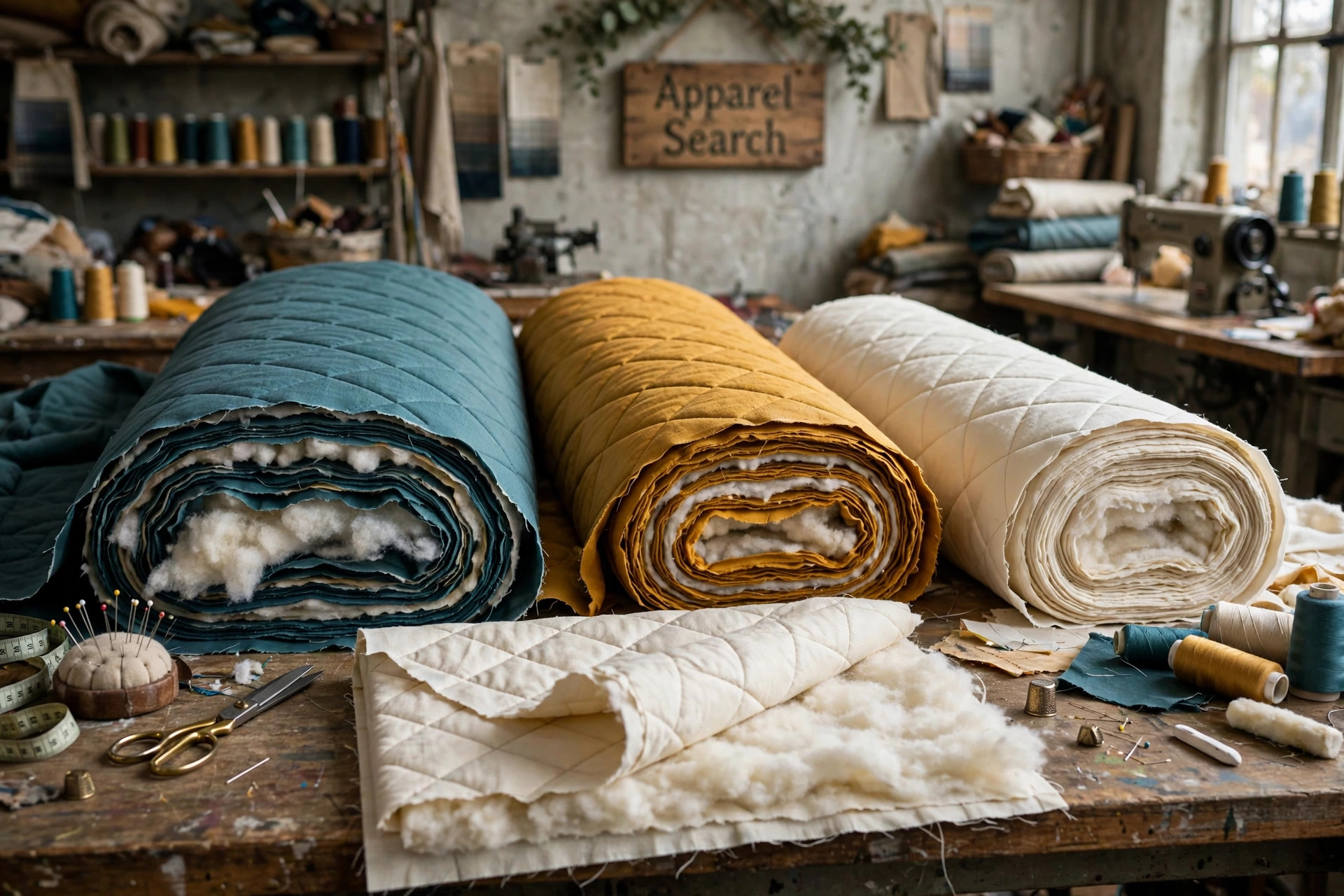
A quilted fabric is a sandwich. The top layer, the face, is the cloth you see, which can be a plain cotton, a printed fashion fabric, a satin, or a technical shell. Beneath it sits the batting, also called wadding: a lofty sheet of polyester, cotton, wool, or a blend that supplies warmth and body. A backing cloth closes the sandwich from below. Rows of stitching pass through all three layers and hold them in place, and the pattern those rows form, diamonds, squares, channels, waves, or a freehand design, compresses the batting along the stitch lines and lets it puff between them, giving quilted cloth its familiar padded, sculpted surface.
Mills make quilted fabric in two broad ways. Needle quilting sews the layers together with thread, the traditional method, which gives a soft drape and a stitch that can be decorative in its own right. Ultrasonic or thermal quilting bonds synthetic layers with patterned heat or sound instead of thread, producing crisp welded designs, often on polyester faces for jackets and bedding, with no needle holes. Which method is used matters for use: stitched quilting handles washing and flexing gracefully and suits natural fibres, while bonded quilting is fast and clean on synthetics but can stiffen if the pattern covers too much of the surface.
Where Quilted Fabric Is Used
Warmth is the oldest job: quilted linings inside coats and jackets trap air in the batting, quilted outerwear uses the padded cloth as the garment itself, and quilted bedcovers, throws, and mattress protectors rely on the same trapped air at household scale. Fashion returns to quilting whenever texture is in demand, in vests, skirts, bags, and shoes, because the diamond and channel patterns read as design without any print. Beyond clothing, quilted fabric insulates transport covers, pet bedding, upholstery panels, and protective padding, and pre-quilted fabric sold by the yard lets home sewers skip the sandwiching step entirely and cut a padded cloth straight from the bolt.
The two listings below are this directory's quilted fabric mills, each linked to its Fabric Mills by Name profile: Usman Enterprises of Pakistan and The West Coast Weaving Establishment of India. Both countries have long textile traditions in cotton and in the stitching trades that quilting depends on, so the pairing fits the product. Neither listing has been removed: no listing was verified dead, and this directory's standing rule is to keep a listing when in doubt. Thank you for using the Apparel Search Fabric Mill Directory.
Specifying and Caring for Quilted Fabric
A useful specification names all three layers separately, face fibre and weave, batting fibre and weight, and backing, then the quilting method and pattern size, because two cloths both sold as quilted can share almost nothing else. Batting weight drives warmth and bulk: light battings line jackets and apparel, medium weights serve throws and bedcovers, and heavy battings become upholstery and protective padding. Check a sample for even loft between the stitch lines, stitching that catches all three layers without puckering the face, and a pattern scale that suits the end use, since large diamonds cut awkwardly on small garment pieces while fine quilting stays manageable at almost any size.
Care follows the most delicate layer, usually the face or a natural batting. Polyester-batting quilted fabrics generally wash gently and dry flat or on low heat, cotton batting can shrink slightly and should be pre-shrunk or washed cool, and wool batting is best dry cleaned or washed with specialist care. Avoid high heat, which can flatten the loft that gives the cloth its warmth and its look, and store quilted goods loosely folded or hung rather than compressed, so the batting recovers its puff instead of staying pressed thin in storage.
Quilted Fabric Mills Listed Here
Usman Enterprises (Pakistan)
Listed in this directory. Follow the company name to its Fabric Mills by Name profile, which carries its full directory record.
The West Coast Weaving Establishment (India)
Listed in this directory. Follow the company name to its Fabric Mills by Name profile, which carries its full directory record.
Common Questions
What is quilted fabric?
A three-layer cloth: a face fabric, a middle layer of batting or wadding, and a backing, held together by rows of stitching through all three layers. The stitch pattern, diamonds, squares or channels, compresses the batting along the lines and lets it puff between them, giving the padded surface.
What is quilted fabric used for?
Quilted linings and outerwear, bedcovers, throws and mattress protectors, fashion items such as vests, bags and skirts where its texture is the design, and insulating or protective uses such as upholstery panels, transport covers and pet bedding. Pre-quilted fabric is also sold by the yard for home sewing.
Which mills does this directory list for quilted fabric?
Two mills, each linked to its Fabric Mills by Name profile: Usman Enterprises (Pakistan) and The West Coast Weaving Establishment (India).
More to Explore - The Full Fabric Directory A-Z
- Raschel Fabric Mills
- Percale Fabric
- Pile Fabric
- Printed Fabric
- Fabric Mills - Fabric Section Hub
- Textile Machinery
- Embroidery Directory
- Printing Directory
- Usman Enterprises
- The West Coast Weaving Establishment
- Clothing Industry Factories
- Yarn Factories
- Fabric Retail
- Fabric Wholesalers
- Fibers Directory
- Fabric Definitions
- Fashion Industry News
- Clothing Industry Employment
- Conversion Charts
- Antibacterial Fabric
- Bamboo
- Basalt
- Boucle
- Breathable
- Broadcloth
- Brocade
- Burlettes
- Canvas
- Carbon
- Chambray
- Chenille
- Chiffon
- Circular
- Corduroy
- Cotton
- Crepe
- Crochet
- Damask
- Denim
- Dobby
- Double Knit
- Drill
- Duck
- Dyed Fabric
- Embroidered
- Fiberglass
- Fil-a-Fils
- Filter Cloth
- Flame Retardant
- Fleece
- French Terry
- Gabardine
- Gauze
- Georgettes
- Ginghams
- Greige Fabric
- Herringbone
- Horse Hair
- Interlining
- Interlock
- Jacquard
- Jersey Fabric
- Lace
- Lacoste
- Linen
- Lining
- Long Fiber Reinforced Thermalplastics
- Metallic
- Mesh
- Muslin
- Narrow
- Net
- Non Woven Fabric
- Novelty
- Nylon
- Ottoman
- Oxford
- Pique
- Pointelle
- Polar Fleece
- Polyester
- Poplin
- Reflective
- Rib
- Sateen
- Satin
- Seersucker
- Silk Fabric
- Single Jersey
- Smart Fabrics
- Stretch
- Suede
- Taffeta
- Tassars
- Terry
- Thermal
- Tricot
- Tulle
- Tweed
- Twill
- Velcro
- Velour
- Velvet
- Viole
- Vynil
- Waffle
- Waterproof
- Wool
- Yarn Dyed
- Textiles
- Fabric
Looking for Fabric Mills and Suppliers?
Return to the Fabric Directory hub for the full fabric section, or browse the Fabric Manufacturers Directory page for the wider mill trade.