Crochet Fabric Mills
Crochet is the fabric built with a hook: one yarn, looped through loops, growing panel by panel into lace, garments and trims. This directory lists the category's single mill, Hands On of India, and explains how crochet fabric is made and bought.
What Crochet Is
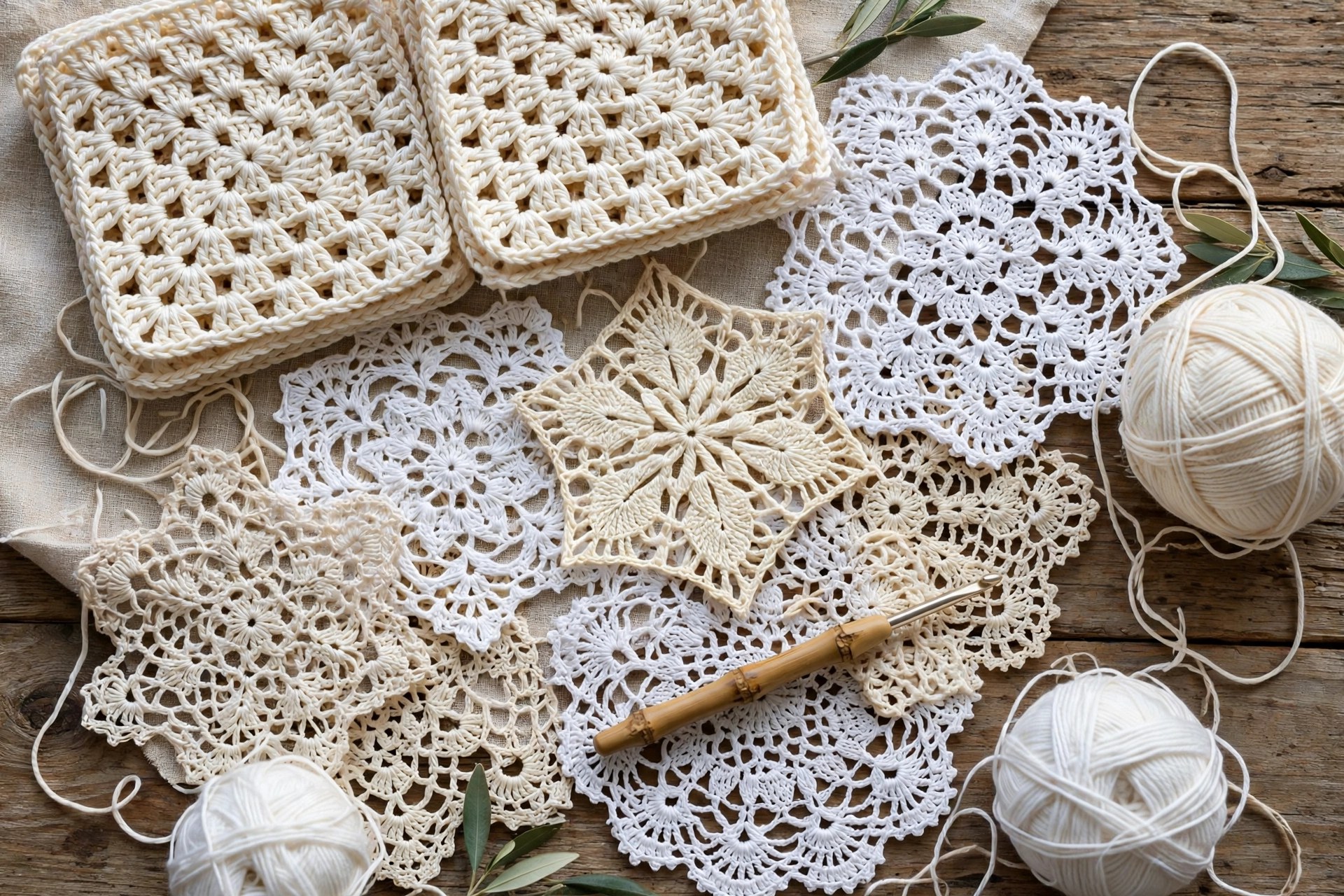
Crochet builds fabric with a single hooked needle and one yarn at a time. Each stitch is a loop pulled through a previous loop and finished before the next begins - unlike knitting, where hundreds of loops stay live on the needles - which makes crochet fabric more textured, slightly firmer, and able to grow in any direction: squares, circles, lace motifs and freeform shapes are native to it. The Crochet Fabric Definition (also spelled Crotchet, an older variant of the word) states the structure formally. The word itself is French for hook, and the technique in its modern form is a nineteenth-century craft that industrialised only partially - a fact that defines this whole category, because crochet is the one fabric in this directory that still reaches the market substantially made by hand.
That hand character is crochet's market. Crochet lace panels, trims, table linen, bags, beachwear and fashion garments carry a visibly made quality that machine production imitates but rarely equals, and the trade has long organised around skilled hand workers - frequently women's cooperatives and home-based artisans in India and other craft regions, coordinated by exporters who grade, finish and assemble the pieces into commercial product. Machine crochet exists and serves the volume end - warp-knitted and crochet-galloon machines produce lace edgings, nets and elastic crochets for lingerie and trim - but when a buyer says crochet fabric, the hand-made article below is usually what is meant.
Buying Crochet: What to Ask
Hand production changes the specification conversation. Consistency is the first question: stitch gauge, motif size and finished dimensions vary between hands in a way loom-state cloth never does, so a serious order sets tolerance ranges, works from approved counter-samples, and prices the grading and finishing that bring artisan output to retail standard. Yarn is the second: cotton dominates for lace and household crochet, with acrylic serving price lines and silk and linen the premium end. Lead time is the third, and it is honest arithmetic - a hand-crocheted panel contains hours that no negotiation removes, which is why crochet sits at the crafted end of the fabric market and why its buyers plan seasons earlier than woven buyers need to.
Care and construction follow from the loops: crochet stretches less than knitting and holds shape well, but open lace work snags and should be washed gently and stored flat, and motifs joined by hand should be checked at the joins, where the structure is only as strong as its seaming. Around this directory, About Knitted Fabrics covers crochet's looped-fabric cousins, the Fabric Directory hub covers the section, and the trade runs through the Machinery directory, Clothing Industry Factories, Yarn Factories, Fabric Retail and Fabric Wholesalers, with the Fibers Directory and Fabric Definitions alongside.
Using This Directory
This directory lists one company: Hands On of India, linked to its profile in the Fabric Mills by Name section - the same Indian hand-work exporter that also appears in this directory under chambray, where hand production meets woven cloth. The commercial crochet trade really is this dispersed: production is spread among artisans, and organised exporters like Hands On are how that work reaches buyers. Industry readers also use Fashion Industry News, Clothing Industry Employment and Conversion Charts. Thank you for using the Apparel Search Fabric Mill Directory.
Crochet Fabric Mills Listed in This Directory
Hands On (India)
Company listed in the Apparel Search fabric mill directory under its own profile in the Fabric Mills by Name section. Open the linked profile for the company's directory record and contact details.
Common Questions
How is crochet different from knitting?
Crochet uses one hook and finishes each stitch before starting the next, so no large set of loops is held live at once. That makes crochet fabric more textured and slightly firmer than knitting, and able to grow in any direction - squares, circles and lace motifs are built piece by piece.
Is crochet fabric made by hand or machine?
Both exist. Machine crochet and related warp-knitted lathes produce lace edgings, nets and elastic trims at volume, but much commercial crochet fabric - lace panels, garments, bags and household textiles - is still substantially hand-made, organised through exporters who coordinate artisan producers.
Which mill is listed for crochet fabric?
One company: Hands On (India), linked to its own profile in the Fabric Mills by Name section of the directory.
More to Explore - Fabric Directories and Trade Links
- Canvas Fabric Directory
- Carbon Fabric
- Chambray Fabric Directory
- Chenille Fabric Mills
- Chiffon Fabric Directory
- Circular Knit Fabric Mills
- Corduroy Fabric Mills
- Cotton Fabric Mills
- Crepe Fabric Directory
- Crochet Fabric Mills
- Bamboo Fabric Mill Directory
- Basalt Fabric
- Boucle Fabric Mills
- Breathable Knit Fabric
- Broadcloth Fabric Directory
- Brocade Fabric Mills
- Burlettes Fabric Mills
- About Fabrics
- About Knitted Fabrics
- About Woven Fabrics
- Antibacterial Fabric Mills
- Fabric Mills - Fabric Section Hub
- Crotchet Fabric Definition
- Machinery
- Hands On
- Clothing Industry Factories
- Yarn Factories
- Fabric Retail
- Fabric Wholesalers
- Fibers Directory
- Fabric Definitions
- Fashion Industry News
- Clothing Industry Employment
- Conversion Charts
- Damask
- Denim
- Dobby
- Double Knit
- Drill
- Duck
- Dyed Fabric
- Embroidered
- Fiberglass
- Fil-a-Fils
- Filter Cloth
- Flame Retardant
- Fleece
- French Terry
- Gabardine
- Gauze
- Georgettes
- Ginghams
- Greige Fabric
- Herringbone
- Horse Hair
- Interlining
- Interlock
- Jacquard
- Jersey Fabric
- Lace
- Lacoste
- Linen
- Lining
- Long Fiber Reinforced Thermalplastics
- Metallic
- Mesh
- Muslin
- Narrow
- Net
- Non Woven Fabric
- Novelty
- Nylon
- Ottoman
- Oxford
- Percale
- Pile
- Pique
- Pointelle
- Polar Fleece
- Polyester
- Poplin
- Printed
- Quilted
- Raschel
- Reflective
- Rib
- Sateen
- Satin
- Seersucker
- Silk Fabric
- Single Jersey
- Smart Fabrics
- Stretch
- Suede
- Taffeta
- Tassars
- Terry
- Thermal
- Tricot
- Tulle
- Tweed
- Twill
- Velcro
- Velour
- Velvet
- Viole
- Vynil
- Waffle
- Waterproof
- Wool
- Yarn Dyed
- Textiles
- Fabric
Looking for Fabric Mills and Suppliers?
Return to the Fabric Directory hub for the full fabric section, or browse the Fabric Manufacturers Directory page for the wider mill trade.