Thermal Fabric Factories
Thermal fabric keeps warmth by architecture: its waffle or honeycomb cells trap still air against the skin. This page explains the constructions and keeps the original factory listings.
Shop Thermal Fabric Now
Shop Thermal Fabric on Amazon Shop Thermal Fabric on eBayThese links open the Apparel Search shopping guides for Amazon and eBay, where the product links are kept in one place.
Warmth From Trapped Air
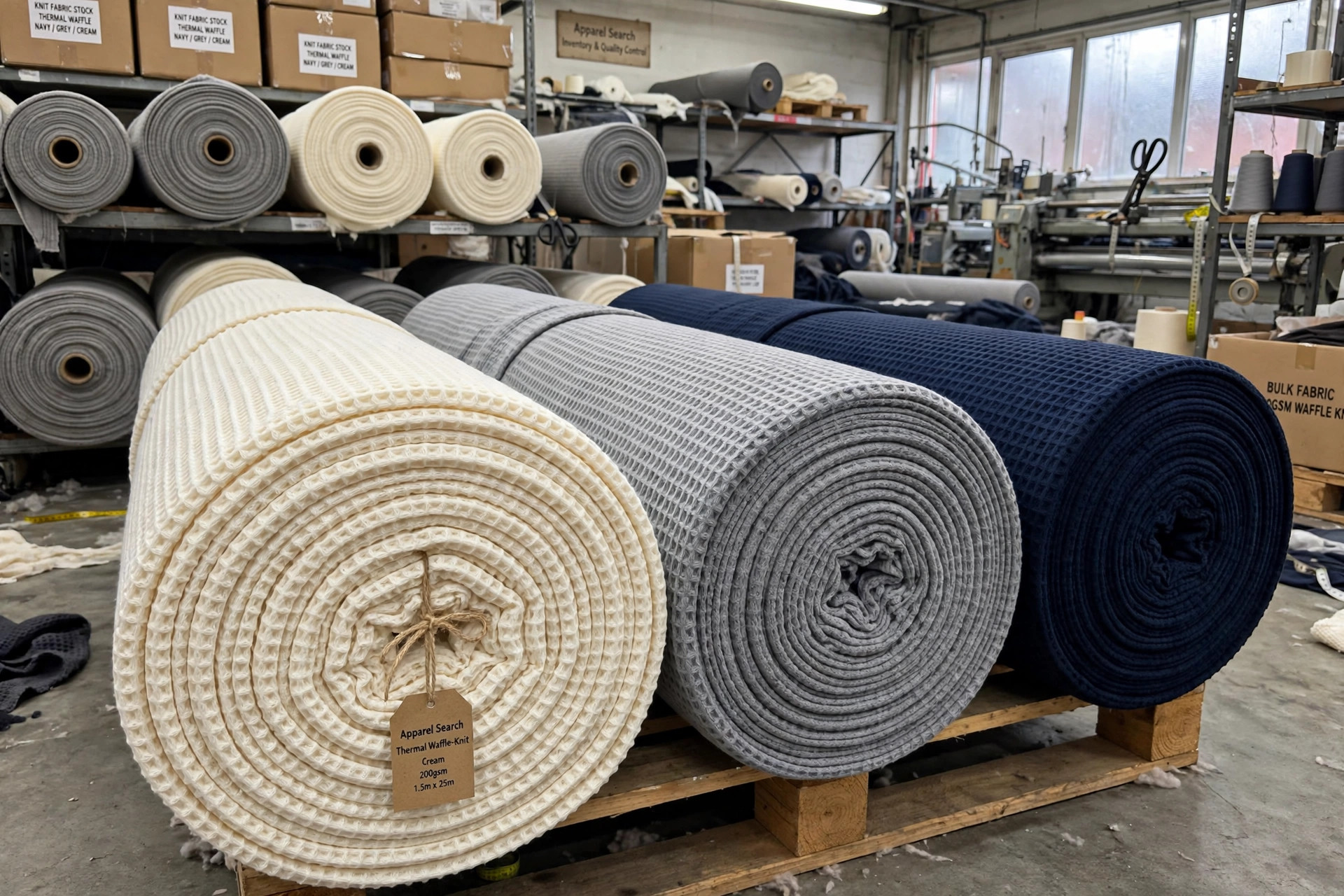
A thermal fabric insulates the way a honeycomb does: its surface is knitted or woven into small recessed cells - the familiar waffle pattern - and each cell holds a pocket of still air. Still air is an excellent insulator, so a light, open-textured thermal layer can feel warmer than a heavier flat fabric, and the channels between the cells also let moisture vapor escape, which is why thermals became the standard base layer for work, sport and sleep. The classic construction is a knitted waffle (also sold as honeycomb or cellular knit); woven cellular cloth and brushed knits serve the same purpose by related structures.
The original Apparel Search thermal page listed five factories, kept below: Carolina Apparel Group, Carolina Cotton Works and Lincoln Textile Sales from the USA - a reminder that thermal underwear was long an American knit-goods staple - Sriyansh Ispat from India, and Supreme Textile Industries from Pakistan.
Fibers: Cotton, Blends and Synthetics
Traditional thermals are cotton: soft, comfortable and warm when dry, but slow to dry and cold when wet, which limits them for active outdoor use. Cotton-polyester blends keep much of the hand while adding strength, shape retention and faster drying, and they dominate workwear and mid-market base layers. Fully synthetic thermals - polyester or polypropylene, often with a brushed inner face and moisture-wicking finish - serve sport and military use, moving sweat off the skin so the trapped-air insulation keeps working. Wool and merino blends occupy the premium end, insulating even when damp and resisting odor on multi-day wear.
Weight is the buyer's shorthand: lightweight thermals around 180-220 gsm for mild cold and layering under shirts, midweight 230-280 gsm for general winter base layers, and expedition weights above that, usually brushed or double-faced. A thermal's warmth does not track weight alone - cell depth, loft after washing and fit against the body matter as much, and a loose thermal under no outer layer loses its trapped air to every draft.
Where Thermal Fabrics Are Used
Long underwear tops and bottoms are the core market, from union-suit heritage to modern base-layer sets, followed by thermal-lined workwear, sleepwear and loungewear, baby and children's winter layers, and thermal curtains and blankets in the cellular woven form. Hospitals and institutions buy thermal blankets for the same reason knitters buy thermal underwear: warmth per gram and survival through industrial laundering.
For garment makers, the knitted waffle's stretch and texture set the handling rules: cut with the wales straight or the cells skew visibly, allow for the fabric's generous width shrinkage in the first washes, and bind or rib the cuffs and neck, because plain-cut waffle edges roll and stretch out. Printed thermals exist, but the texture breaks up fine detail, so most decoration is yarn-dyed stripes, embroidery or applique.
Care is part of the fabric's appeal: thermal knits wash and tumble dry with the rest of the household laundry, and the better qualities hold their cells through years of it. What shortens a thermal's life is not washing but overstretching at cuffs and waistbands and storing it damp, since cotton-rich knits mildew - faults of handling, not of the construction, and worth a line on any workwear care label.
Sourcing Notes
Specify a thermal by construction (knit waffle, woven cellular, brushed knit), fiber, finished weight and shrinkage tolerance after three washes, and ask the factory whether the quoted weight is before or after brushing and finishing, since brushed thermals gain loft and apparent bulk without gaining yarn. For workwear programs, confirm the blend's behavior in industrial laundry; for sport programs, confirm the wicking finish is durable-rated to a stated number of washes rather than a topical treatment that rinses away in the first month.
Fabric Mills and Factories in This Directory
The mills below are the listings the original Apparel Search directory carried on this page. Each name opens that company's profile in the Fabric Mills by Name directory.
Carolina Apparel Group, Inc.
A fabric mill based in USA, profiled in the Apparel Search Fabric Mills by Name directory and listed among the mills supplying this fabric type.
Carolina Cotton Works, Inc.
A fabric mill based in USA, profiled in the Apparel Search Fabric Mills by Name directory and listed among the mills supplying this fabric type.
Lincoln Textile Sales, Inc
A fabric mill based in USA, profiled in the Apparel Search Fabric Mills by Name directory and listed among the mills supplying this fabric type.
Sriyansh Ispat Limited
A fabric mill based in India, profiled in the Apparel Search Fabric Mills by Name directory and listed among the mills supplying this fabric type.
Supreme Textile Industries (Pvt) Limited
A fabric mill based in Pakistan, profiled in the Apparel Search Fabric Mills by Name directory and listed among the mills supplying this fabric type.
Common Questions
Why is thermal fabric warm if it is so light?
Its waffle or honeycomb cells trap pockets of still air against the body, and still air insulates. The structure, not the weight of yarn, does most of the warming.
Is cotton or synthetic thermal better?
Cotton is soft and fine for everyday and work use but dries slowly and chills when wet. Polyester and polypropylene thermals wick moisture and dry fast, so they suit sport and outdoor work; merino blends are the premium natural option.
What weight thermal should I buy?
About 180-220 gsm for light layering, 230-280 gsm for a general winter base layer, and heavier brushed weights for severe cold - fitted close, since loose thermals lose their trapped warm air.
More to Explore
- Antibacterial Fabric
- Bamboo
- Basalt
- Boucle
- Breathable
- Broadcloth
- Brocade
- Burlettes
- Canvas
- Carbon
- Carolina Apparel Group, Inc.
- Carolina Cotton Works, Inc.
- Chambray
- Chenille
- Chiffon
- Circular
- Clothing Industry Employment
- Clothing Industry Factories
- Conversion Charts
- Corduroy
- Cotton
- Crepe
- Crochet
- Damask
- Denim
- Dobby
- Double Knit
- Drill
- Duck
- Dyed Fabric
- Embroidered
- Embroidery Directory
- Fabric
- Fabric Definitions
- Fabric Directory
- Fabric Retail
- Fabric Wholesalers
- Fashion Industry News
- Fiberglass
- Fibers Directory
- Fil-a-Fils
- Filter Cloth
- Flame Retardant
- Fleece
- French Terry
- Gabardine
- Gauze
- Georgettes
- Ginghams
- Greige Fabric
- Herringbone
- Horse Hair
- Interlining
- Interlock
- Jacquard
- Jersey Fabric
- Lace
- Lacoste
- Lincoln Textile Sales, Inc
- Linen
- Lining
- Long Fiber Reinforced Thermalplastics
- Mesh
- Metallic
- Muslin
- Narrow
- Net
- Non Woven Fabric
- Novelty
- Nylon
- Ottoman
- Oxford
- Percale
- Pile
- Pique
- Pointelle
- Polar Fleece
- Polyester
- Poplin
- Printed
- Printing Directory
- Quilted
- Raschel
- Reflective
- Rib
- Sateen
- Satin
- Seersucker
- Silk Fabric
- Single Jersey
- Smart Fabrics
- Sriyansh Ispat Limited
- Stretch
- Suede
- Supreme Textile Industries (Pvt) Limited
- Taffeta
- Tassars
- Terry
- Textile Machinery
- Textiles
- Tricot
- Tulle
- Tweed
- Twill
- Velcro
- Velour
- Velvet
- Viole
- Vynil
- Waffle
- Waterproof
- Wool
- Yarn Dyed
- Yarn Factories
Looking for Fabric Mills and Suppliers?
The wider directory behind these pages is the Fabric section hub, which opens the whole Apparel Search fabric mill directory: fabric types from A to Z, the Fabric Mills by Name profiles, and the dyeing, printing and finishing directories that support them.