Ottoman Fabric Mills Directory
Ottoman is the fabric named for its bold horizontal ribs: a plain-weave ground thrown into wide, rounded cords that run across the cloth, originally in silk and now in cotton, wool and synthetic blends as well. This directory explains how that rib is made and where the cloth works, and carries the nine mills this section lists under ottoman fabric factories, in Pakistan, China, Thailand, Taiwan, the USA and the United Kingdom.
Shop Ottoman Fabric Now
Shop Ottoman Fabric on Amazon Shop Ottoman Fabric on eBayThe Amazon and eBay links on this page are affiliate links. If you make a purchase through them, Apparel Search may earn a commission.
What Ottoman Fabric Is
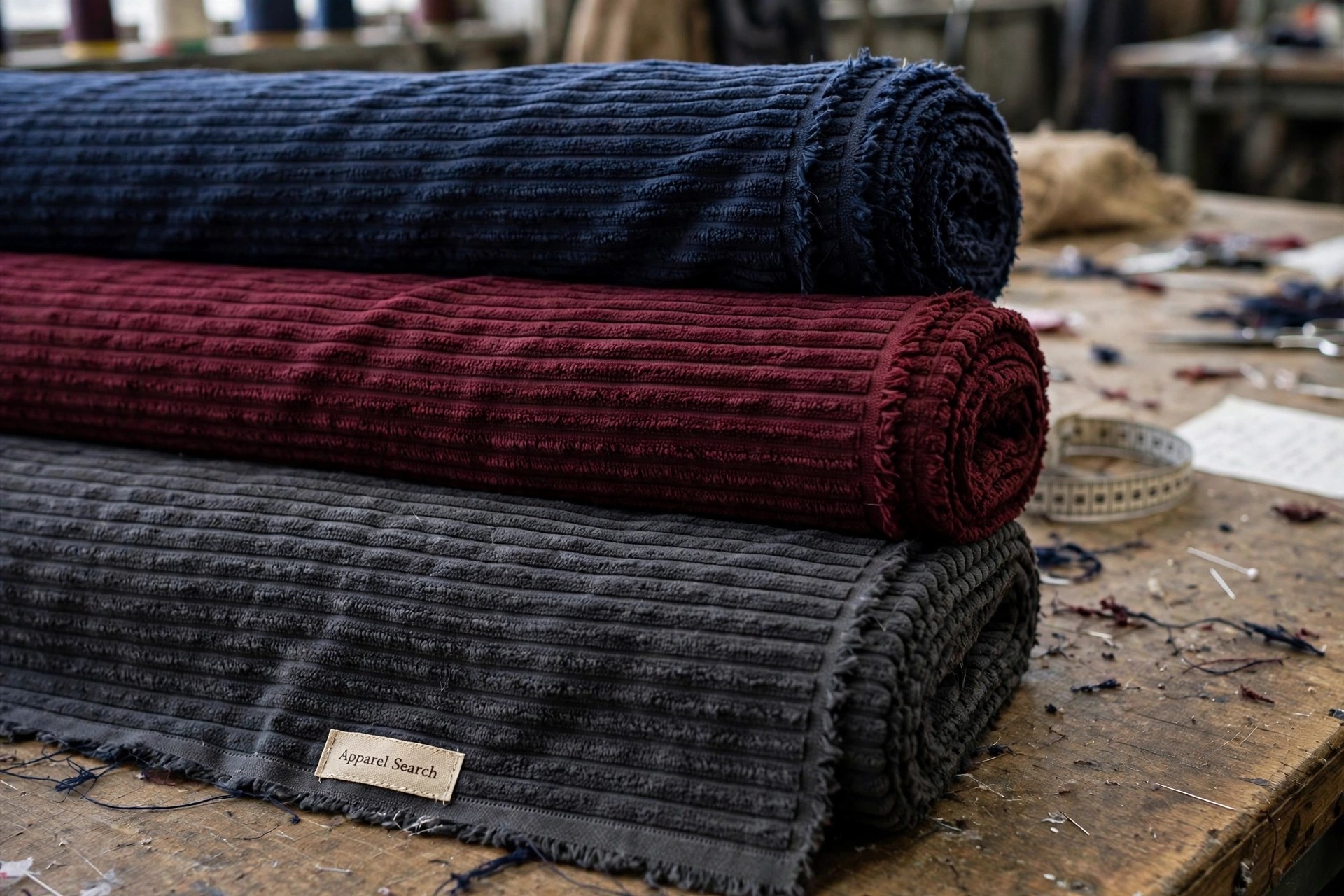
Ottoman is a ribbed fabric whose ribs run horizontally, across the width of the cloth, and are far bolder than the fine lines of a poplin or a faille. The classic construction is a plain weave in which a fine warp is completely covered by a much heavier weft, with several weft picks packed into each visible cord, so the surface becomes a series of soft, rounded ridges. Traditionally the warp was silk and the filling cotton or wool, giving a lustrous rib with body underneath; modern ottoman reverses and mixes fibres freely, and knitted ottoman, the form the original directory header names for this page, builds a similar corded effect on knitting machines for fashion and upholstery cloth with some give.
That rib is not decoration added afterwards; it is the structure itself, which is why ottoman keeps its texture through wear and cleaning in a way printed or embossed ribs cannot. The cloth is firm, holds a shape, and catches light differently on the top and side of each cord, so a single dye shade reads as two tones across a garment. Weight follows fibre and cord size: light silk ottoman serves dresses and ceremonial wear, medium cotton and blend ottoman serves suiting and uniforms, and heavy ottoman becomes upholstery, drapery and luggage cloth where the rib also hides abrasion.
Where Ottoman Fabric Is Used
Formal and ceremonial clothing is ottoman's historic home: academic and legal gowns, evening coats, structured dresses and the facings and trims where a ribbed silk catches candlelight and camera flash have used it for well over a century. The same body that serves ceremony serves tailoring, so ottoman appears in jackets, waistcoats, skirts and uniforms that must look crisp at a distance. At furniture weight it covers chairs and panels, and the knitted form turns up in fashion tops, dresses and soft furnishings where a corded surface with stretch is wanted. Buyers should note the rib direction before cutting: ottoman ribs are normally worn running horizontally around the body, and a pattern cut the other way changes both the look and the hang of the cloth.
The nine listings below are this directory's ottoman mills, each linked to its Fabric Mills by Name profile: Ahmed Fine Textile Mills Limited and Gulshan Weaving Mills of Pakistan, Changshu Sunwell Knitting Textile Co., Ltd., Shanghai Best Linen Cotton Textile Factory and Xiamen C and D Inc. of China, Jong Stit Knitting Co. Ltd. of Thailand, Lu Her Knitting Factory of Taiwan, Safer Textile Processing Corp. of the USA, and Shahtex (Leicester) Limited of the United Kingdom. The mix, knitting houses in East and Southeast Asia alongside weaving and processing mills in South Asia, the USA and the UK, fits a fabric made in both woven and knitted forms. None has been removed: no listing was verified dead, and this directory's standing rule is to keep a listing when in doubt. Thank you for using the Apparel Search Fabric Mill Directory.
Specifying and Caring for Ottoman
A useful ottoman specification names the fibre, the construction, woven or knitted, the rib size, fine or bold, the weight, and the finish, because two cloths both sold as ottoman can differ in every one of those. Handle a sample across the rib and along it: good ottoman ribs are even, fully covered, with no grin-through of the ground yarn at the cord tops, and the cloth should recover from folding without the ribs flattening permanently. In the workroom, ottoman sews like the firm fabric it is; mark the rib direction on every pattern piece, match ribs at visible seams where the design calls for it, and test pressing on a cutting first, because high heat and pressure can glaze silk and flatten the cord that gives the fabric its name.
Care follows the fibre, not the rib name: silk and wool ottoman is dry-clean territory, cotton and most blend ottoman washes gently and irons on the reverse under a cloth, and knitted ottoman should be dried flat or hung carefully so its own weight does not pull the ribs out of line. Store structured ottoman garments hung rather than folded, for the same reason mills ship the cloth rolled: a sharp fold across the ribs can leave a line that steaming only partly lifts.
Ottoman Fabric Mills Listed Here
Ahmed Fine Textile Mills Limited (Pakistan)
Listed in this directory. Follow the company name to its Fabric Mills by Name profile, which carries its full directory record.
Changshu Sunwell Knitting Textile Co., Ltd. (China)
Listed in this directory. Follow the company name to its Fabric Mills by Name profile, which carries its full directory record.
Gulshan Weaving Mills (Pakistan)
Listed in this directory. Follow the company name to its Fabric Mills by Name profile, which carries its full directory record.
Jong Stit Knitting Co. Ltd. (Thailand)
Listed in this directory. Follow the company name to its Fabric Mills by Name profile, which carries its full directory record.
Lu Her Knitting Factory (Taiwan)
Listed in this directory. Follow the company name to its Fabric Mills by Name profile, which carries its full directory record.
Safer Textile Processing Corp. (USA)
Listed in this directory. Follow the company name to its Fabric Mills by Name profile, which carries its full directory record.
Shahtex (Leicester) Limited (United Kingdom)
Listed in this directory. Follow the company name to its Fabric Mills by Name profile, which carries its full directory record.
Shanghai Best Linen Cotton Textile Factory (China)
Listed in this directory. Follow the company name to its Fabric Mills by Name profile, which carries its full directory record.
Xiamen C and D Inc. (China)
Listed in this directory. Follow the company name to its Fabric Mills by Name profile, which carries its full directory record.
Common Questions
What is ottoman fabric?
A ribbed fabric with wide, rounded horizontal cords across the cloth, made by covering a fine warp with a much heavier weft in plain weave, traditionally silk over cotton or wool. Knitted ottoman builds a similar corded effect with some stretch. The rib is the structure itself, not a print or finish.
What is ottoman fabric used for?
Formal and ceremonial gowns, evening coats, structured dresses, jackets, waistcoats and uniforms, and at heavier weights upholstery and drapery. Its firm body holds a shape and its ribs read as two tones in one dye shade as light moves across them.
Which mills does this directory list for ottoman fabric?
Nine mills, each linked to its Fabric Mills by Name profile: Ahmed Fine and Gulshan (Pakistan), Changshu Sunwell, Shanghai Best Linen Cotton and Xiamen C and D (China), Jong Stit (Thailand), Lu Her (Taiwan), Safer Textile Processing (USA) and Shahtex (United Kingdom).
More to Explore - The Full Fabric Directory A-Z
- Oxford Fabric Mills
- Percale Fabric
- Pique Fabric
- Poplin Fabric
- Polyester Fabric Mills
- Nylon Fabric Mills
- Fabric Mills - Fabric Section Hub
- Textile Machinery
- Embroidery Directory
- Printing Directory
- Ahmed Fine Textile Mills Limited
- Changshu Sunwell Knitting Textile Co., Ltd.
- Gulshan Weaving Mills
- Jong Stit Knitting Co. Ltd.
- Lu Her Knitting Factory
- Safer Textile Processing Corp.
- Shahtex (Leicester) Limited
- Shanghai Best Linen Cotton Textile Factory
- Xiamen C and D Inc.
- Clothing Industry Factories
- Yarn Factories
- Fabric Retail
- Fabric Wholesalers
- Fibers Directory
- Fabric Definitions
- Fashion Industry News
- Clothing Industry Employment
- Conversion Charts
- Antibacterial Fabric
- Bamboo
- Basalt
- Boucle
- Breathable
- Broadcloth
- Brocade
- Burlettes
- Canvas
- Carbon
- Chambray
- Chenille
- Chiffon
- Circular
- Corduroy
- Cotton
- Crepe
- Crochet
- Damask
- Denim
- Dobby
- Double Knit
- Drill
- Duck
- Dyed Fabric
- Embroidered
- Fiberglass
- Fil-a-Fils
- Filter Cloth
- Flame Retardant
- Fleece
- French Terry
- Gabardine
- Gauze
- Georgettes
- Ginghams
- Greige Fabric
- Herringbone
- Horse Hair
- Interlining
- Interlock
- Jacquard
- Jersey Fabric
- Lace
- Lacoste
- Linen
- Lining
- Long Fiber Reinforced Thermalplastics
- Metallic
- Mesh
- Muslin
- Narrow
- Net
- Non Woven Fabric
- Novelty
- Pile
- Pointelle
- Polar Fleece
- Printed
- Quilted
- Raschel
- Reflective
- Rib
- Sateen
- Satin
- Seersucker
- Silk Fabric
- Single Jersey
- Smart Fabrics
- Stretch
- Suede
- Taffeta
- Tassars
- Terry
- Thermal
- Tricot
- Tulle
- Tweed
- Twill
- Velcro
- Velour
- Velvet
- Viole
- Vynil
- Waffle
- Waterproof
- Wool
- Yarn Dyed
- Textiles
- Fabric
Looking for Fabric Mills and Suppliers?
Return to the Fabric Directory hub for the full fabric section, or browse the Fabric Manufacturers Directory page for the wider mill trade.