Single Jersey Fabric Factories
Single jersey is the T-shirt fabric of the world: one set of needles, one smooth face, and more yardage than any other cloth structure. Here is how it is knitted and who the directory lists for it.
Shop Jersey Fabric Now
Shop Jersey Fabric on Amazon Shop Jersey Fabric on eBayThese links open the Apparel Search shopping guides for Amazon and eBay, where the product links are kept in one place.
One Bed of Needles
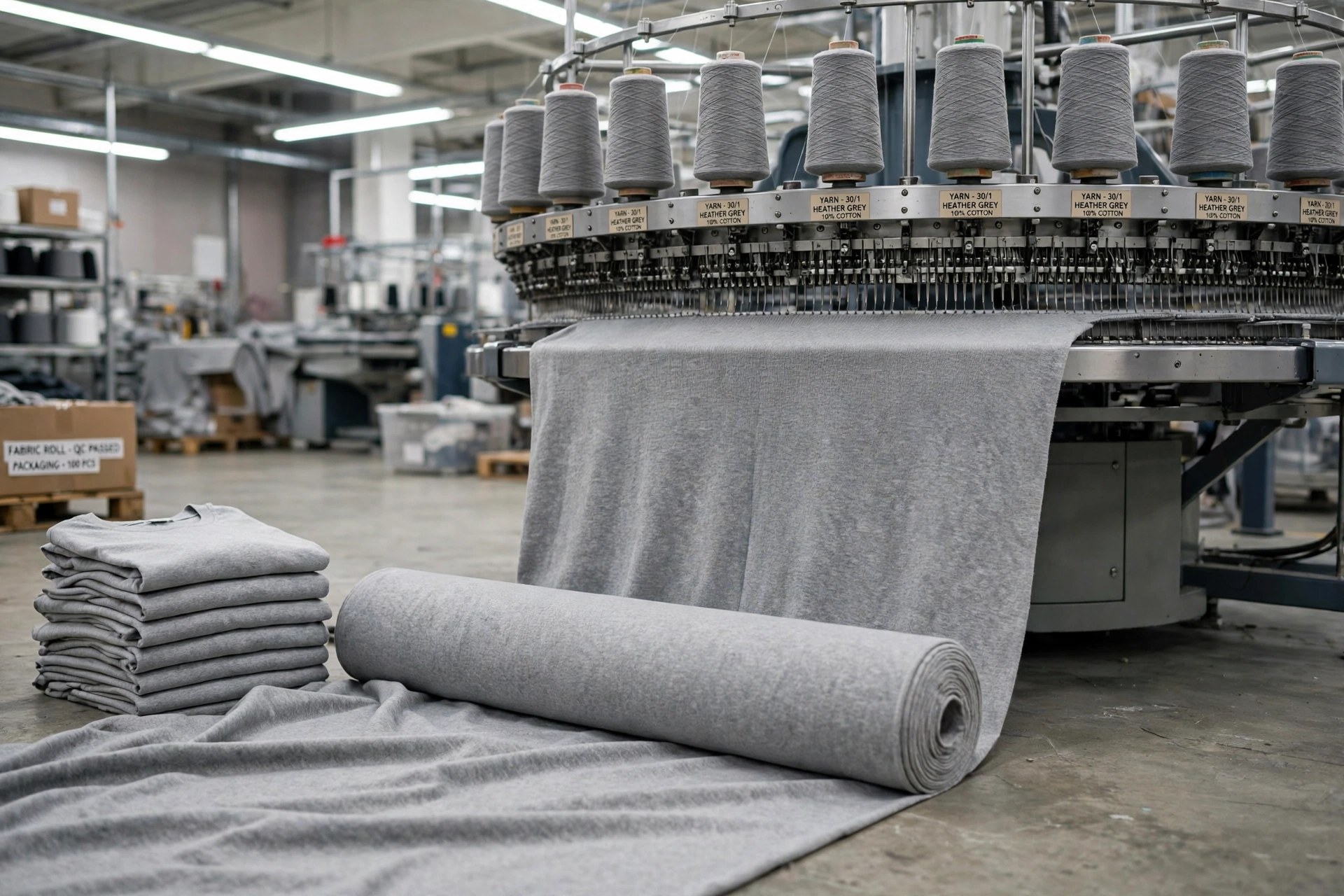
Single jersey is the simplest weft knit: a single set of latch needles on a circular (or flat) knitting machine loops one yarn system into a fabric with a smooth, flat face of V-shaped stitches and a back of arcs. That simplicity is its strength - it knits faster and cheaper than any double knit - and the source of its known habits: the edges curl toward the face, the cloth can skew or spiral after washing if the yarn twist is lively, and a cut ladder runs easily because there is no second needle bed locking the loops. Every T-shirt, most underwear and a large share of casual dresses and tops start as single jersey.
Modern circular knitting machines run dozens of feeders at high speed and knit jersey in tube form or open width, in diameters matched to garment body sizes so side seams can be reduced or eliminated. Mills control quality through stitch length and yarn tension: the loop length sets the fabric's weight, stretch and shrinkage, and small deviations show up as barré - horizontal streaks that only appear after dyeing, which is why good jersey mills are as much dyehouse managers as knitters.
Weights, Fibers and Blends
Single jersey is sold by weight, roughly 120-160 gsm for light summer tees and underwear, 160-200 gsm for standard T-shirts and dresses, and 200 gsm upward for polos-adjacent tops and winter layers. Cotton dominates, but the structure takes almost any yarn: polyester and recycled-polyester jersey for sportswear, viscose and modal jersey for fluid dresses, elastane blends (typically 3-8 percent) for fitted garments, and slub, marl and space-dyed yarns for fashion effects. Open-end spun yarns make economical jersey; ring-spun and combed yarns make the smooth, premium cloth that prints and embroiders cleanly.
Finishing decides how the fabric behaves in the garment: compacting controls shrinkage, bio-polishing and singeing clear the surface fuzz that causes pilling, and moisture-management or antimicrobial finishes adapt plain jersey to activewear. Buyers should test-wash greige-to-finished samples, because jersey's width and length shrinkage - often 5 percent or more if under-compacted - is the most common cause of garment size complaints.
The Factories on This Page
The original directory listed three single jersey factories, kept below: Alok Textile Industries of India, part of one of India's largest integrated textile operations; Changshu Huarui Knitting Textile Co., Ltd of China, a knitting specialist from the Changshu garment cluster; and Dokuboy of Turkey, whose full company name - Dokumacilar Kumaş Boya Tekstil - reflects its combined weaving, knitting and dyeing operation. Knit production clusters around garment-export regions, and these three listings sit in three of the biggest: India, China and Turkey.
Jersey's weaknesses are worth planning around. The same open loop structure that makes it soft makes it prone to pilling where surfaces rub, to snagging on rough hardware, and to seam grinning on tight garments when the stitch density is low. Spirality - the twisting of side seams after washing - is controlled by choosing balanced yarns, plating with a small percentage of elastane, or accepting a resin or heat-set finish on synthetics. None of these faults is a reason to avoid single jersey; they are specifications to write into the order. A purchase order that states loop length or gsm, shrinkage tolerance after three washes, spirality tolerance in percent, and pilling grade after a standard test will get consistent cloth from any of the factory types listed here.
Because jersey is sold worldwide in enormous volume, its prices track the cotton and polyester yarn markets closely, and the factories listed here compete on knitting efficiency, dyehouse quality and delivery speed rather than on the structure itself, which every serious knit mill in the world can produce.
Fabric Mills and Factories in This Directory
The mills below are the listings the original Apparel Search directory carried on this page. Each name opens that company's profile in the Fabric Mills by Name directory.
Alok Textile Industries
A fabric mill based in India, profiled in the Apparel Search Fabric Mills by Name directory and listed among the mills supplying this fabric type.
Changshu Huarui Knitting Textile Co., Ltd
A fabric mill based in China, profiled in the Apparel Search Fabric Mills by Name directory and listed among the mills supplying this fabric type.
Dokuboy
A fabric mill based in Turkey, profiled in the Apparel Search Fabric Mills by Name directory and listed among the mills supplying this fabric type.
Common Questions
What is single jersey fabric used for?
T-shirts above all, plus underwear, casual tops and dresses, sleepwear and sportswear - it is the most widely produced apparel fabric structure in the world.
Why does single jersey curl at the edges?
The single needle bed leaves unbalanced loop tension in the cloth, so cut edges roll toward the face. Finishing and garment construction (hems, bindings) manage it.
What weight of jersey is right for T-shirts?
Around 160-180 gsm is the standard for a quality everyday tee; lighter 120-150 gsm cloth suits summer and layering tees, and 200 gsm plus gives a heavyweight, structured feel.
More to Explore
- Alok Textile Industries
- Antibacterial Fabric
- Bamboo
- Basalt
- Boucle
- Breathable
- Broadcloth
- Brocade
- Burlettes
- Canvas
- Carbon
- Chambray
- Changshu Huarui Knitting Textile Co., Ltd
- Chenille
- Chiffon
- Circular
- Clothing Industry Employment
- Clothing Industry Factories
- Conversion Charts
- Corduroy
- Cotton
- Crepe
- Crochet
- Damask
- Denim
- Dobby
- Dokuboy
- Double Knit
- Drill
- Duck
- Dyed Fabric
- Embroidered
- Embroidery Directory
- Fabric
- Fabric Definitions
- Fabric Directory
- Fabric Retail
- Fabric Wholesalers
- Fashion Industry News
- Fiberglass
- Fibers Directory
- Fil-a-Fils
- Filter Cloth
- Flame Retardant
- Fleece
- French Terry
- Gabardine
- Gauze
- Georgettes
- Ginghams
- Greige Fabric
- Herringbone
- Horse Hair
- Interlining
- Interlock
- Jacquard
- Jersey Fabric
- Lace
- Lacoste
- Linen
- Lining
- Long Fiber Reinforced Thermalplastics
- Mesh
- Metallic
- Muslin
- Narrow
- Net
- Non Woven Fabric
- Novelty
- Nylon
- Ottoman
- Oxford
- Percale
- Pile
- Pique
- Pointelle
- Polar Fleece
- Polyester
- Poplin
- Printed
- Printing Directory
- Quilted
- Raschel
- Reflective
- Rib
- Sateen
- Satin
- Seersucker
- Silk Fabric
- Smart Fabrics
- Stretch
- Suede
- Taffeta
- Tassars
- Terry
- Textile Machinery
- Textiles
- Thermal
- Tricot
- Tulle
- Tweed
- Twill
- Velcro
- Velour
- Velvet
- Viole
- Vynil
- Waffle
- Waterproof
- Wool
- Yarn Dyed
- Yarn Factories
Looking for Fabric Mills and Suppliers?
The wider directory behind these pages is the Fabric section hub, which opens the whole Apparel Search fabric mill directory: fabric types from A to Z, the Fabric Mills by Name profiles, and the dyeing, printing and finishing directories that support them.