Tulle Fabric Directory
Tulle is the weightless hexagonal net of veils, tutus and gown overlays - named for a French city and born on lace machines. This page explains its qualities and presents the directory listings.
Shop Tulle Fabric Now
Shop Tulle Fabric on Amazon Shop Tulle Fabric on eBayThese links open the Apparel Search shopping guides for Amazon and eBay, where the product links are kept in one place.
A Net From the Lace Machines
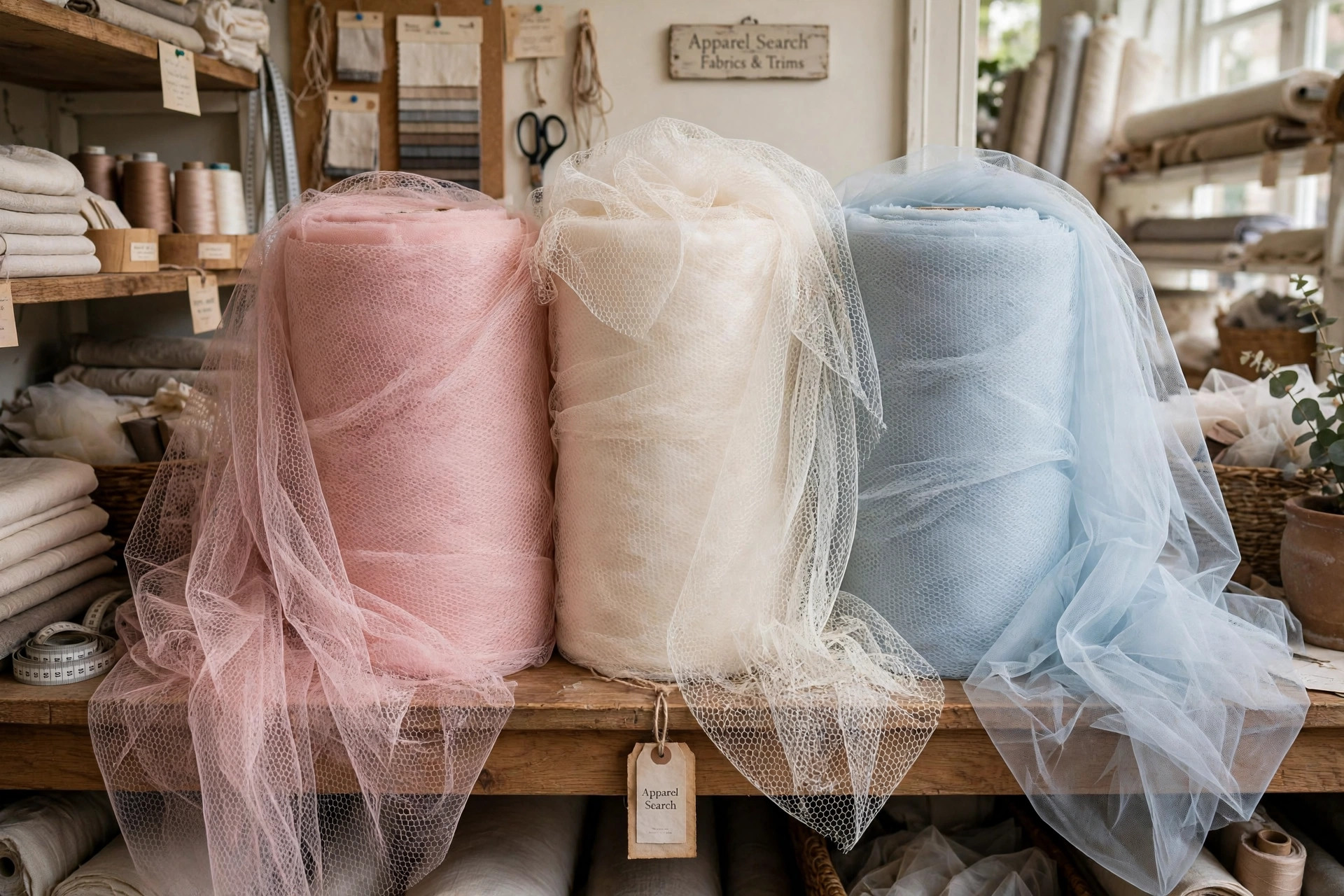
Tulle is a fine, light net with a hexagonal mesh, made by twisting warp yarns around weft yarns so the intersections lock and cannot slip. It descends from bobbinet, the machine-made net first produced on adapted lace machinery in Nottingham in the early nineteenth century, and it takes its name from Tulle, the French city associated with net and lace making. True bobbinet-structure tulle is still the finest and softest; much modern tulle is a Raschel-knitted net that imitates the hexagon at lower cost, and the two are sold side by side, which is why a buyer should ask how a quoted tulle is made.
This directory lists two tulle suppliers - Edley Associates of the USA and Shamala Textiles - each with its profile below. The site glossary's tulle entry is linked on this page.
Silk, Nylon and the Hand of the Net
Silk tulle is the couture material: feather-light, soft, and draping in the floating layers of bridal veils and ballet costumes, at a price that reserves it for special work. Nylon tulle is the trade standard - crisp or soft depending on finish, strong, inexpensive and available in every color; polyester net serves dress and craft markets; and the stiffened 'bridal illusion' quality, a very fine nylon net, is what most veils are actually cut from. The hand of tulle is a specification in itself: soft tulle drapes and is gathered into skirts and overlays, stiff tulle (sometimes called crinoline net's lighter cousin) holds shapes in petticoats, tutu skirts and millinery.
Hexagon size and yarn fineness set the grades, from coarse veiling and tutu net down to illusion so fine it disappears against skin. Glitter, flocked, dotted and sequinned tulles are finished versions of the same nets for the occasion-wear trade.
Where Tulle Is Used
Bridal is tulle's kingdom: veils, gown skirts and overlays, bridesmaid dresses and flower-girl frocks. Ballet owns the second kingdom - the classical tutu is layers of stiff tulle, and rehearsal skirts use the soft qualities. Around those two sit evening overlays that let a plain satin read as couture, gift wrapping and favor bags, party and wedding decoration, millinery veiling, and the craft and floral trades, which consume colored tulle by the bolt.
Working with tulle is mostly about managing volume and edges: it does not fray, so hems are simply cut, but it stretches on the bias of the hexagon and must be handled flat and unhurried; layers are gathered onto waistbands and bodices with long stitches, and pressing is done, if at all, with a cool iron and a press cloth, because nylon net glazes and shrinks under heat. Its static and its habit of clinging to itself in the cutting room are the two complaints every veil maker learns to plan around.
Volume is tulle's whole purpose in dressmaking: a single layer is nearly invisible, ten layers are a cloud, and fifty are a tutu, so designers order by the meter and think in layers rather than in pattern pieces. That layering also builds color - pale nets stacked shift the shade of the fabric beneath them - which is why a gown's overlay is always sampled over its actual satin, never judged alone on the roll.
Sourcing Notes
Specify tulle by fiber, construction (bobbinet-type or Raschel net), mesh fineness, stiffness and finished width - bridal widths run wide, craft bolts narrow - and order a handled sample, because tulle cannot be judged from a photograph: two nets that look identical differ completely in drape. For veil programs, confirm the shade against skin and against the gown fabric in daylight; 'ivory' in net is not one color across suppliers, and the fine illusion qualities shift the apparent shade of everything under them.
Fabric Mills and Factories in This Directory
The mills below are listed in this directory. Each name opens the company's profile in the Fabric Mills by Name directory.
Edley Associates, Inc
A fabric mill based in USA, profiled in the Apparel Search Fabric Mills by Name directory and listed among the mills supplying this fabric type.
Shamala Textiles
Profiled in the Apparel Search Fabric Mills by Name directory and listed among the mills supplying this fabric type.
Common Questions
What is tulle fabric used for?
Bridal veils and gown overlays, ballet tutus, evening dress overlays, millinery veiling, gift wrapping and decoration - anywhere a weightless, transparent net is needed.
What is the difference between silk and nylon tulle?
Silk tulle is softer, lighter and far more expensive, draping fluidly for couture veils and tutus. Nylon tulle is the strong, inexpensive trade standard, available from soft drape to stiff, shape-holding qualities.
Does tulle fray?
No - the locked hexagonal mesh does not unravel, so tulle edges are left cut rather than hemmed. It can stretch and distort if handled roughly while being sewn.
More to Explore
- Antibacterial Fabric
- Bamboo
- Basalt
- Boucle
- Breathable
- Broadcloth
- Brocade
- Burlettes
- Canvas
- Carbon
- Chambray
- Chenille
- Chiffon
- Circular
- Clothing Industry Employment
- Clothing Industry Factories
- Conversion Charts
- Corduroy
- Cotton
- Crepe
- Crochet
- Damask
- Denim
- Dobby
- Double Knit
- Drill
- Duck
- Dyed Fabric
- Edley Associates, Inc
- Embroidered
- Embroidery Directory
- Fabric
- Fabric Definitions
- Fabric Directory
- Fabric Retail
- Fabric Wholesalers
- Fashion Industry News
- Fiberglass
- Fibers Directory
- Fil-a-Fils
- Filter Cloth
- Flame Retardant
- Fleece
- French Terry
- Gabardine
- Gauze
- Georgettes
- Ginghams
- Greige Fabric
- Herringbone
- Horse Hair
- Interlining
- Interlock
- Jacquard
- Jersey Fabric
- Lace
- Lacoste
- Linen
- Lining
- Long Fiber Reinforced Thermalplastics
- Mesh
- Metallic
- Muslin
- Narrow
- Net
- Non Woven Fabric
- Novelty
- Nylon
- Ottoman
- Oxford
- Percale
- Pile
- Pique
- Pointelle
- Polar Fleece
- Polyester
- Poplin
- Printed
- Printing Directory
- Quilted
- Raschel
- Reflective
- Rib
- Sateen
- Satin
- Seersucker
- Shamala Textiles
- Silk Fabric
- Single Jersey
- Smart Fabrics
- Stretch
- Suede
- Taffeta
- Tassars
- Terry
- Textile Machinery
- Textiles
- Thermal
- Tricot
- Tulle
- Tweed
- Twill
- Velcro
- Velour
- Velvet
- Viole
- Vynil
- Waffle
- Waterproof
- Wool
- Yarn Dyed
- Yarn Factories
Looking for Fabric Mills and Suppliers?
The wider directory behind these pages is the Fabric section hub, which opens the whole Apparel Search fabric mill directory: fabric types from A to Z, the Fabric Mills by Name profiles, and the dyeing, printing and finishing directories that support them.