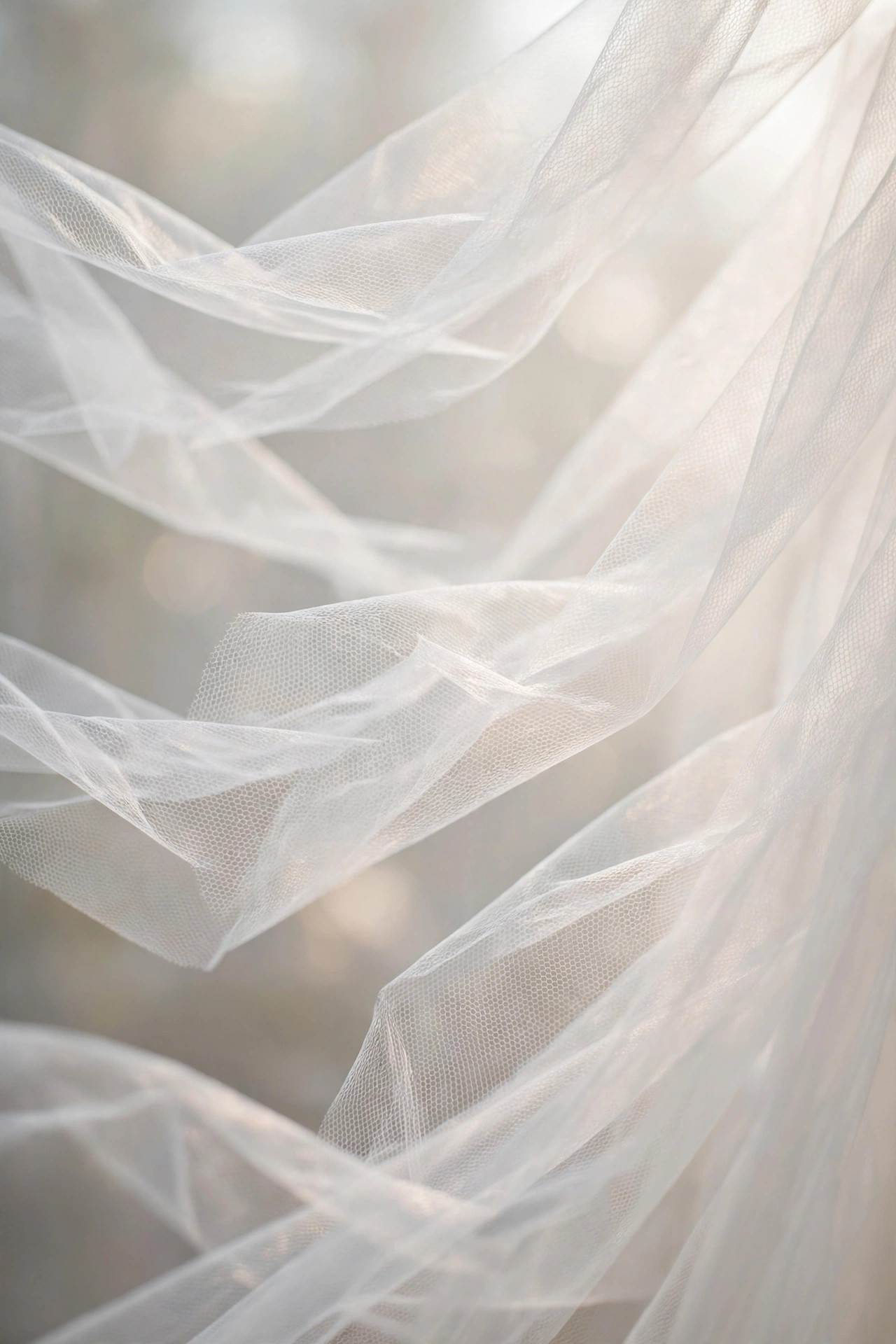
Tulle is a fine, lightweight net fabric with a hexagonal mesh, traditionally silk but today usually nylon or polyester. Stiffer than most nets yet softer than crinoline, tulle gives volume without weight — the engineering behind bridal veils, ballet tutus, petticoats, and evening gowns with architectural skirts.
How Tulle Works
Tulle's hexagonal holes are formed by twisting warp yarns around the weft, locking each opening in place. The mesh can be woven soft and drapy for veils or stiff and springy for underskirts.
Stiffness is graded by hand: silk illusion tulle floats, nylon bridal tulle holds a soft shape, and stiff dress net stands out on its own. The same fiber in different finishes behaves like different fabrics.
Tulle in Fashion
Tulle is named for Tulle, France, where bobbinet machines first produced it in the 1800s. Ballet adopted it for the Romantic tutu, and brides have worn it ever since.
Couture uses tulle as structure — layered petticoats, veiled overlays, 1950s prom silhouettes — and as decoration: gathered trims, bows, and illusion necklines that disappear against the skin.
Working With Tulle Today
Tulle barely frays, so hems are optional — a rolled edge or simple cut is often enough. Cut with a rotary cutter on a single layer; pins disappear into the mesh, so use clips or pattern weights.
Gather with two rows of long stitches, and layer generously: one layer looks sparse, while six to eight create the classic cloud. Store rolled to avoid permanent creases.
FAQs
- What is the difference between tulle and netting?
- Tulle is the fine, soft hexagonal mesh used in bridal and ballet; craft netting is coarser and stiffer. They overlap, but tulle is the finer, dressier cousin.
- Does tulle fray?
- Barely — the twisted mesh resists unraveling, which is why veils and tutus are often left with cut edges.
- How do you soften stiff tulle?
- Wash it gently or let body heat and wear relax it. For a veil, softness comes with handling; for structure, keep the stiff finish.
- Silk vs. nylon tulle?
- Silk tulle (illusion) is the softest and most expensive, with an unmatched drape; nylon is springier, cheaper, and holds volume better.
Glossary: see the full fashion glossary for more apparel industry terms.