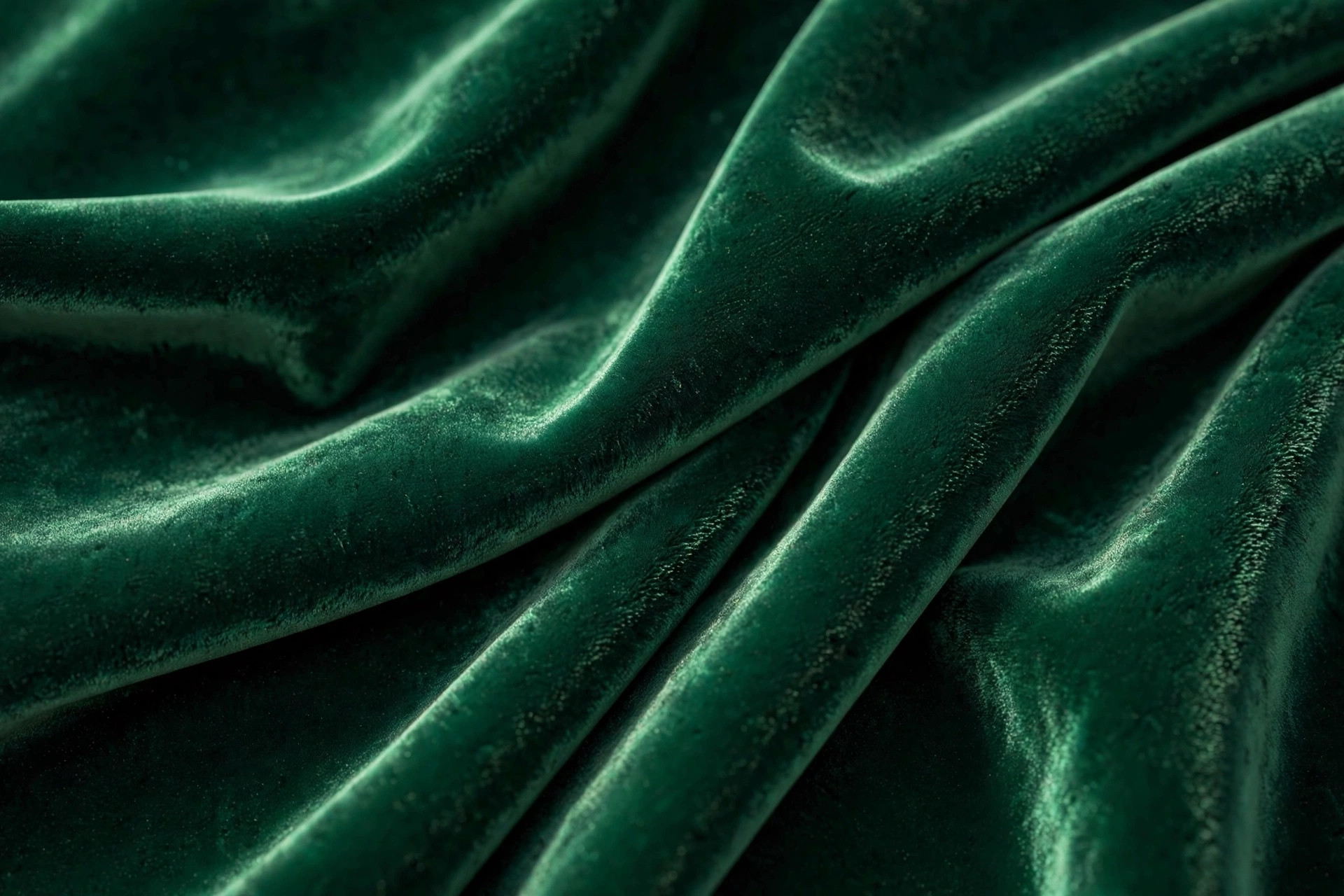
Velvet is a woven fabric with a dense, upright pile that gives it a soft hand and a rich play of light and shadow. Traditionally silk, today also cotton, rayon, and polyester, velvet is cut from a double cloth woven face-to-face, then sliced apart. It is the classic cloth of evening wear, upholstery, and ceremony.
How Velvet Is Made
Velvet starts as two layers of cloth woven simultaneously, joined by extra warp yarns that stand between them. A blade slices those connecting yarns, producing two separate pieces of piled fabric. The upright fibers are then brushed and sheared to an even height.
The pile can be left uniform for classic velvet, pressed flat in patterns for panne, or burned away with chemicals for devoré (burnout) velvet. Uncut loops make terry-like textures instead.
Velvet Through History
Pile weaves date back thousands of years, but velvet as we know it flourished in Renaissance Italy, where silk velvet signaled wealth and power. For centuries it dressed royalty, clergy, and the stage.
The 20th century democratized it: cotton velveteen for everyday luxury, synthetic velvets for the masses, and stretch velvet for 1970s disco and 1990s slip dresses. Velvet never really leaves fashion — it just waits for its next entrance.
Working With Velvet Today
Nap direction is everything: cut all pieces the same way or the garment will look two-toned. Sew with a walking foot, pin within seam allowances, and never press directly — steam from the wrong side or use a needle board.
Choose the fiber for the job: silk velvet for heirloom pieces, cotton velvet for structure, stretch velvet for fitted garments. Store velvet rolled, never folded, to avoid permanent creases in the pile.
FAQs
- What is the difference between velvet and velveteen?
- Velvet has a longer, softer pile and is traditionally silk; velveteen is cotton with a shorter, denser pile and a firmer hand. Velveteen is sturdier and easier to sew.
- Does velvet stretch?
- Classic woven velvet does not stretch, but stretch velvet — knit with spandex — does. Always check which one you are buying before cutting.
- How do you remove crush marks from velvet?
- Hold a steam iron above the fabric (never touching) and brush the pile upright with a soft clothes brush while the steam relaxes it.
- Can you machine wash velvet?
- Cotton and synthetic velvets usually can, on gentle. Silk velvet should be dry-cleaned — water can watermark the pile permanently.
Glossary: see the full fashion glossary for more apparel industry terms.