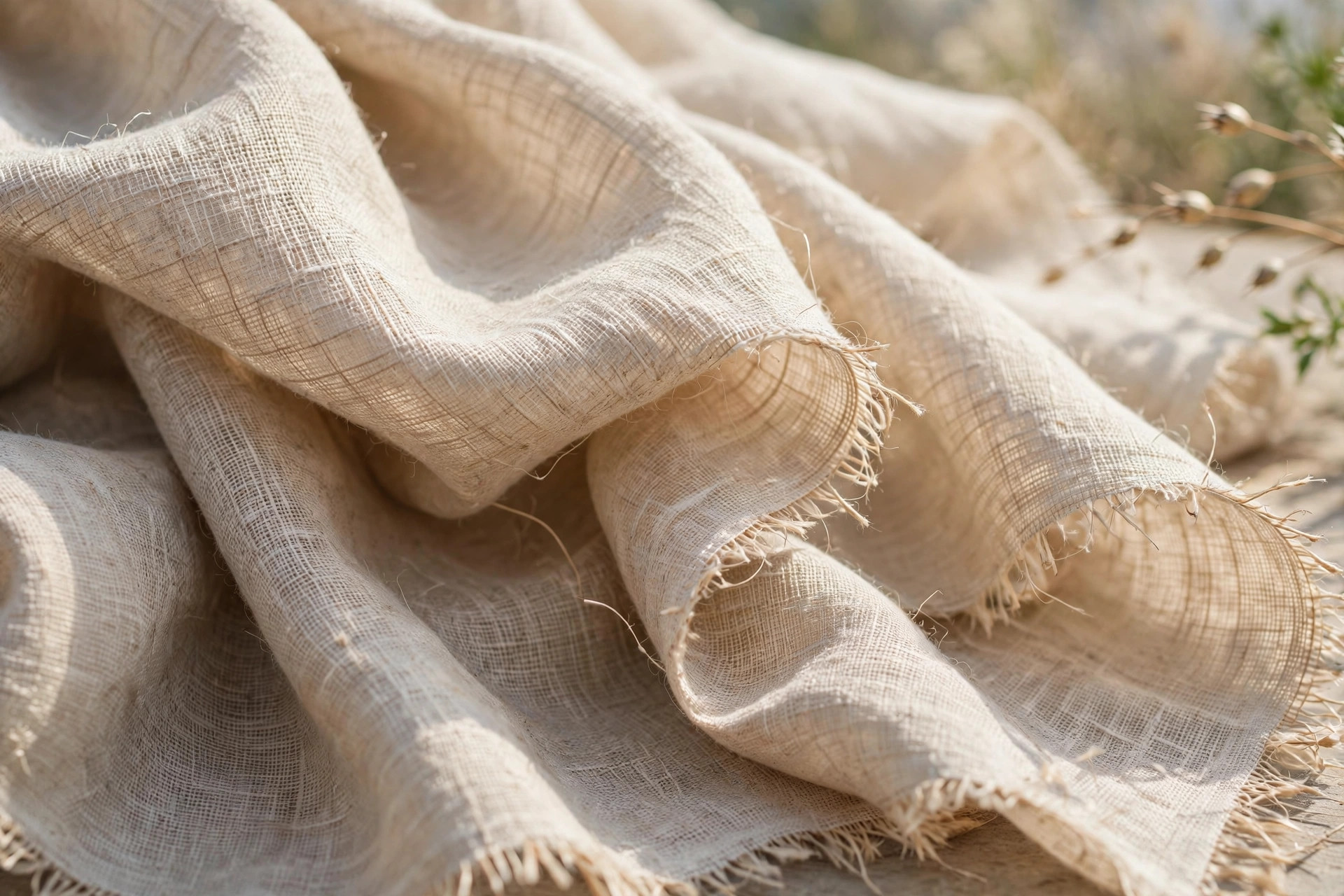
Linen is a natural fabric woven from flax, a bast fiber harvested from the stems of the flax plant. Stronger than cotton when wet, highly breathable, and quick to absorb and release moisture, linen is the classic hot-weather cloth — recognizable by its crisp hand, visible slubs, and famous wrinkles.
From Flax to Fabric
Flax stalks are retted — soaked or dew-softened — so the fibers separate from the woody core, then broken, scutched, and heckled into spinnable line fiber. Because flax fibers are long and straight, linen yarns have fewer joins and a characteristic subtle unevenness: the slubs.
Woven linen is naturally lustrous and cool to the touch. The fibers barely stretch, which is why linen holds a crease — and why it wrinkles the moment you sit down.
Linen Through History
Linen is among humanity's oldest textiles: ancient Egyptians wrapped mummies in it and wore it as a sign of purity. Irish linen became a byword for quality in the 18th and 19th centuries.
Today linen means summer — breezy shirts, relaxed tailoring, and beach dressing. It has also become a sustainability favorite, since flax needs little irrigation or pesticide.
Working With Linen Today
Prewash linen before cutting; it can shrink on the first wash. The wrinkles are part of the look — pressing them all out fights the fiber's nature — but a hot steam iron tames them when you want polish.
Linen frays, so finish seams, and expect softening with every wash: linen gets better, not worse, with age.
FAQs
- Why does linen wrinkle so much?
- Flax fibers have almost no elasticity, so once bent they stay bent. The wrinkles are inherent — many designers consider them linen's signature rather than a flaw.
- Is linen cooler than cotton?
- Yes. Linen wicks moisture and dries quickly, and its open weave lets air through, which is why it dominates hot-weather wardrobes.
- Is linen sustainable?
- Generally yes: flax grows with modest water and few chemicals, and nearly the whole plant is used. Look for European Flax certification for verified sourcing.
- How do you soften stiff linen?
- Wash and wear it. Each cycle relaxes the fibers. A cup of white vinegar in the rinse can help, and tumbling on low (briefly) speeds the process.
Glossary: see the full fashion glossary for more apparel industry terms.