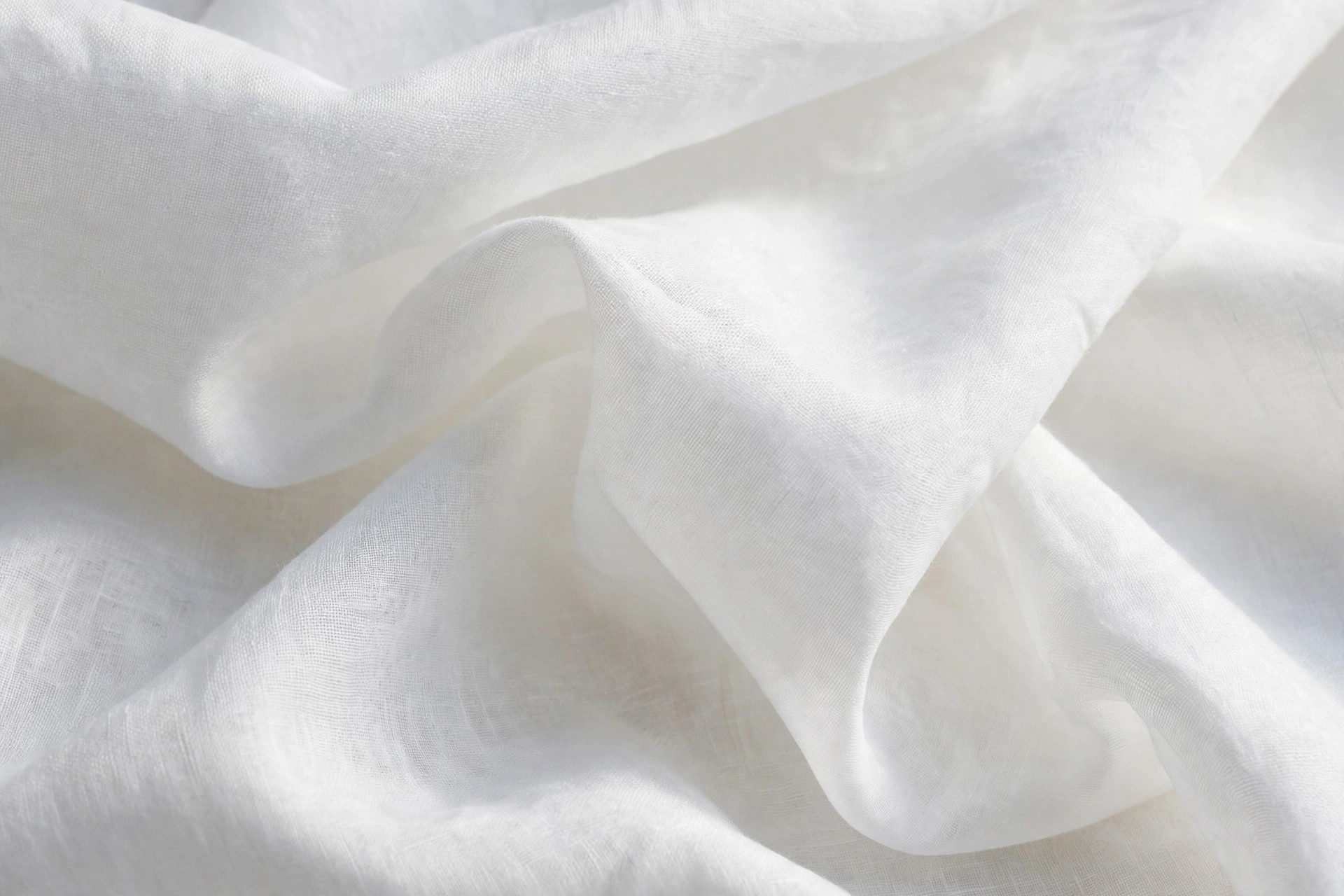
Batiste is a fine, soft, lightweight plain-weave fabric — traditionally linen, today usually cotton or a cotton blend — with a smooth hand and a whisper of sheerness. Legend names it for Jean Baptiste, a 13th-century weaver of Cambrai, France, whose town also gave the textile world cambric.
What Makes Batiste
Batiste is woven from very fine, high-quality combed yarns in a balanced plain weave, then finished soft — the opposite treatment from its crisp cousin organdy. The result is a cloth that feels like a breath: smooth, light, and gently translucent without being fragile.
Linen batiste is the historic form; cotton batiste — sometimes called Swiss batiste at its finest — dominates today, with polyester blends adding wrinkle resistance. It is the soft sheer, where organdy is the crisp one and voile sits somewhere between.
Batiste Through History
Cambrai’s fine linens were prized across medieval Europe, and batiste became the fabric of intimate luxuries: handkerchiefs fine enough to pull through a ring, 18th-century undergarments, and the baby clothes — christening gowns, bonnets — that marked family milestones.
Heirloom sewers adopted batiste for French hand sewing: delicate tucks, entredeux, and lace insertions that demand a fine, stable ground. The peasant blouses of the 1970s gave batiste a fashion moment, and quilters still prize its softness for fine piecing.
Batiste Today
Batiste remains the choice for christening gowns, fine lingerie, summer blouses, and heirloom projects, and it makes a beautiful lining or underlining for sheer fashion fabrics. Its softness suits anything worn close to the skin.
Sew it with the respect due a fine fabric: prewash to remove sizing, staystitch curves immediately, use fine needles, and press gently. It launders easily and softens further with wear — a fabric that gets better with age.
FAQs
- What is the difference between batiste and cambric?
- They are near twins from the same Cambrai tradition — both fine plain weaves. Cambric is often woven slightly denser and finished a touch crisper; batiste is softer. The names are sometimes used interchangeably.
- What is the difference between batiste and organdy?
- Batiste is soft and fluid; organdy is the same fine cotton idea finished crisp and stiff. Choose batiste for drape, organdy for structure.
- Is batiste sheer?
- Slightly — it is translucent rather than transparent, and is often lined, layered, or used where a hint of sheerness is charming.
- Does batiste wrinkle?
- Cotton batiste wrinkles like other fine cottons; blends with polyester resist creasing better. A warm iron restores smoothness.
Glossary: see the full fashion glossary for more apparel industry terms.