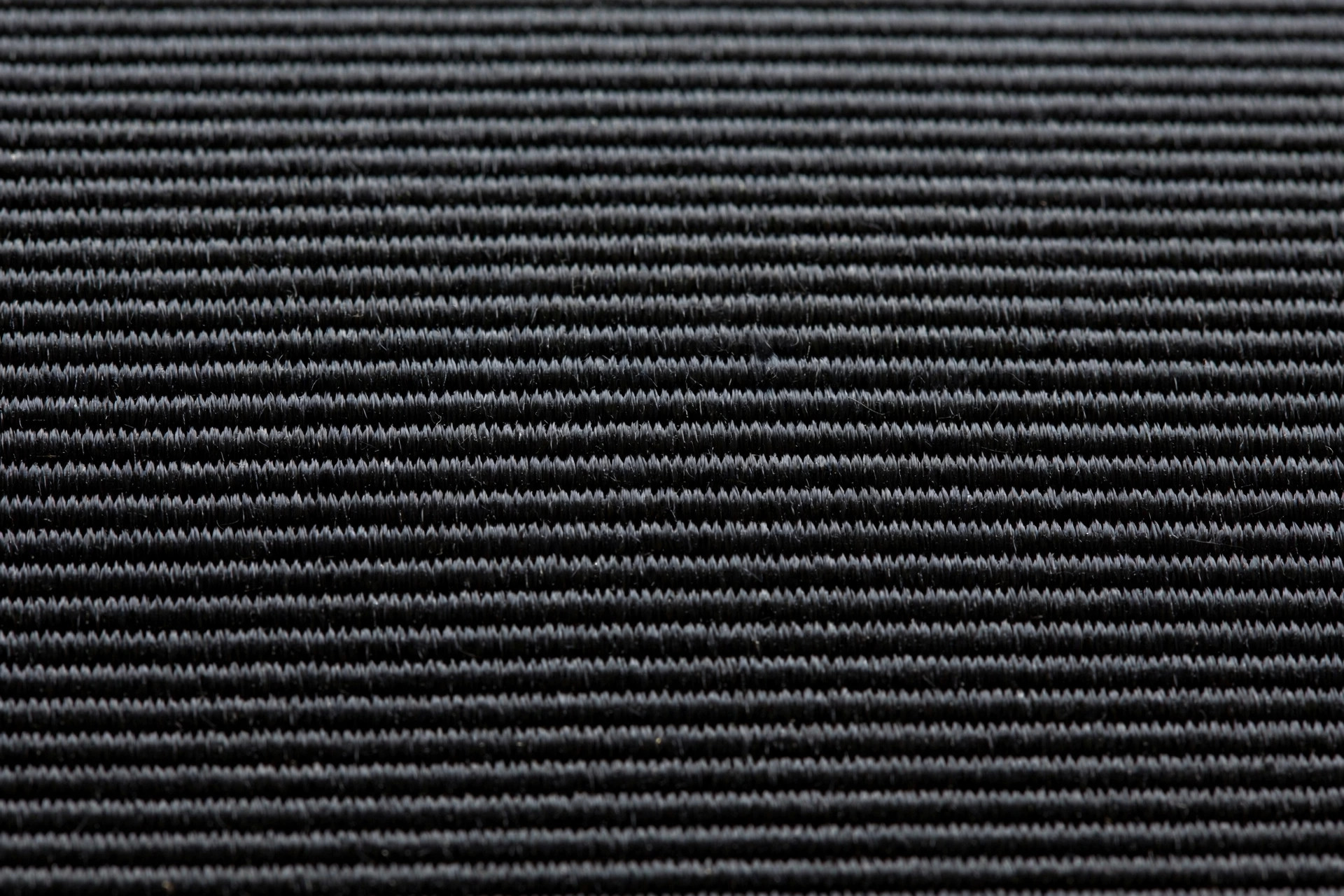
Grosgrain (pronounced “grow-grain”) is a sturdy fabric with prominent transverse ribs, woven so heavy weft yarns form distinct crosswise cords. From the French gros grain — “large grain” — it is most familiar as ribbon: the edged ribbons of hat bands, waistbands, watch straps, medals, and gift wrap.
How the Rib Is Made
Grosgrain is a rib weave — sometimes called a repp weave. Many fine warp yarns are packed tightly while a heavier weft yarn beats across them, and the weft’s bulk pushes up into rounded ribs running selvedge to selvedge. The ribs are the fabric’s structure: they make grosgrain stiff across its width and nearly non-stretch along it.
As ribbon, it is woven narrow with finished woven edges that resist unraveling. Silk, polyester, cotton, nylon, and rayon versions all exist; polyester dominates today for its durability and crisp rib definition. The same weave, cut wide, serves as a suiting-weight fabric for structured skirts and vests.
Grosgrain Through History
Ribbed silk ribbons trimmed European dress from the 1600s onward — hat bands, sashes, and the rosettes of ceremony. Milliners built entire trades on grosgrain’s ability to hold a crisp bow, and bookbinders used it for headbands on fine volumes.
The 20th century put grosgrain to work: trouser waistband facings that grip a shirt and stop rolling, military and school ribbons, watch straps, and the famous striped grosgrain belt. A grosgrain skirt — stiff, ribbed, swinging — was a preppy staple of the 1950s and 60s.
Grosgrain Today
Grosgrain ribbon remains the trimmer’s standby: bows, hat bands, lanyards, pet collars, key fobs, and packaging. In tailoring, grosgrain waistband facing is still the professional finish inside quality trousers, and grosgrain watch straps are a menswear classic.
Working with it is forgiving — the woven edges mean long lengths do not fray — but cut ends do. Heat-seal the ends of synthetic grosgrain with a quick pass of a flame or use a fray-check liquid on natural fibers. It sews cleanly as an applied trim and makes excellent seam binding where a crisp edge is wanted.
FAQs
- How do you pronounce grosgrain?
- “Grow-grain.” The name is French, from gros grain, meaning large grain — a reference to the prominent ribs.
- What is the difference between grosgrain and satin ribbon?
- Grosgrain is matte with distinct transverse ribs and a stiff hand; satin ribbon is smooth, lustrous, and drapes softly. Grosgrain holds a bow’s shape, satin flows.
- Why is grosgrain used inside waistbands?
- Its stiff, ribbed structure grips the shirt, prevents the waistband from rolling, and adds durability exactly where trousers take stress.
- Does grosgrain fray?
- The woven edges of ribbon do not fray, but cut ends do. Seal synthetic ends with heat or apply fray-check to natural fibers.
Glossary: see the full fashion glossary for more apparel industry terms.