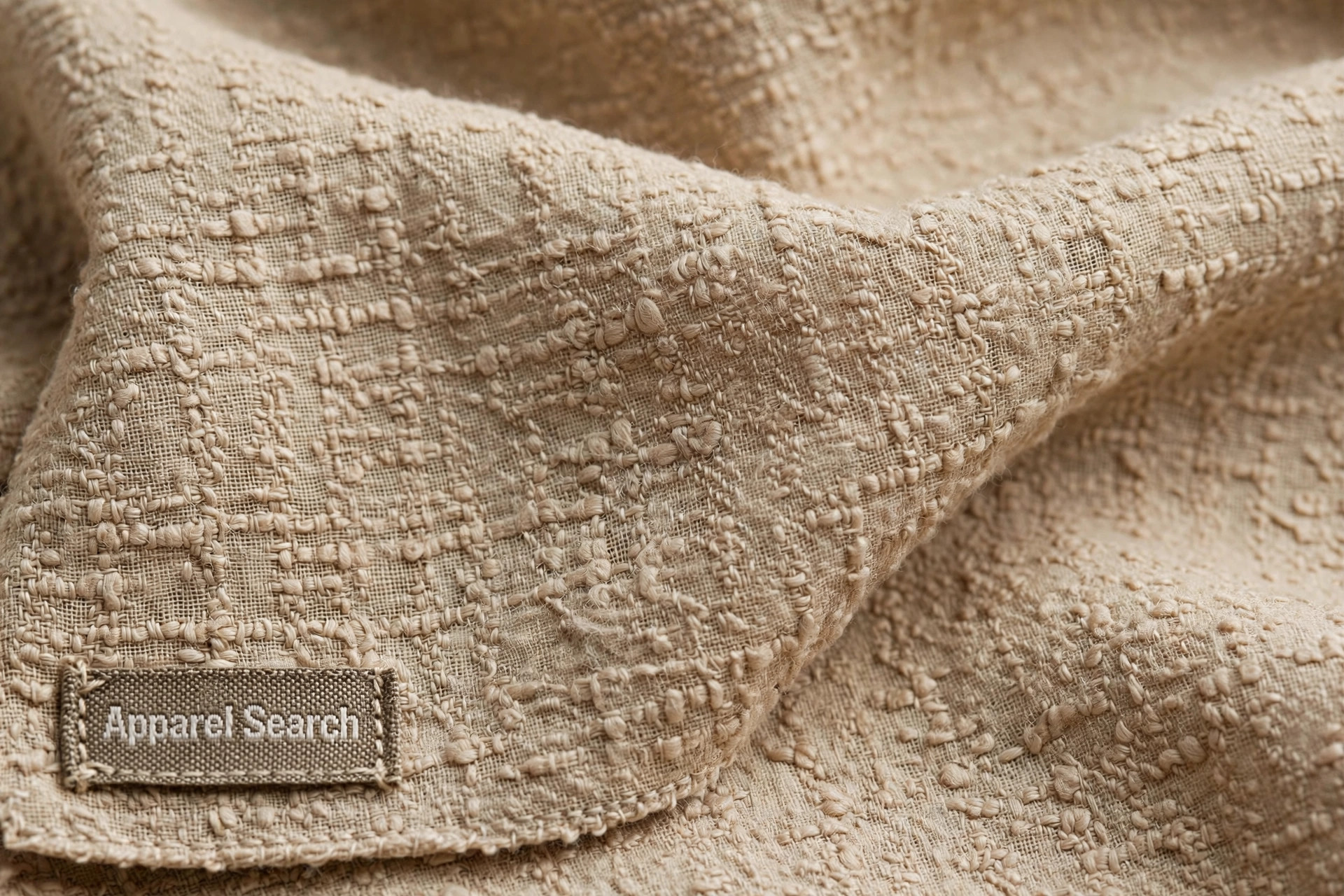
Pongee is a plain-weave fabric with a characteristic slubbed, nubby texture — fine in one direction, unevenly thick in the other. Its name comes from a Chinese term for home-loomed silk, and classic pongee is a lightweight silk; today cotton, rayon, and polyester pongees carry the same textured look at friendlier prices.
The Slub That Defines It
Pongee’s texture comes from its weft: while the warp uses fine, even yarns, the weft is thick, thin, and delightfully irregular, throwing little nubs and slubs across the cloth. The uneven surface catches light unevenly, giving pongee a lively, organic character no smooth fabric can imitate.
Traditionally the slubbed yarns came from wild or tussah silks, whose filaments are naturally uneven. A happy side effect of all that texture: creases and wrinkles visually disappear into the nubs, making pongee one of the most forgiving fabrics to wear.
Pongee Through History
Pongee began as a Chinese homespun — silk woven on household looms for local use before it ever reached export markets. By the early 1900s it was a fashionable shirting and blouse fabric in the West, prized for combining silk’s refinement with an informal, textured surface.
Its strength-to-weight ratio gave it serious jobs too: silk pongee was specified for military parachutes in the early 20th century, and its tight weave made excellent umbrella cloth. In Japan, a smooth cousin of pongee lines the finest kimono.
Pongee Today
Modern pongee — in silk, cotton, rayon, or polyester — makes relaxed blouses, dresses, and linings, plus drapery and home textiles where texture adds interest. It drapes softly, presses easily, and its stable plain weave is a pleasure to sew.
Care follows the fiber: silk pongee wants gentle handling, while cotton and polyester versions are workhorses. Whatever the fiber, the slubbed surface means this is a fabric that looks better the less you fuss over it.
FAQs
- Is pongee always silk?
- No. Traditional pongee is silk, but cotton, rayon, and polyester pongees are common today and keep the signature slubbed texture.
- What is the difference between pongee and raw silk?
- They are related — both use uneven silk yarns — but pongee is generally lighter and finer, while raw or tussah silks are heavier and coarser.
- Does pongee wrinkle?
- Its nubby texture disguises creasing remarkably well, which is why travelers and minimal-iron wardrobes favor it.
- What is pongee used for?
- Blouses, dresses, linings, and home textiles — anywhere a lightweight fabric with organic texture is wanted.
Glossary: see the full fashion glossary for more apparel industry terms.