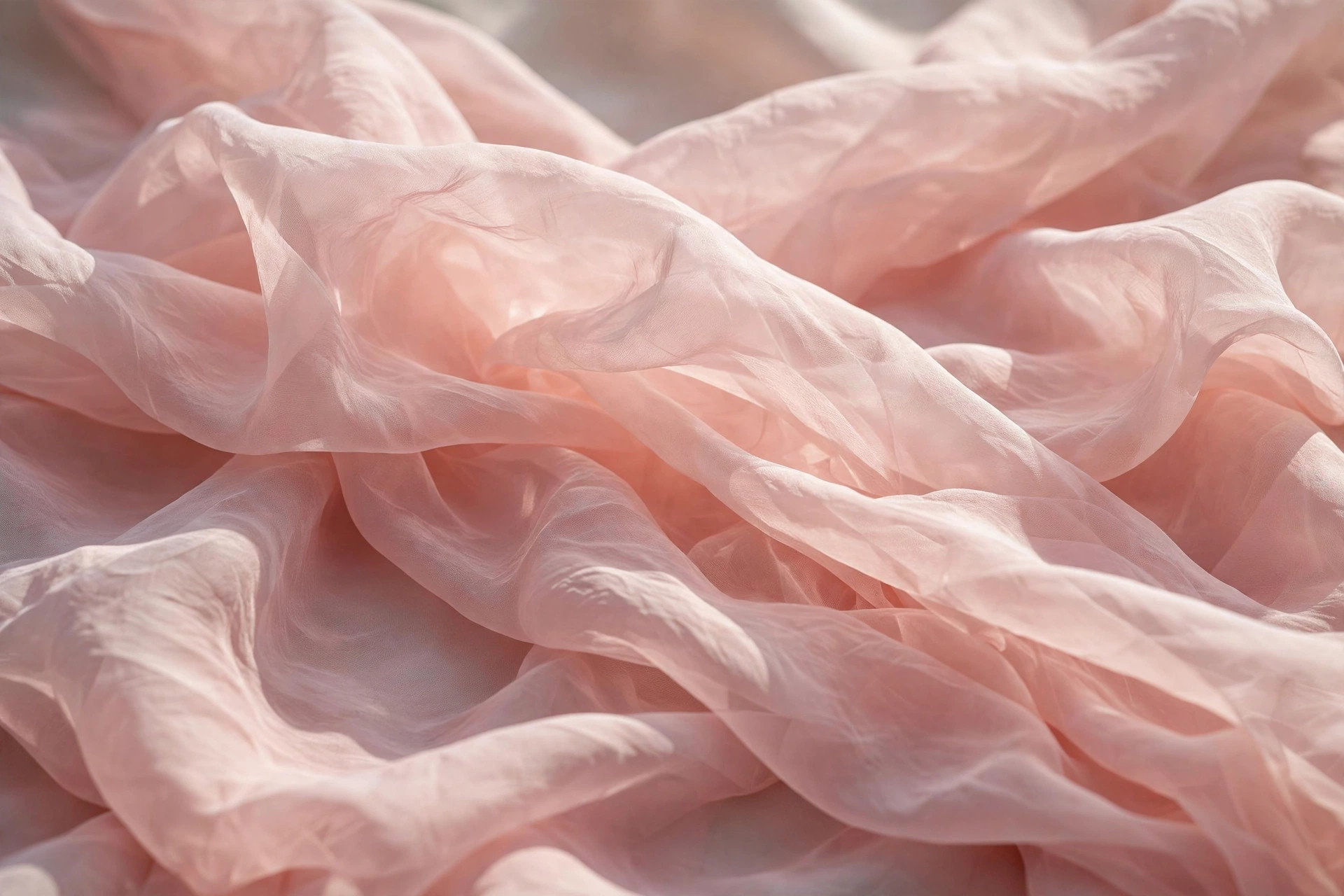
Chiffon is a sheer, lightweight plain-weave fabric woven from highly twisted crepe yarns. Traditionally silk, today usually polyester or nylon, its signature is a soft, fluid drape with a faintly puckered texture — the fabric of evening gowns, sheer blouses, and scarves.
How Chiffon Gets Its Character
Chiffon’s personality comes from its yarns. Crepe yarns are twisted far tighter than ordinary yarns, and chiffon alternates S-twist and Z-twist yarns in the weave. The opposing twists make the yarns curl slightly, giving the finished cloth its subtle crinkle and a lively, springy hand.
Woven in a simple plain weave at low density, the fabric stays transparent while the twisted yarns keep it from lying flat and limp. The result drapes in soft, liquid folds — the opposite of crisp sheers like organza, which stand away from the body.
Chiffon Through History
Silk chiffon was a 19th-century luxury, its name borrowed from the French word for a scrap of cloth. Fine silk chiffon dressed the evening hours of the early 1900s, from tea gowns to dance frocks.
The mid-20th century brought polyester chiffon, and with it, affordability. Suddenly high fashion’s floating skirts and sheer sleeves were within reach of every wardrobe. Chiffon blouses defined 1970s dressing, and chiffon remains a bridal staple — veils, overlays, and sashes — as well as the favored sheer of South Asian dress, from sarees to dupattas.
Working With Chiffon Today
Chiffon rewards patience at the sewing machine. Cut it between tissue layers to stop shifting, use a sharp fine needle, and finish every seam — French seams are the classic choice for sheer cloth. Staystitch necklines and armholes the moment they are cut.
Care depends on the fiber: silk chiffon wants hand washing or dry cleaning, while polyester chiffon is machine-washable and travel-friendly. Press on low heat with a press cloth — synthetics melt under a hot iron. Beyond apparel, chiffon trims lingerie, costumes, and accessories anywhere a whisper of sheer fabric is wanted.
FAQs
- What is the difference between chiffon and georgette?
- Georgette is heavier, grainier, and more matte, with a springier hand and better wrinkle resistance; chiffon is lighter and drapes more softly.
- Is chiffon always silk?
- No. Classic chiffon is silk, but the great majority of chiffon sold today is polyester, with some nylon. Polyester chiffon is cheaper, more durable, and easier to care for.
- Does chiffon fray?
- Yes, readily. Use French seams and pink or serge raw edges so they do not unravel.
- Can you iron chiffon?
- Use a cool iron with a press cloth. Silk chiffon scorches under high heat, and polyester chiffon can melt or glaze, so test on a scrap first.
Glossary: see the full fashion glossary for more apparel industry terms.