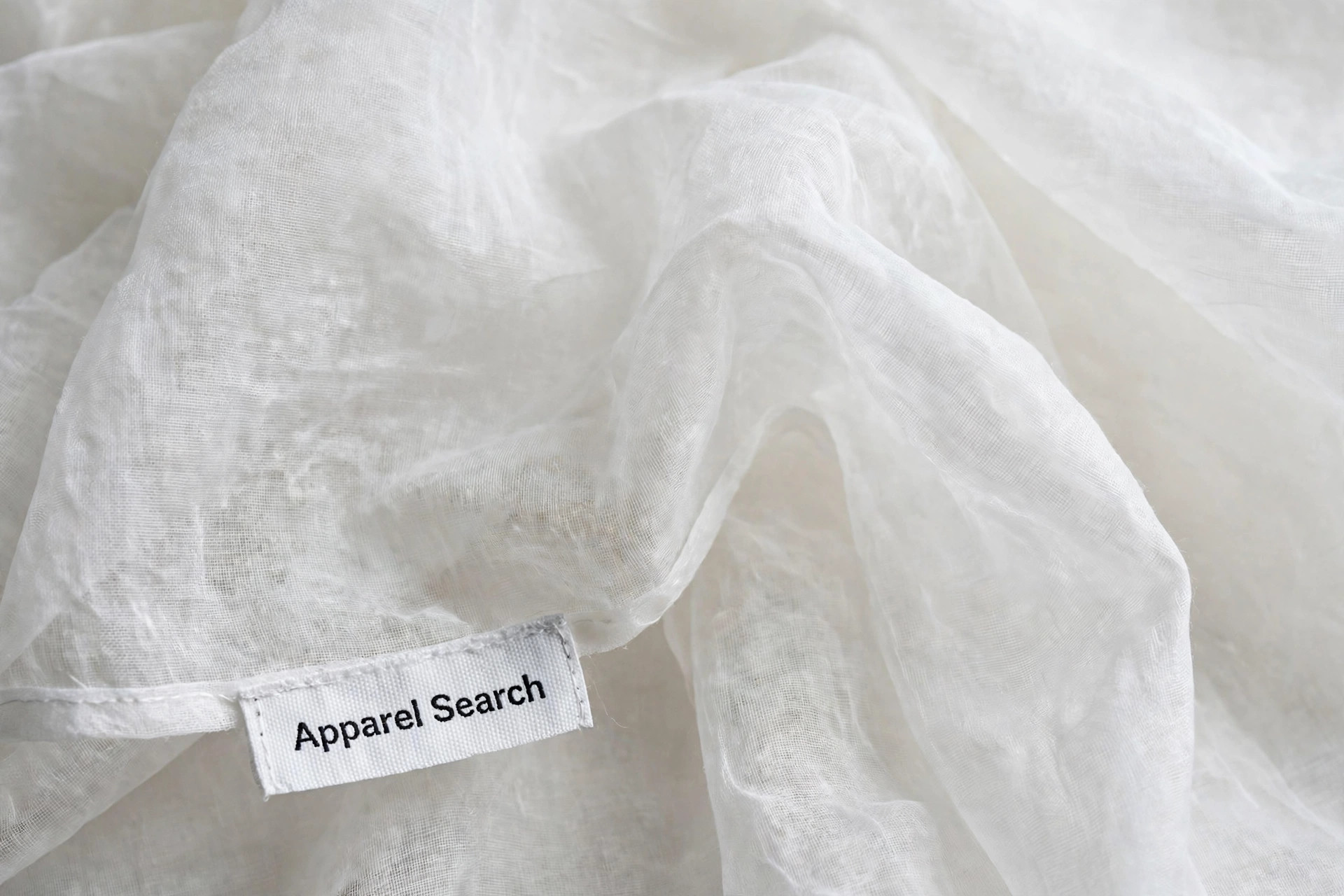
Organdy is a sheer, crisp plain-weave fabric woven from fine combed cotton yarns and stiffened in finishing for a translucent, papery hand. Where organza earns its body from twisted silk or filament yarns, organdy gets its crispness the cotton way — fine yarns plus a crisp finish — for a matte, breathable sheer.
How Organdy Gets Its Crispness
Organdy starts with very fine, tightly spun combed-cotton yarns in a balanced plain weave. The crispness is added afterward: the cloth is treated — traditionally starched, in modern mills often with a chemical or parchmentizing finish — so the finished fabric feels like crisp tissue paper and holds a crease.
That finish is the fabric’s glory and its limitation. It washes out gradually, so a well-loved organdy blouse softens with laundering; a dip in spray starch restores the snap. Do not confuse it with organza: organza is finer, more lustrous, and typically silk or synthetic, while organdy is cotton, matte, and softer in spirit.
Organdy Through History
Fine crisp cottons dressed summers for centuries — sheer white muslins were the height of fashion around 1800, and organdy inherited that role. It made the collars and cuffs of the Victorian era, the christening gowns passed down generations, and the airy summer dresses of the early 20th century.
Needleworkers treasure organdy as a ground for shadow-work embroidery, where stitches show softly through the sheer cloth. Mid-century petticoats and party dresses used it for crisp, rustling layers that held their flounce.
Organdy Today
Organdy still trims collars, cuffs, and yokes where a crisp sheer detail is wanted, and it makes charming summer blouses, children’s party dresses, and craft projects. Sewers also press it into service as a lightweight sew-in interfacing for sheer garments — support that disappears.
Cut and sew it like other sheers: fine needles, finished seams, careful pressing. Expect the crisp finish to relax with washing; if you love the snap, starch it back. Store folded rather than hung to keep its body.
FAQs
- What is the difference between organdy and organza?
- Organdy is cotton — matte, breathable, and softly crisp. Organza is traditionally silk (now often polyester) — finer, more lustrous, and stiffer. Both are sheer; the fiber and finish differ.
- Does organdy stay crisp?
- The crisp finish gradually washes out. Re-starching restores it, which is why heirloom organdy pieces are starched after laundering.
- Is organdy see-through?
- It is sheer, so it is usually lined, layered, or used for details like collars and trims rather than as a single opaque layer.
- What is organdy used for in sewing?
- Collars, cuffs, trims, summer blouses, christening gowns, embroidery grounds, and as a sew-in interfacing for sheer fabrics.
Glossary: see the full fashion glossary for more apparel industry terms.