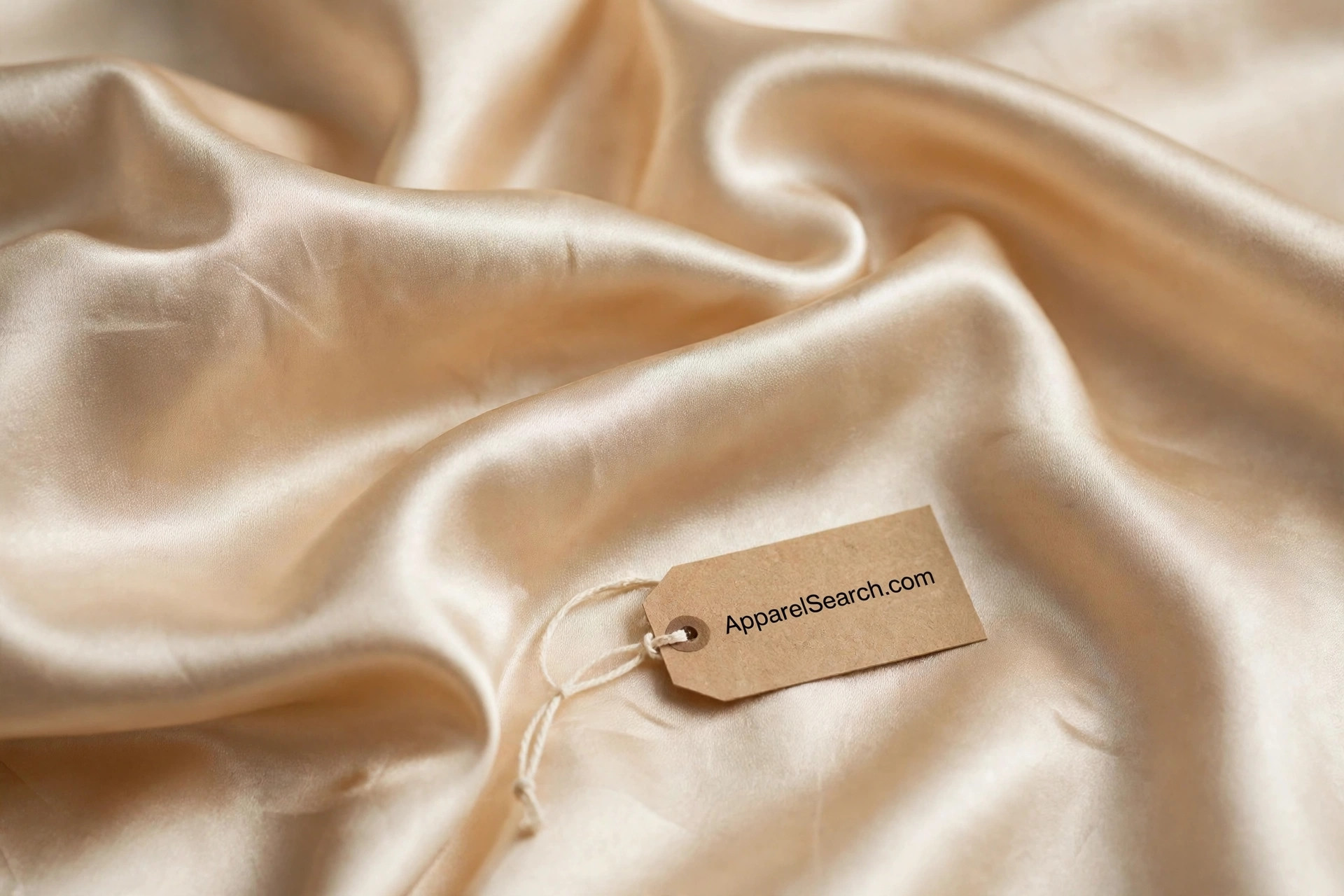
Sateen is a fabric woven in a satin weave from spun yarns — usually cotton — giving it a lustrous face and a dull back. The name distinguishes it from true satin, which uses filament yarns like silk: sateen delivers the sheen with cotton’s breathability, softness, and washability.
Satin Weave, Spun Yarns
In a satin weave, each weft yarn floats over four or more warp yarns before interlacing, so long smooth floats cover the surface and reflect light evenly — that is where the luster comes from. Sateen uses this weave with spun yarns (short cotton fibers twisted together) rather than continuous filaments.
Mercerizing the cotton deepens the sheen further. The trade-off for all those floats: the surface can snag, and cheaper sateens may pill. Compared with percale — cotton’s matte plain weave — sateen is silkier, drapier, and warmer to the touch.
Sateen Through History
Cotton weavers adopted the satin weave to give printed cottons a dressier face, and sateen became a favorite ground for damask-like patterns and elegant drapery. But its fame arrived with the modern bedroom: the 20th century’s appetite for luxury bedding made “sateen sheets” shorthand for indulgence.
Fashion followed — sateen’s fluid luster suits evening blouses, dresses, and linings that want satin’s glow with cotton’s comfort and easy care.
Sateen Today
Sateen dominates the luxury sheet market and dresses windows in flowing drapery, while apparel uses it for blouses, dresses, and jacket linings. It is the practical glamour fabric: lustrous enough for evening, washable enough for real life.
At the machine, treat it like the slippery customer it is — pin generously, use a walking foot for long seams, and cut with weights rather than pins where possible. It wrinkles less than plain-weave cotton and presses beautifully on medium heat.
FAQs
- What is the difference between sateen and satin?
- The weave is the same; the yarns differ. Sateen uses spun yarns, usually cotton; satin uses filament yarns such as silk or polyester. Sateen is generally more breathable and washable.
- Sateen vs. percale sheets — which is better?
- Neither — they are different pleasures. Sateen is silky, lustrous, and warm; percale is crisp, matte, and cool. Choose by sleep preference.
- Does sateen wrinkle?
- Less than plain-weave cotton, thanks to its smooth floats. A medium iron removes any creases quickly.
- Is sateen good for clothing?
- Yes — dresses, blouses, and linings benefit from its drape and sheen, though its slippery surface demands careful cutting and pinning.
Glossary: see the full fashion glossary for more apparel industry terms.