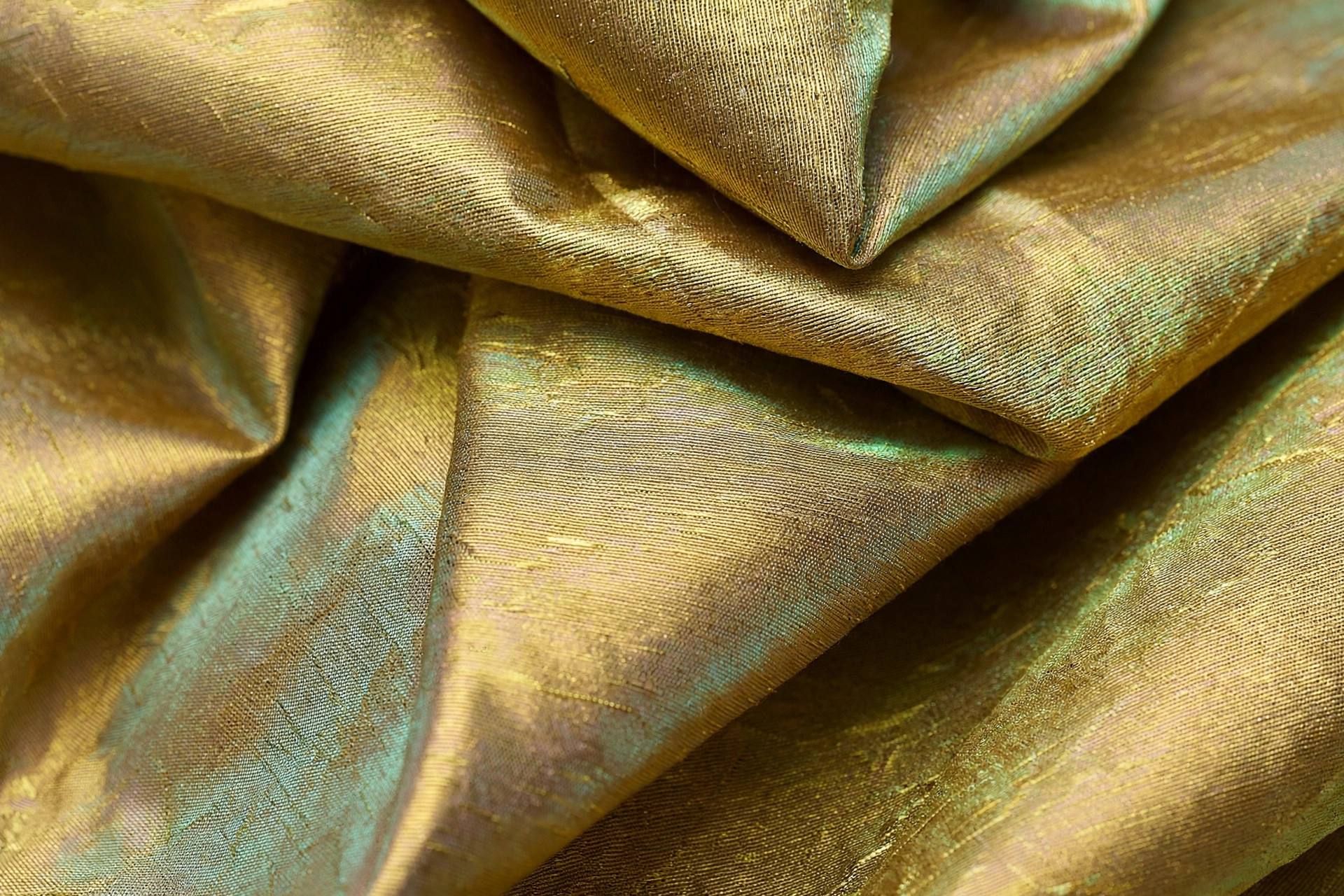
Taffeta is a crisp, smooth plain-weave fabric with a fine crosswise rib and a subtle sheen. Traditionally silk — now also woven in polyester, nylon, acetate, and rayon — it is famous for its “scroop,” the papery rustle it makes when moved: the unmistakable sound of formalwear.
What Makes Taffeta Rustle
Taffeta’s crispness comes from fine, high-twist yarns woven tightly in a plain weave. The yarns are traditionally given a treatment that makes them slightly stiff, so the finished cloth holds its shape and makes its signature whispering sound as the fibers rub — the scroop that tailors once prized as the mark of good silk.
The weave also invites color play: shot taffeta uses different warp and weft colors, shimmering iridescently — peacock taffeta flashing green and purple is the classic example. Moiré taffeta is calendered with engraved rollers for a watered, wavy pattern. The name itself comes from the Persian taftah, meaning twisted or woven.
Taffeta Through History
Taffeta dressed ceremony for centuries. It stiffened the court dress of the 1700s, rustled through Victorian ballrooms in voluminous skirts, and gave the New Look of the late 1940s its sculpted, swishing skirts. Brides choose it for gowns that need architecture — bodices that stay put, skirts that hold a bell shape.
Beyond fashion, taffeta’s tight weave made it the skin of early hot-air balloons, and its crisp body still serves corsetry, where it supplies structure, and bookbinding and lampshades, where a lustrous stiff cloth is wanted.
Taffeta Today
Taffeta remains an occasion fabric first: evening gowns, bridal wear, and cocktail dresses, plus the linings, petticoats, and interlinings that give formal garments their stand. It also trims handbags, evening shoes, and home décor accents.
At the machine: it frays, so finish seams; it shows needle holes, so use fine needles and avoid ripping stitches; and silk taffeta water-spots, so press dry with a press cloth and keep steam off the show side.
FAQs
- What is the difference between silk and polyester taffeta?
- Silk taffeta has a softer hand and a more musical rustle, and breathes — but it water-spots and costs far more. Polyester is stiffer, washable, and more wrinkle-resistant.
- What is shot taffeta?
- Shot taffeta is woven with one color in the warp and another in the weft, producing an iridescent two-tone effect that shifts as the fabric moves.
- Does taffeta wrinkle?
- It creases rather than wrinkling softly, and sharp creases can be stubborn. Hang garments promptly and steam gently — silk taffeta from the wrong side.
- What is the difference between taffeta and satin?
- Taffeta is crisp with a fine rib and a papery rustle; satin is smooth, fluid, and highly lustrous with a soft drape. Taffeta holds a shape, satin flows.
Glossary: see the full fashion glossary for more apparel industry terms.