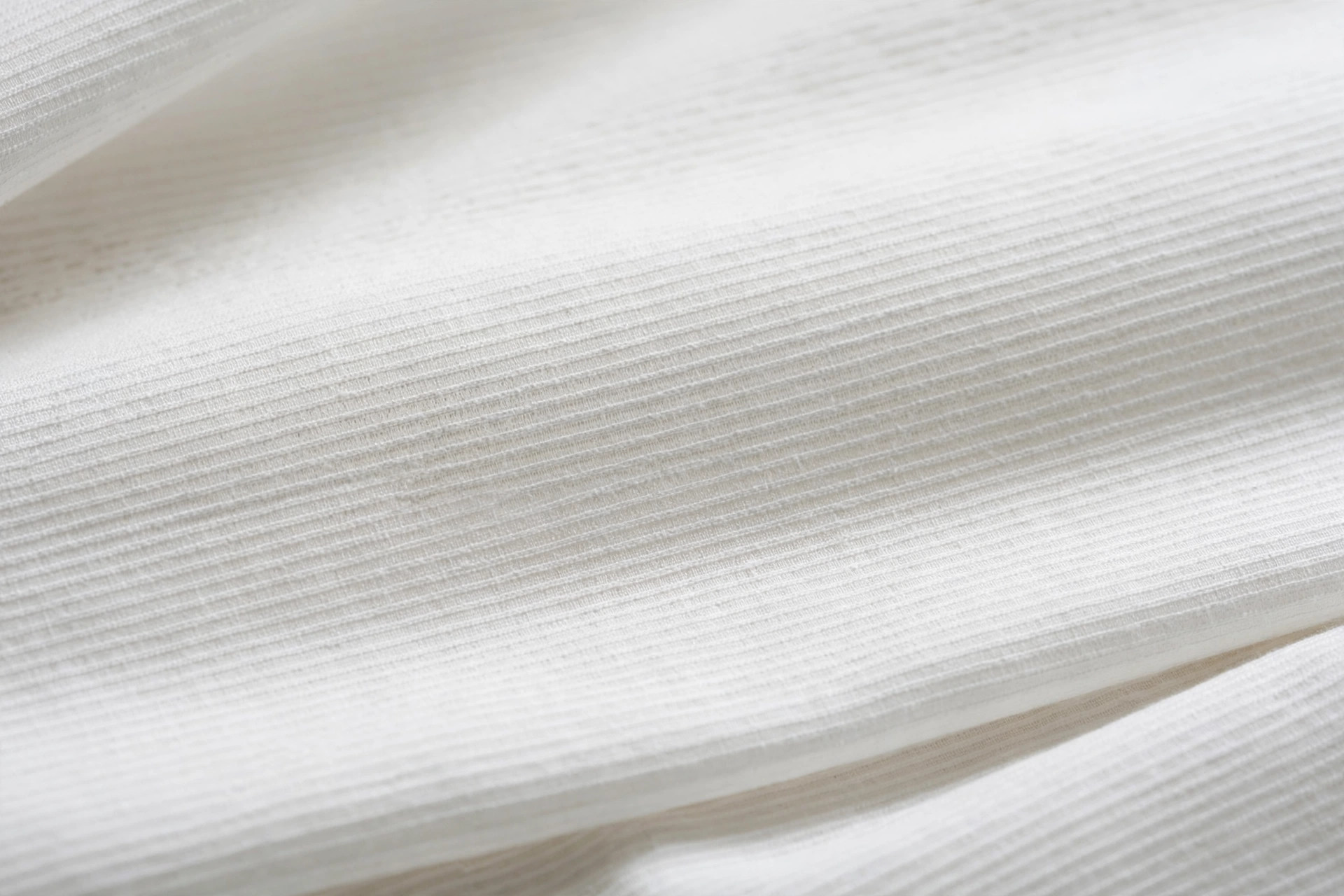
Broadcloth is a densely woven plain-weave fabric with a very fine crosswise rib. Originally the name meant cloth woven on a wide ("broad") loom, but today it describes the construction: a tight, lustrous weave - in cotton, silk, rayon, wool, or blends - with a smooth face and a soft, refined hand.
What Makes Broadcloth
Cotton broadcloth - the dress-shirt fabric - is woven from fine carded or combed yarns with a slightly heavier filling than warp, which creates the faint crosswise rib you can feel more than see. It is very closely woven, which gives it a smooth, slightly lustrous surface and a crisp but soft drape. Wool broadcloth is a different animal: a twill, usually with a two-up-one-down construction, milled and finished to a smooth face for suiting and outerwear.
Broadcloth Through History
Broadcloth was one of the great trade goods of medieval and early modern Europe. English broadcloth, woven wide and then fulled (shrunk and felted) to a dense finish, was exported across the continent and helped build England's textile wealth. The name survived the centuries even as the meaning shifted from "wide loom cloth" to the fine shirting weave we know today.
Broadcloth Today
Cotton broadcloth remains the default fabric for fine dress shirts - smooth enough for business, breathable enough for comfort. It also appears in blouses, quilting cottons, and linings. Wool broadcloth dresses up as suiting and formal outerwear. When shopping, note that "broadcloth" on a label almost always means the cotton shirting unless wool is specified.
FAQs
- What is the difference between broadcloth and poplin?
- They are close cousins. Broadcloth is finer than poplin, with a subtler rib and a more lustrous, softer face - poplin's rib is slightly more pronounced and its hand a touch crisper.
- Is broadcloth always cotton?
- No. Cotton broadcloth is the common shirting, but wool broadcloth (a finished twill suiting) and silk or rayon broadcloths also exist. Check the fiber content on the label.
- Why is it called broadcloth?
- Originally it was woven on a broad (wide) loom - wider than the narrow looms of the day. The name stuck long after loom widths standardized.
- Does broadcloth wrinkle?
- Cotton broadcloth wrinkles moderately - less than linen, more than synthetics. "Wrinkle-free" finished broadcloth shirts are widely available.
Glossary: see the full fashion glossary for more apparel industry terms.