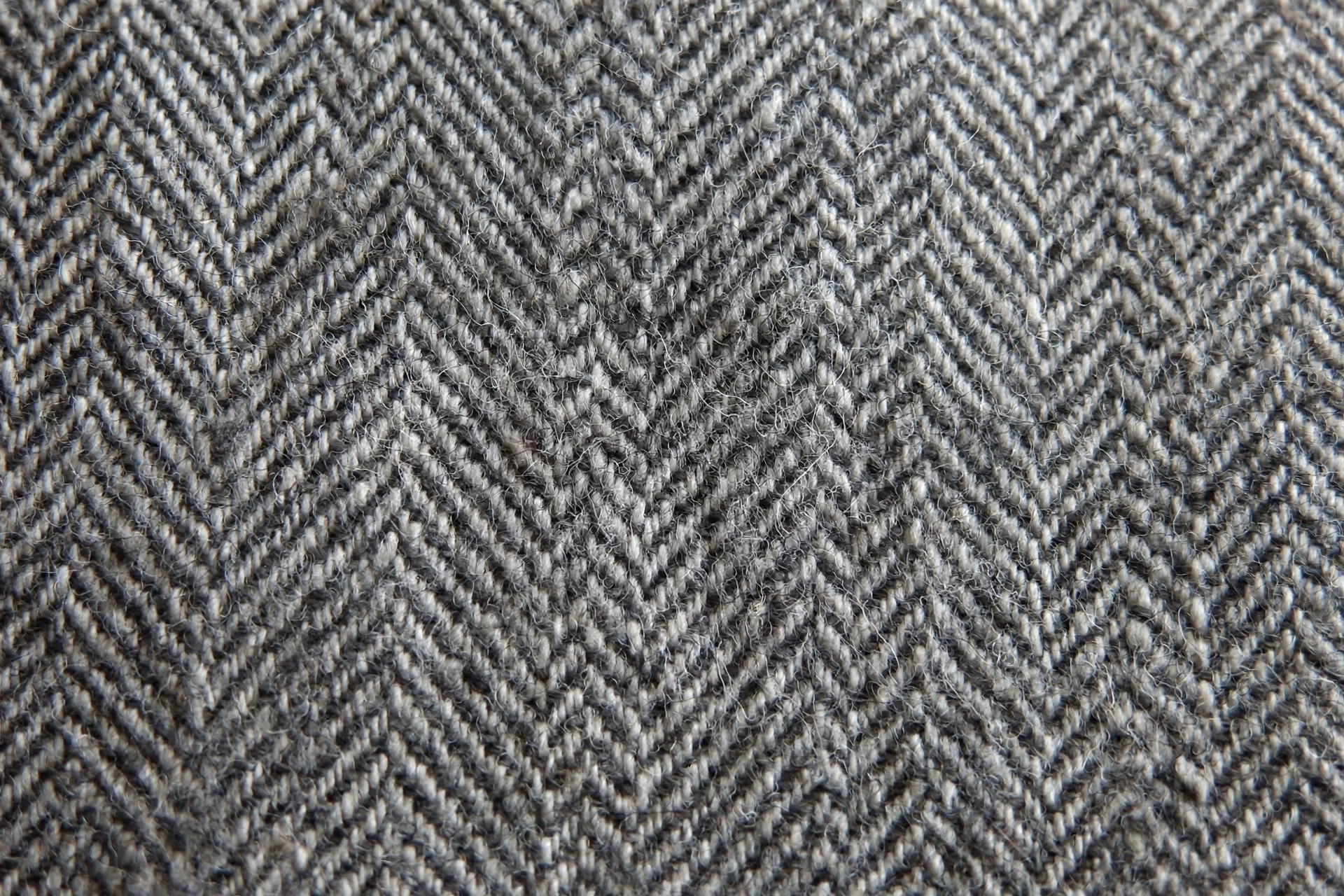
Herringbone is a twill weave pattern of broken zigzag stripes that resemble the bones of a herring fish - rows of short parallel slashes that reverse direction at regular intervals, forming a column of V shapes. It is a weaving structure, not a print: the pattern comes from reversing the twill direction.
What Makes Herringbone
In a standard twill, the diagonal wale runs in one direction. In herringbone, the weaver periodically reverses the threading or treadling so the diagonal flips, creating the characteristic zigzag. Because it is structural, herringbone looks the same woven in one color (the texture alone makes the pattern) or in two colors for a bolder effect. It is an even-sided twill, so the face and back look similar.
Herringbone Through History
The zigzag twill is ancient - Roman builders even laid bricks in a herringbone pattern (opus spicatum). In textiles it became a staple of British country cloth: herringbone tweeds for shooting jackets and estate wear, valued because the busy pattern hid wear and dirt. By the 20th century it had moved into town as a suiting and topcoat classic.
Herringbone Today
Herringbone suits, sport coats, and topcoats remain menswear staples, and the pattern crosses into womenswear, upholstery, and even wood flooring. When buying suiting, note the scale: fine herringbones read as subtle texture from a distance, while bold, high-contrast herringbones make a statement.
FAQs
- What is the difference between herringbone and chevron?
- Both are V-shaped zigzags, but herringbone's Vs are broken - the stripes reverse in staggered columns - while chevron is a continuous, unbroken zigzag.
- Is herringbone always wool?
- No. Wool is traditional for suiting, but herringbone is woven in cotton, linen, silk, and synthetics - and the same zigzag appears in flooring and paper patterns.
- Does herringbone have a right and wrong side?
- It is an even-sided twill, so both faces look nearly identical - one reason it wears well and tailors cleanly.
- Is herringbone formal or casual?
- Both, depending on scale and color. A fine charcoal herringbone suit is business-formal; a chunky brown herringbone tweed jacket is country-casual.
Glossary: see the full fashion glossary for more apparel industry terms.