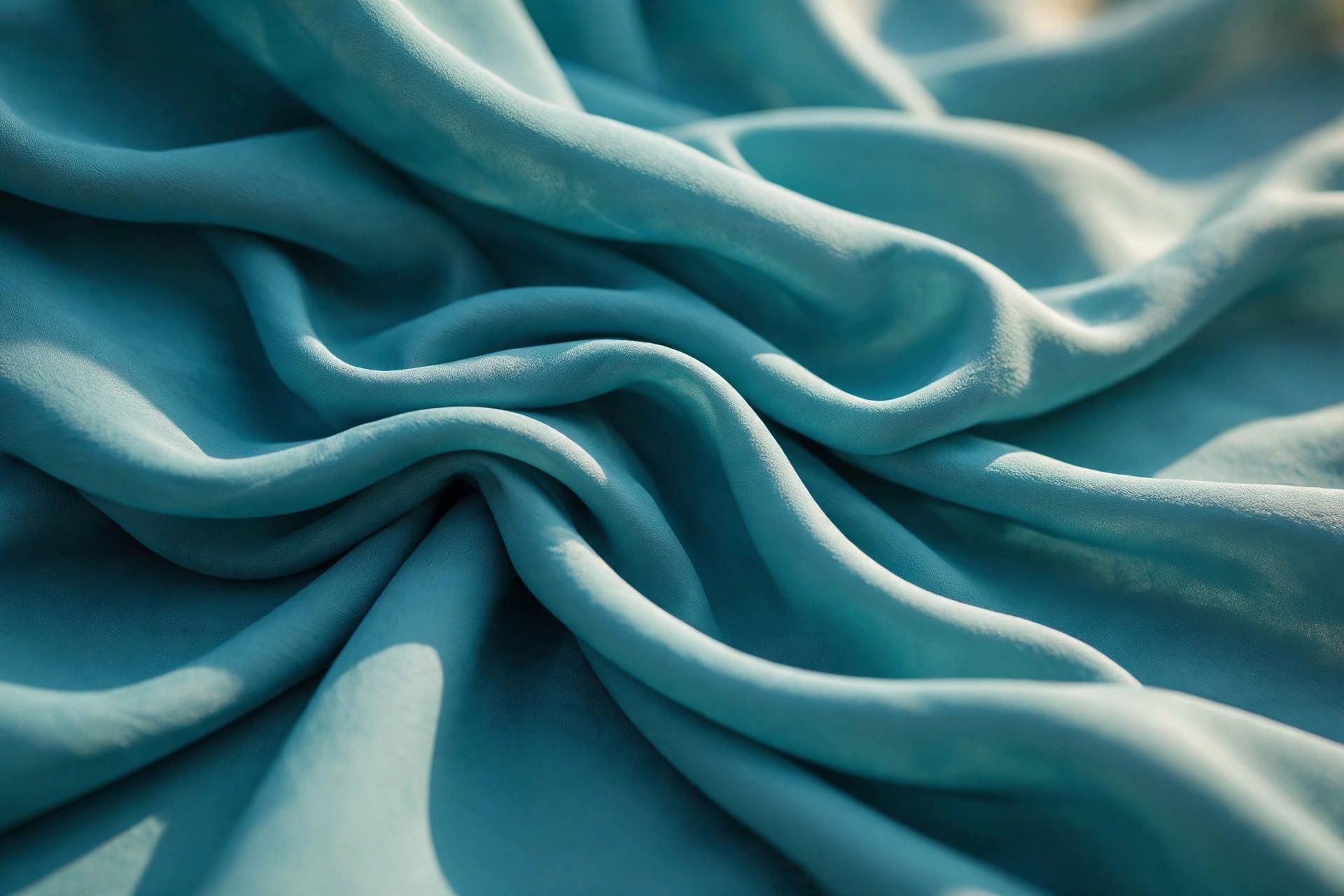
Rayon is a semi-synthetic fiber made from regenerated cellulose - usually wood pulp - dissolved and re-spun into filaments. It was the first commercially successful man-made fiber, originally marketed as "artificial silk." The rayon family includes viscose (the standard type), modal, and lyocell (sold as Tencel).
What Makes Rayon
Rayon starts as a natural material - cellulose from trees or bamboo - but it is chemically processed into fiber, which is why it sits between natural and synthetic. The result drapes like silk, breathes like cotton, absorbs dye brilliantly, and costs far less than silk. The trade-offs: regular viscose rayon loses strength when wet, can shrink, and wrinkles readily. Modal improves on wet strength and softness; lyocell uses a cleaner closed-loop solvent process and is stronger and more stable.
Rayon Through History
French chemist Hilaire de Chardonnet patented the first commercial artificial silk in the 1880s ("Chardonnet silk"); the viscose process, developed around 1890, won out for mass production. The fiber got its official name - rayon - in 1924. It clothed the mid-20th century: Hawaiian shirts, 1940s dresses, linings, and workwear all ran on rayon before polyester's rise in the 1960s and 1970s pushed it aside.
Rayon Today
Rayon never went away - it dresses summer blouses, dresses, and linings where drape and breathability matter, and it blends with cotton, linen, and spandex. The eco story is mixed: the raw material is renewable, but conventional viscose production uses harsh chemicals and has been linked to deforestation, which is why certified sources (FSC pulp) and closed-loop lyocell/modal have become the responsible choice. When shopping, "100% viscose" and "100% rayon" describe the same basic fiber family.
FAQs
- Is rayon a natural or synthetic fiber?
- Neither, exactly - it is semi-synthetic (regenerated cellulose). The raw material is natural wood pulp, but it is chemically dissolved and reformed into fiber.
- What is the difference between rayon, viscose, modal, and lyocell?
- Viscose is the standard rayon process. Modal is a modified viscose with better wet strength. Lyocell (Tencel) uses a different, cleaner solvent-spinning process. All are regenerated-cellulose fibers.
- Does rayon shrink?
- Regular viscose rayon can shrink and lose strength when washed - follow the label, and expect "dry clean" or "hand wash cold" on many garments. Modal and lyocell are more stable.
- Is rayon sustainable?
- It depends on sourcing and process. Look for FSC-certified pulp and closed-loop production (lyocell/Tencel); conventional viscose has a heavier footprint.
Glossary: see the full fashion glossary for more apparel industry terms.