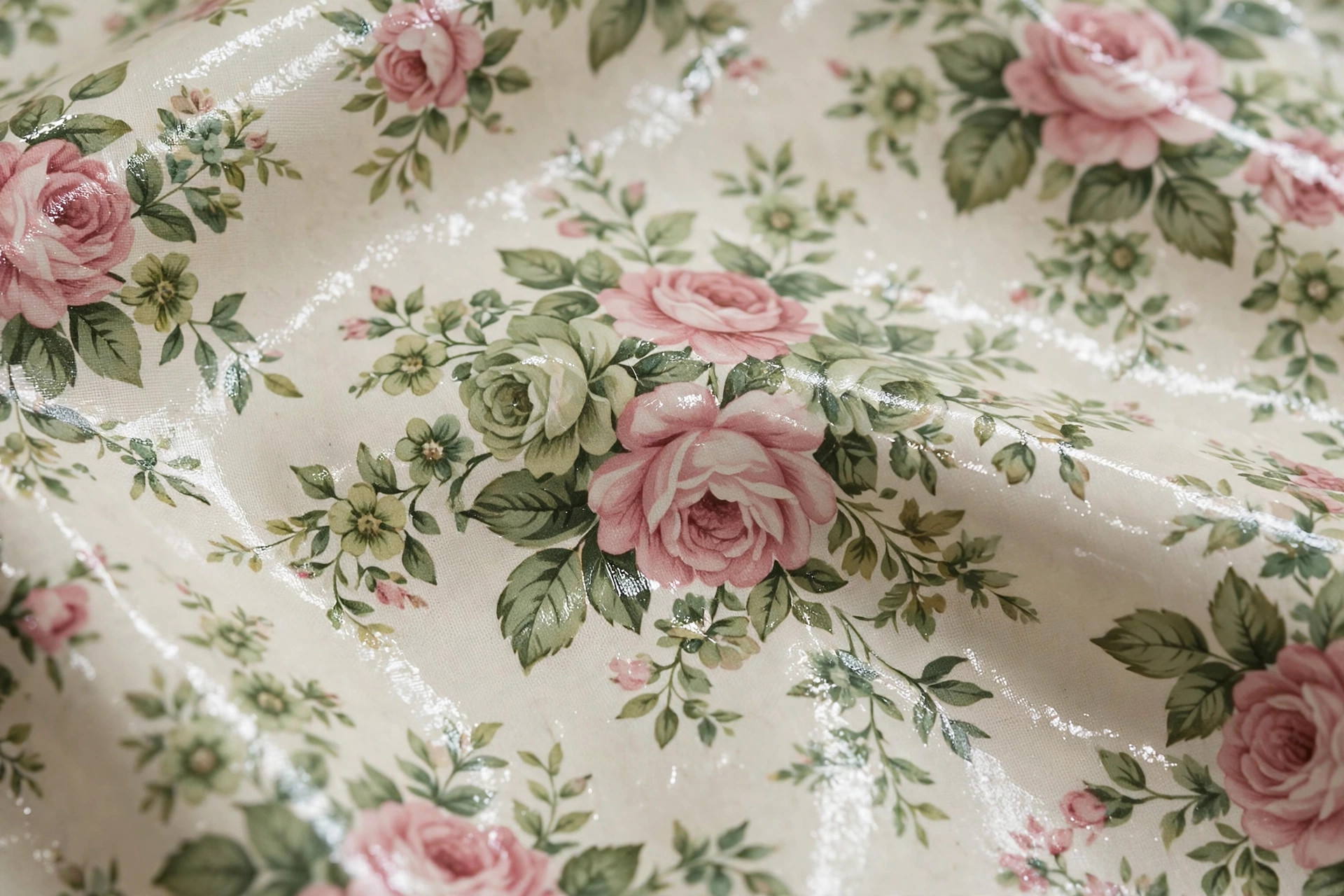
Chintz is a plain-weave cotton printed with designs - classically florals - and finished with a glazed surface that gives it a soft sheen. The name comes from the Hindi word chint, meaning "spotted" or "variegated." Unglazed chintz is called cretonne.
What Makes Chintz
True chintz starts as a printed cotton, then gets its signature glaze: the fabric is calendered (pressed between hot rollers, sometimes with starch or wax) to a polished finish that deepens the printed colors and adds a slight luster. The classic look is large-scale florals on a light ground, though geometrics and conversational prints exist. Modern "chintz" is often resin-finished for a more durable glaze that survives washing better than old starch glazes did.
Chintz Through History
Chintz launched one of fashion's great trade wars. Hand-painted and mordant-dyed cottons from India's Coromandel Coast flooded into Europe in the 1600s, and their wash-fast, brilliant colors made local textiles look dull by comparison. Demand exploded into "chintz mania" - and European wool and silk weavers lobbied successfully to have printed cottons banned in France (1686) and England (1700, tightened 1721). The bans backfired in the long run: they pushed Europeans to learn cotton printing themselves, seeding the industrial textile revolution.
Chintz Today
Modern chintz lives mostly in interiors - upholstery, drapery, and bedding in traditional floral schemes - and in quilting cottons. In apparel it appears in vintage-style dresses and blouses. Shoppers should know the glaze is a finish, not a fiber: it softens with washing, and "semi-chintz" or resin finishes last longer than old-fashioned starch glazes.
FAQs
- What is the difference between chintz and cretonne?
- Chintz is glazed; cretonne is the same kind of printed cotton left unglazed. Same print, different finish.
- Is chintz washable?
- Modern resin-finished chintz usually is, on gentle cycles. Traditional starch-glazed chintz loses its sheen with washing - check the label.
- Why was chintz banned in Europe?
- Domestic wool, silk, and linen producers could not compete with the color and wash-fastness of Indian printed cottons, so France and England banned their import and sale to protect local industry.
- Is chintz still made in India?
- Yes - block-printed and screen-printed cottons in the chintz tradition are still produced in India, alongside mass-market printed chintz from mills worldwide.
Glossary: see the full fashion glossary for more apparel industry terms.