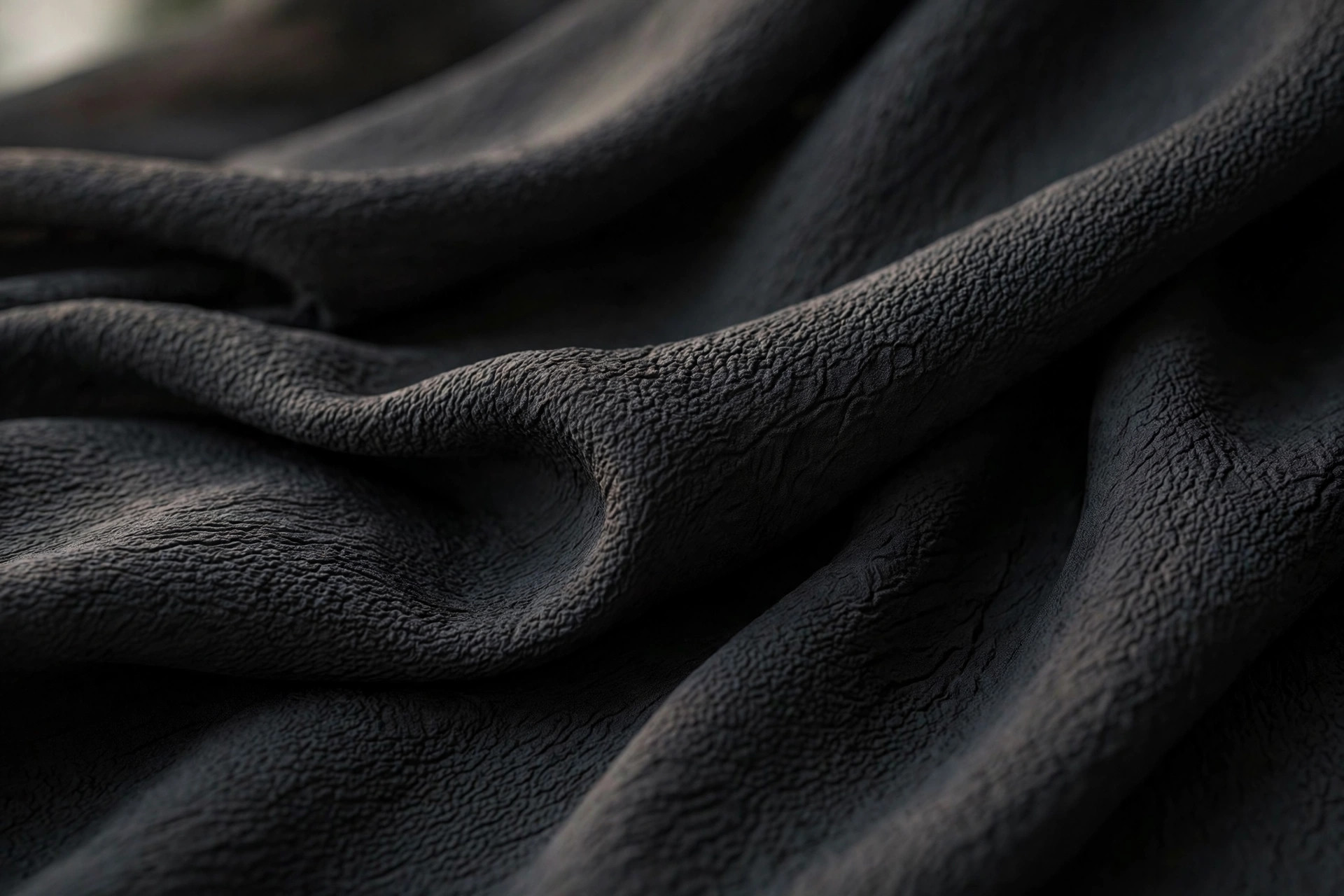
Crepe (also spelled crêpe) is a fabric with a distinctive crinkled, pebbled, or grainy surface. The texture is usually created with high-twist yarns - alternating S-twist and Z-twist yarns that kink and pucker as they relax - though embossing and chemical treatments can produce crepe effects too. Crepe can be woven or knitted from silk, wool, cotton, rayon, or polyester.
What Makes Crepe
The classic crepe mechanism is twist: yarns spun with very high twist want to untwist, and when S-twist and Z-twist yarns alternate in the weave, the opposing forces pucker the cloth into its signature pebble grain. Wool crepe uses the same principle for suiting with a dry, matte hand. Crepe de chine is a lightweight silk crepe with a soft luster; Canton crepe has a bolder pebble; polyester crepe mimics the effect at a lower price and with easier care.
Crepe Through History
Black silk mourning crepe was a Victorian staple - crisp, matte, and unmistakably somber. By the 1920s and 1930s, crepe had gone glamorous: bias-cut silk crepe gowns by Vionnet and her contemporaries draped the body in liquid folds, and the fabric's wrinkle resistance made it a travel favorite. Wool crepe became the backbone of mid-century women's suiting for the same reason - it looked sharp straight out of a suitcase.
Crepe Today
Crepe remains a workhorse of occasion dressing: bridesmaid dresses, cocktail dresses, and blouses in polyester or silk crepe; suiting in wool crepe. Its texture hides wrinkles, its matte face photographs well, and it drapes without clinging. When a pattern calls for "crepe," match the fiber to the use - silk or rayon for drape, wool for structure, polyester for easy care.
FAQs
- What is the difference between crepe and chiffon?
- Both can be sheer and made of high-twist yarns, but chiffon is lighter, more transparent, and flatter, while crepe has a pronounced pebbled texture and usually more body.
- Does crepe wrinkle?
- One of crepe's virtues is wrinkle resistance - the textured surface springs back. Wool and polyester crepes are the most forgiving; silk crepe can still crease under pressure.
- Is crepe always made of silk?
- No. Silk crepe is the luxury standard, but wool, rayon, cotton, and polyester crepes are all common, each with a different hand and price.
- Is crepe hard to sew?
- It can shift under the presser foot, so use a walking foot, sharp microtex needles, and plenty of pins or clips. Pre-washing (when the fiber allows) prevents later surprises.
Glossary: see the full fashion glossary for more apparel industry terms.