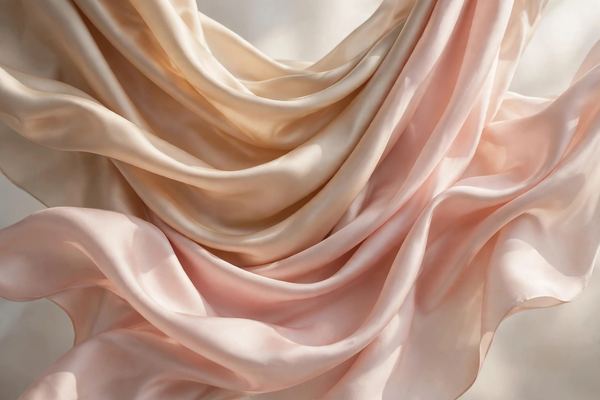
Silk is a natural protein fiber produced by silkworms, prized for its luster, smooth hand, and elegant drape. It has been a luxury fabric for thousands of years. No other fiber catches the light the same way, slides over the skin the same way, or falls in the same fluid folds - which is why silk blouses, scarves, dresses and ties never really go out of fashion. This guide explains where silk comes from, what the different types are, how its weight is measured, and how to choose and care for it well.
01 / The fiber
What Silk Is
Silk begins with the caterpillar of the silk moth, Bombyx mori. Raised on a diet of mulberry leaves, the silkworm spins a cocoon from a single continuous filament of protein - fibroin, held together by a natural gum called sericin - that can run for hundreds of metres. Growers unwind (or "reel") those filaments from several cocoons together to make a thread thick enough to weave. Because silk is an animal protein fiber, like wool or hair, rather than a plant cellulose fiber, it behaves differently in wear and in the wash: it is smooth rather than absorbent-crisp, and it dislikes harsh detergents, wringing and strong sun.
Silk's weight is measured in momme (pronounced "mommy" and written mm) - the weight, in pounds, of a piece of silk 100 yards long and 36 inches wide. Higher momme means more silk in every square yard: denser, more opaque, more durable cloth. A whisper-light scarf silk might be 8 to 12 momme, a good blouse silk 16 to 19 momme, and luxury bedding or a substantial dress silk 22 momme and above. When two silk garments differ sharply in price, momme - together with the grade of the filament - is usually the reason.
02 / Performance
How Silk Feels and Performs
Silk's famous luster comes from the structure of the fiber itself: each filament has a smooth, roughly triangular cross-section that reflects light like a tiny prism, giving woven silk its depth of shine. The same smoothness makes silk feel cool against the skin and lets it drape in liquid folds. Silk absorbs a good amount of moisture before it feels damp and adjusts surprisingly well to temperature - light and breathable in summer, yet a fine insulating layer under a sweater in winter. For its fineness it is a respectably strong fiber, but it is a delicate one: sunlight, perspiration and rough handling all shorten its life.
Strengths
- Unmatched natural luster and fluid drape
- Smooth and gentle against skin and hair
- Breathable, yet insulating as a light layer
- Absorbs moisture before feeling damp
- Strong for such a fine fiber
- Takes rich, deep dye colors beautifully
Trade-offs
- Delicate - snags, abrades and water-spots easily
- Weakened by prolonged sunlight and perspiration
- Needs gentle hand washing or dry cleaning
- Wrinkles, though creases usually hang out
- Among the most expensive clothing fibers
03 / Varieties
Common Types of Silk
- Mulberry silk - the highest quality, from silkworms fed mulberry leaves; smooth and uniform. Its long, even, naturally white filaments are the standard against which other silks are judged.
- Charmeuse - lightweight with a glossy face and dull back; used for blouses and lingerie. Its liquid shine makes it the classic "silk satin" of eveningwear and scarves.
- Crepe de chine - slightly textured, matte silk with beautiful drape. Tightly twisted yarns give it a fine pebbly surface that resists wrinkling better than flat silks.
- Dupioni - crisp silk with a slubbed texture, popular for formalwear. It holds sculpted shapes, which is why wedding dresses and structured jackets favor it.
- Raw silk / tussah - less processed, with a nubby natural texture. Tussah comes from wild silkworms that feed on oak and other leaves, so its fibers are shorter, coarser and naturally tan in color.
- Organza - a sheer, crisp plain-weave silk used for overlays, veils and evening volume; it is transparent but surprisingly strong.
- Taffeta - a smooth, crisp silk with a faint rustle, long used for ball gowns, linings and ribbons.
Learn more from our Panne - detailed guide and Paduasoy & Crepe glossary listing.
04 / Uses
What Silk Is Used For
Silk earns its place wherever drape, shine and a smooth feel matter more than hard wear. In clothing that means blouses, shirts and camisoles, flowing dresses and skirts, lingerie and sleepwear, scarves and neckties, and the linings of good jackets and coats, where silk lets a garment glide on and off. Formalwear leans on it heavily - dupioni and taffeta for structure, organza for sheer overlays, charmeuse for bias-cut gowns. Beyond clothing, silk appears in luxury bedding, where its smoothness is kind to skin and hair, and in fine upholstery and wall coverings. It is rarely the right choice for everyday workwear or children's play clothes: the fiber is too delicate, and its care too particular, for that kind of service.
05 / Buying
How to Choose Silk
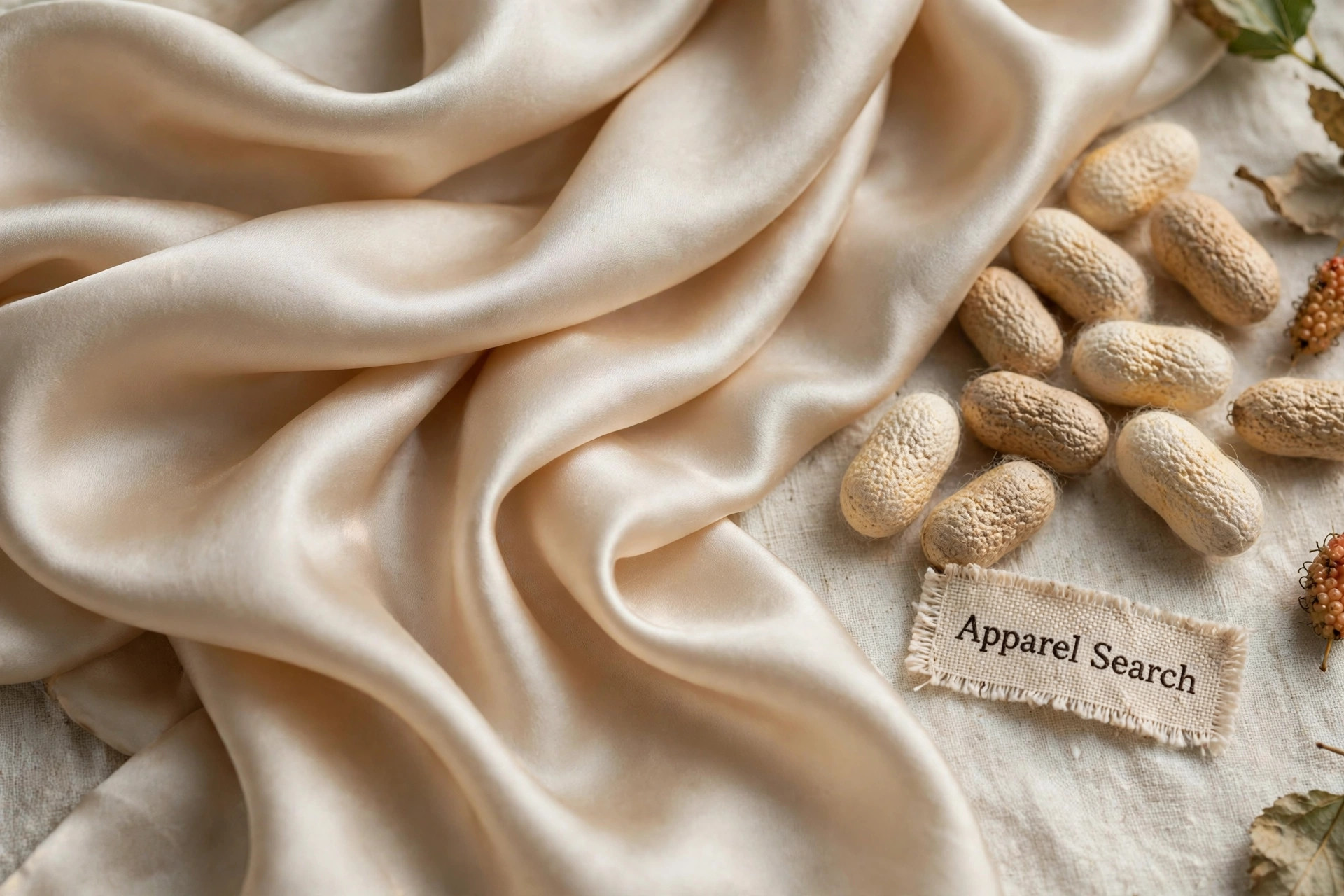
Start with momme. For a blouse you expect to wear for years, look for 16 momme or above; very light silks feel wonderful but wear through and snag sooner. Below about 12 momme, treat the garment as an occasion piece rather than a wardrobe staple. Next, decide between mulberry and wild silk: mulberry gives the smooth, even, lustrous surface most people picture as "silk," while tussah and raw silk trade some shine for a nubby, linen-like texture and a more relaxed look - neither is better, they are different cloths.
Then check the finish. Sandwashed silk has been washed with fine abrasives for a soft, matte, suede-like hand; it is more forgiving to wear and wash, at the cost of some luster. Finally, read the fiber label rather than the marketing: "satin" names a weave, not a fiber, and much inexpensive "satin" is polyester. A genuine silk garment will say so - and will usually name its momme weight or its type.
06 / Care
Caring for Silk
Silk is delicate: hand wash in cool water with gentle detergent, or dry clean. Never wring silk; roll in a towel to remove water and dry flat or hang. Keep silk out of prolonged direct sunlight. See the fabric care guide for details.
A few more habits help: wash colors separately the first few times, since silk dyes can bleed; use a cool iron on the reverse side while the fabric is barely damp; and store silk clean, folded with tissue or hung on a padded hanger, away from light. Perfume and perspiration attack silk, so let cosmetics dry before dressing and air garments before storing.
Silk at a Glance
Common Questions
What is momme weight in silk?
Momme (mm) is the standard weight measure for silk - the weight in pounds of a piece 100 yards long and 36 inches wide. Higher momme means denser, more opaque and more durable cloth: light scarf silks run 8 to 12 momme, good blouse silk 16 to 19, and luxury bedding or substantial dress silk 22 and above.
Is silk warm or cool to wear?
Both, which is part of its appeal. Silk breathes and absorbs moisture, so light silk feels cool in summer, yet its smooth fibers also trap a thin insulating layer of air, making it a comfortable base layer in cold weather. Few fibers span the seasons as gracefully.
Can silk be washed at home?
Many silk garments can, carefully: hand wash in cool water with a gentle detergent, never wring, roll in a towel to remove water, and dry flat or hang away from sunlight. Structured garments, very dark dyes and crisp silks such as taffeta are safer dry cleaned - and always test a hidden spot first.
What is the difference between mulberry and tussah silk?
Mulberry silk comes from cultivated silkworms fed only mulberry leaves, giving long, uniform, naturally white filaments and a smooth, lustrous cloth. Tussah silk comes from wild silkworms feeding on oak and other leaves; its fibers are shorter, coarser and naturally tan, making a nubby, less shiny but characterful fabric.
More to Explore
Explore more: Fabric Directory | Fabric Industry Guide