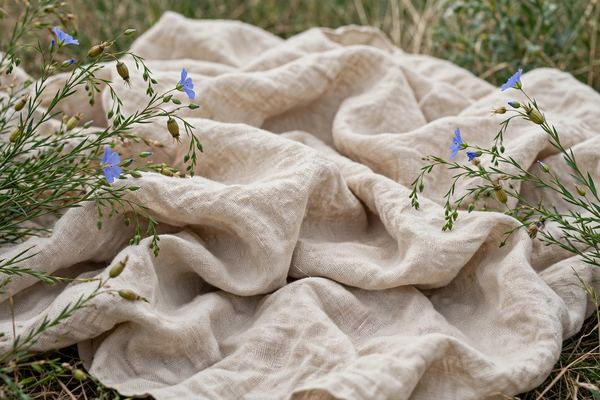
Linen is made from flax fibers - one of the oldest textiles in the world. It is breathable, strong, and gets softer with every wash, making it ideal for warm weather. A linen shirt on a humid day, linen sheets on a summer night, a linen tablecloth that improves for decades: few fabrics reward long ownership the way linen does. This guide explains how flax becomes linen, why it keeps you cool, the weaves and blends you will meet on labels, and how to choose and care for it.
01 / The fiber
What Linen Is
Linen is a bast fiber: it comes not from a seed pod but from the stem of the flax plant. The useful fibers run the length of the stalk, glued into bundles by natural pectin, and freeing them is the slow part of linen making. After harvest, the stalks go through retting - they are spread in dew or soaked in water so that moisture and microbes rot the pectin away without damaging the fiber. The dried stalks are then broken, scraped (scutched) and combed (hackled) to leave long, pale, lustrous fiber bundles ready for spinning.
Like cotton, flax fiber is almost pure cellulose, but the fibers are far longer and the yarn they make is stronger and less elastic. Flax fibers are also naturally hollow, which is the key to linen's summer reputation: air and moisture move through the cloth instead of being trapped in it. Because so much of linen production is mechanical and slow, and because flax yields less fiber per acre than cotton, good linen has always cost more - and lasted longer.
02 / Performance
How Linen Feels and Performs
Linen's character is a bundle of pleasant contradictions. Fresh off the loom it can feel crisp, even stiff, yet it softens with every wash until old linen has a supple, almost silky hand. It is one of the strongest everyday fibers - stronger than cotton, and like cotton it is stronger when wet - but it has almost no stretch, so it creases sharply and those creases are part of its look. Its hollow fibers wick moisture away and release it quickly, so linen feels dry and cool where cotton would feel damp. And its surface is naturally smooth and lint-free, which is why it polishes glass, dries dishes and makes such comfortable bedding.
Strengths
- Exceptionally breathable - hollow fibers wick moisture and allow airflow
- Stronger than cotton, and stronger again when wet
- Absorbs moisture and dries quickly, feeling cool in heat
- Gets softer and better with every wash
- Eco-friendly - flax grows with minimal water and pesticides
- Naturally smooth, lint-free and long-wearing
Trade-offs
- Wrinkles and creases readily - part of its relaxed charm
- Almost no stretch, so it can feel stiff when new
- Can shrink if washed hot or dried on high heat
- Coarse, cheap linen yarns can feel rough
- Sharp folds can wear through over many years
03 / Varieties
Linen Types and Weaves
- Plain weave shirting and dress linen - the everyday linen of summer shirts, dresses and trousers: an open, even weave in light to medium weights, crisp at first and softening fast.
- Damask - linen woven on a jacquard loom so the pattern is in the weave itself, matte against shiny; the classic cloth for fine table linen and traditional bedding.
- Huckaback - a textured weave with small raised patterns that grip water, long used for towels and still the best linen for drying.
- Cambric - a fine, lightweight, tightly woven plain weave, soft enough for handkerchiefs, blouses and baby clothes.
- Linen-cotton blends - cotton softens linen's hand, reduces its wrinkling and lowers its price, while the linen keeps much of the coolness and strength; a practical choice for everyday shirts and bedding.
- Handkerchief linen - the lightest grade, sheer and fine, used for heirloom sewing, christening wear and delicate blouses.
Whatever the weave, expect slubs - small soft lumps where a fiber bundle runs thicker. In linen they are not flaws; they are the fingerprint of the natural fiber, and cloth without any is usually a blend or a synthetic imitation.
04 / Uses
What Linen Is Used For
Linen owns the summer wardrobe: shirts, dresses, trousers, shorts, unstructured jackets and suits that stay presentable in heat that would wilt wool or polyester. At home it is just as established - sheets and duvet covers that feel cool on hot nights, tablecloths and napkins in damask, huckaback towels, curtains that filter light without trapping heat, and upholstery that shrugs off years of use. Linen canvas has carried oil paintings for centuries, and linen thread still sews leather and sails. Wherever a fabric must breathe, absorb and endure, linen is on the shortlist.
05 / Buying
How to Choose Linen
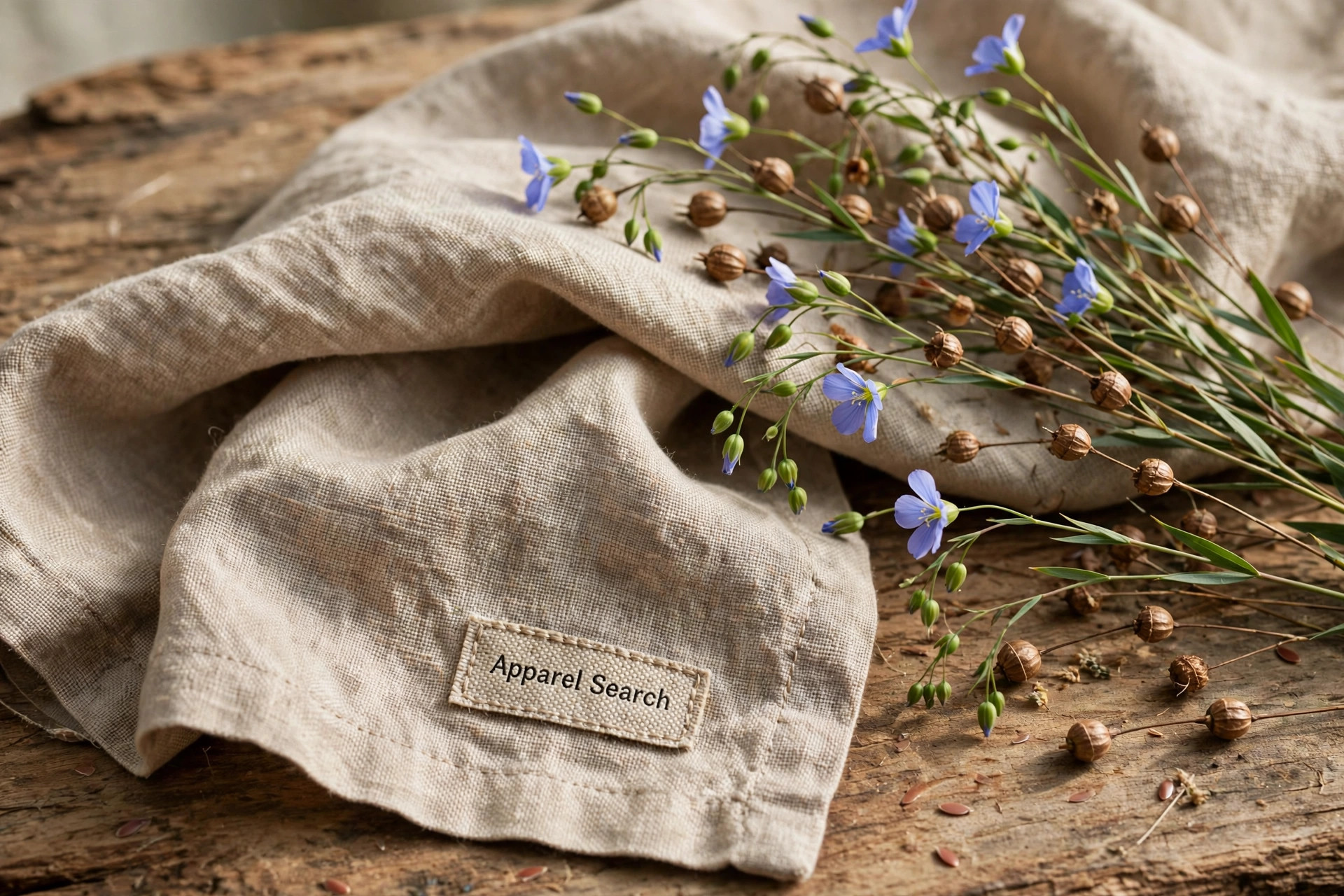
Trust your hand first. Rub the cloth between your fingers: good linen feels cool, dry and substantial, with a slight spring; poor linen feels papery or harsh, and harshness from coarse yarns never fully washes out. Look at the slubs and accept them - small, soft irregularities are normal and expected, while perfectly uniform "linen-look" cloth at a very low price is often polyester in disguise.
Then match the weight to the job: light, open weaves for shirts and summer dresses; medium weights for trousers and jackets; heavy linen for upholstery and curtains. Check the blend on the label - pure linen gives the full coolness and character, while a linen-cotton blend is a sensible, softer, cheaper compromise. Finally, ask whether the garment is prewashed: prewashed linen starts soft and has done most of its shrinking already.
06 / Care
Caring for Linen
Machine wash linen in lukewarm water on gentle; line dry or tumble dry low. Embrace the wrinkles, or iron while slightly damp for a crisper look. See the fabric care guide for details.
Linen rewards this simple routine for a very long time. Wash it with room to move - cramming the machine creases it harder - shake garments out before drying, and take them off the line or out of the dryer while faintly damp if you plan to iron. Store linen folded loosely rather than on hangers, and never put it away damp. Treated this way, linen does not wear out so much as wear in.
Linen at a Glance
Common Questions
Why does linen wrinkle so much?
Linen fibers are stiff and have almost no elasticity, so when linen bends, the fibers hold the crease instead of springing back. Those wrinkles are part of linen's relaxed character - most wearers embrace them. For a crisper look, iron linen while it is slightly damp, or choose a linen-cotton blend.
Is linen a good fabric for hot weather?
Yes - it is one of the best. Linen's hollow fibers let air move through the cloth and wick moisture away from the skin, and linen releases that moisture quickly instead of staying damp. A linen shirt feels noticeably cooler and drier than cotton on a humid day.
Does linen shrink?
It can, especially at its first wash and especially in hot water or a hot dryer. Wash linen lukewarm on a gentle cycle and line dry or tumble dry low to keep its size. Many linen garments are sold prewashed, which does most of the shrinking before you buy.
Does linen get softer over time?
Yes. Linen is one of the few fabrics that genuinely improves with age: washing and wearing gradually loosen the fibers, so a shirt or sheet that starts crisp becomes supple and smooth over the years while staying strong. It is a fabric people hand down, not throw out.
More to Explore
Explore more: Fabric Directory | Fabric Industry Guide