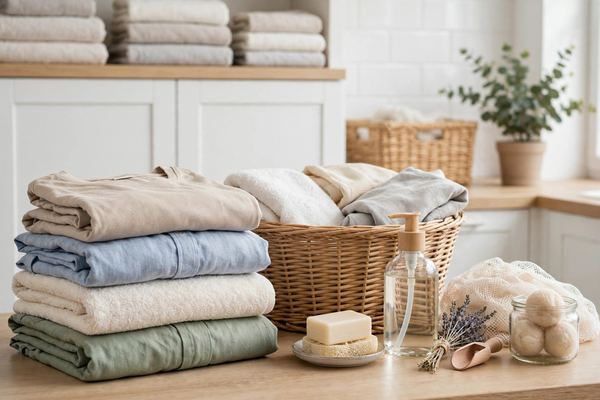
Proper care keeps clothes looking better longer. Always check the garment's care label first - these are general guidelines by fabric type. Most clothing damage does not happen in wear; it happens in the wash, the dryer and the wardrobe, one slightly-too-hot cycle at a time. This reference gathers the whole routine in one place: how to wash each major fabric, how to dry, iron and store garments, and how to read the label that should always have the final say.
01 / Principles
Start With the Label, Then Sort
The care label is written for that specific garment - its fiber, its dyes, its trims and its construction - so it outranks any general guide, including this one. Read it before the first wash, not after the first mishap. Then sort properly: by color, because dark dyes migrate; by weight, because heavy zips and denim abrade light fabrics in the drum; and by delicacy, because lace, silk and wool should never share a hot, vigorous cycle.
Three habits protect everything you own. Turn garments inside out to shield their outer surface and slow fading. Close zips and hooks so they cannot snag a neighbor. And treat stains before washing, not after - dryer heat sets most stains permanently.
02 / By fabric
Care by Fabric
- Cotton - machine wash cool/warm; tumble dry low. Avoid hot water to prevent shrinking. Wash dark pieces inside out to slow fading. See the cotton fabric guide.
- Denim - wash cold, inside out, infrequently; hang dry to preserve color. Spot clean between washes and let air do the freshening. See the denim fabric guide.
- Silk - hand wash cool with gentle detergent, or dry clean; never wring. Roll silk in a towel, then dry away from heat and sunlight. See the silk fabric guide.
- Linen - machine wash lukewarm gentle; line dry or tumble low. Linen softens with every wash and creases by nature; embrace the creases or iron it damp. See the linen fabric guide.
- Wool - hand wash cold or wool cycle; dry flat to keep shape. Never hang wet wool, and store it clean with protection against moths.
- Polyester / synthetics - machine wash cool; tumble dry low; they dry quickly and resist wrinkles. Keep heat modest anyway - high dryer heat can set wrinkles and glaze synthetic surfaces.
- Velvet - dry clean most velvet; steam, never press, to lift the pile. Store velvet hanging with room around it, never folded sharply. See the velvet fabric guide.
- Jersey - machine wash cool on gentle and dry flat or on low heat. Knit loops stretch and torque if they are wrung or hung wet, so reshape jersey while it is damp. See the jersey fabric guide.
- Fleece - machine wash cool, inside out, and tumble dry low or line dry. Skip fabric softener, which coats the fibers and dulls fleece's loft and wicking. See the fleece fabric guide.
- Lace - hand wash fine lace in cool water, or use a mesh bag on delicate; dry clean heirloom and silk lace. Never wring it - roll it in a towel and dry it flat. See the lace fabric guide.
- Tulle - hand wash in cool water with mild soap and air dry; never wring, which crushes the mesh. Store tulle rolled, away from Velcro and jewelry that snag it. See the tulle fabric guide.
- Poplin - machine wash warm, remove promptly, and iron while slightly damp for the crispest finish. Poly-cotton poplin needs less ironing than pure cotton - the standing crispness trade-off. See the poplin fabric guide.
03 / Drying
Drying Tips
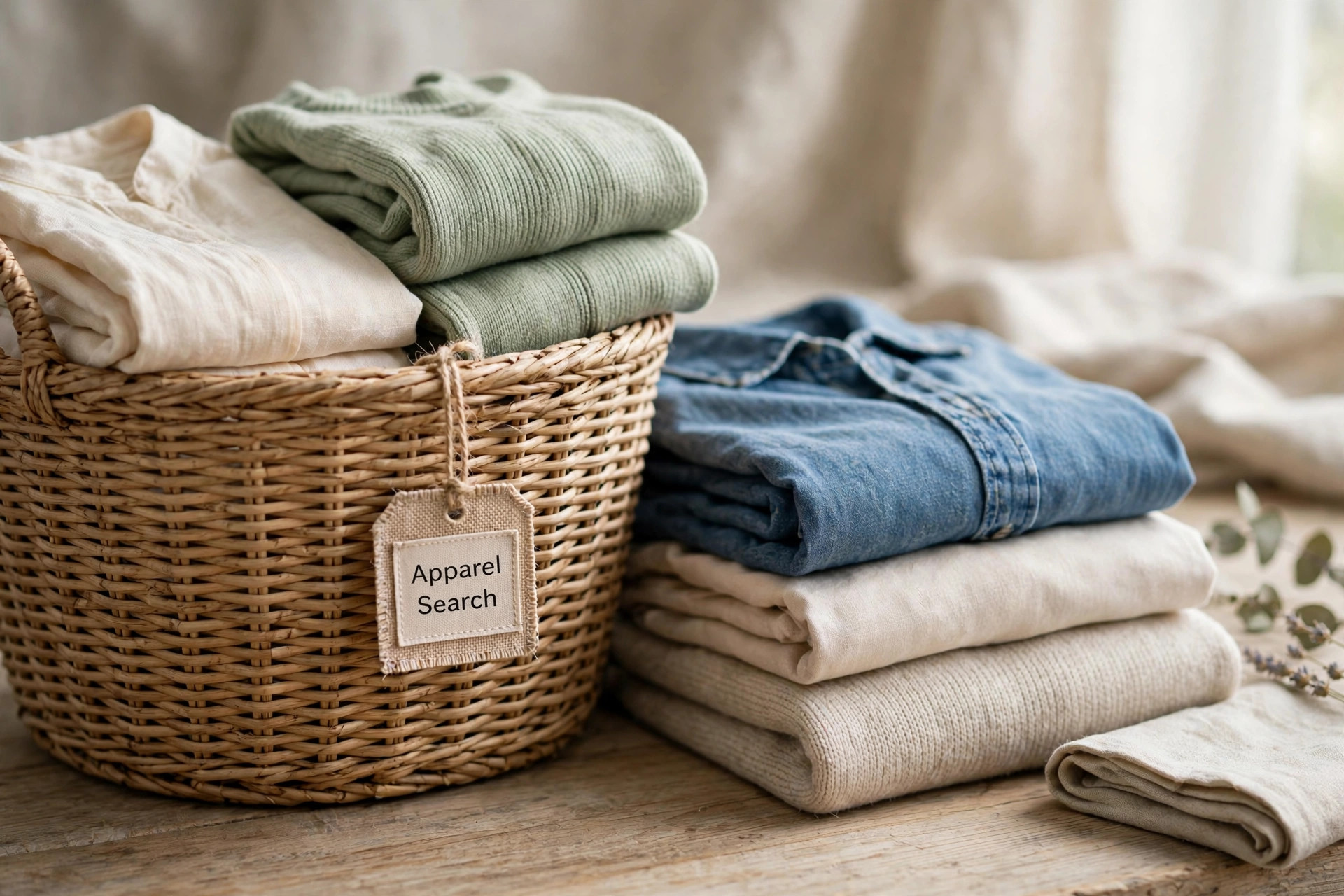
- Line drying is gentlest and saves energy; it works well for most fabrics.
- Remove clothes from the dryer while slightly damp to reduce wrinkles.
- Never tumble dry silk, delicate lace, or structured garments.
The dryer is where heat does its fastest damage, so treat its settings as fabric settings: low for almost everything, and no tumble at all for wool sweaters, which dry flat on a towel, or for anything with elastic or prints. Shake each piece out before it dries, however it dries - a garment dried in a crumpled shape keeps that shape until its next wash. Line drying in shade preserves color longest; strong sun is a free bleach for dark cotton and silk alike.
04 / Labels
Reading Care Labels
Care symbols are standardized: a washtub means washing, a triangle means bleaching, a square means drying, an iron means ironing, and a circle means dry cleaning. When in doubt, choose the gentler option.
The details inside the shapes refine the message. Dots add heat - one dot is cool, two warm, three hot - in the washtub, the dryer square or under the iron. Lines under a symbol call for a gentler cycle, and a cross through any symbol forbids that process outright: a crossed triangle means no bleach, a crossed circle means do not dry clean. A number in the washtub is the maximum water temperature.
05 / Pressing
Ironing and Steaming
Match the iron to the fiber: high heat with steam for cotton and linen, medium for wool and poplin blends, low for silk and most synthetics, which glaze or melt under a hot plate. Iron garments inside out where you can, use a press cloth over wool, silk and anything with a surface finish, and let each section cool before you move the garment - a crease sets as it cools, not while the iron is on it.
Steam is the gentler tool and often the better one. A steamer relaxes wrinkles without contact, which makes it the safe choice for velvet pile, pleats and anything structured that an iron would flatten. Steam also freshens garments between washes, cutting down on laundry itself. Start with the pieces that want the lowest heat and work upward, so the iron is never reheating through a pile of mixed laundry.
06 / Storage
Storing Clothes Well
Store everything clean - invisible traces of perspiration and food are what attract moths and set into stains over a season. Knits, wool sweaters and jersey belong folded, never hung, because hangers stretch knit shoulders out of shape; woven shirts, dresses and tailored pieces belong hung on shaped hangers that support the shoulder line. A crushed wardrobe creases garments and traps the damp that invites mildew.
For long storage, choose breathable cotton garment bags over plastic, which traps moisture, and keep delicate lace and heirlooms wrapped in acid-free tissue, flat where possible. Cedar and lavender deter moths pleasantly but are no substitute for putting clothes away clean.
07 / Shrinkage
Understanding Shrinkage
Shrinkage is mostly relaxation: fibers and yarns that were stretched during manufacture pull back toward their natural length when heat, water and agitation let them. Cotton and wool shrink most readily, linen a little, and synthetics hardly at all - which is why blends shrink less than pure natural fibers, and why most shrinkage happens at the very first wash. Buying pre-shrunk garments, washing cool and drying on low heat or on the line keeps sizes truest.
Learn about shrinkage.
08 / Dry cleaning
When to Dry Clean
Send a garment to the cleaner when its label says dry clean only, when it is structured - lined jackets, tailored coats, pleated or boned pieces whose shape water would distort - or when the fabric itself demands it: most velvet, heirloom and silk lace, and delicate silk. Point out stains and say what caused them; a cleaner who knows the stain can choose the right solvent instead of setting it with the wrong one.
Between cleanings, do less: air tailored garments for a day after wearing, brush them down, and let them rest between wears, and they will need cleaning a fraction as often. Remove the cleaner's plastic bag when a garment comes home - it traps fumes and moisture - and store the piece in a breathable bag instead.
Fabric Care at a Glance
Common Questions
Can you wash silk at home, or is it always dry clean?
Many silks can be hand washed at home in cool water with a gentle detergent, and the care label is the deciding vote. Test an inside seam for colorfastness first, wash briefly without wringing, and dry away from heat and sun. Structured silk garments, and any silk whose label says dry clean only, should go to the cleaner.
How do you stop clothes from shrinking?
Heat and agitation shrink clothes, so wash in cool or lukewarm water, choose a gentle cycle, and dry on low heat or on the line. Cotton and wool shrink most readily, and most of it happens at the first wash. Pre-shrunk garments, and synthetics, hold their size best.
What do the symbols on a care label mean?
The five basic shapes cover the whole routine: a washtub means washing, a triangle means bleaching, a square means drying, an iron means ironing, and a circle means dry cleaning. Dots inside a symbol add heat level, lines add gentleness, and a cross through any symbol means do not do it.
When should you dry clean instead of washing?
Dry clean structured garments such as lined jackets and pleated skirts, delicate or heirloom lace, most velvet, and anything labeled dry clean only. Water can distort the internal construction of tailored pieces even when the outer fabric itself is washable, and a good cleaner also presses them back to shape.
More to Explore
Explore more: Fabric Directory | Fabric Industry Guide