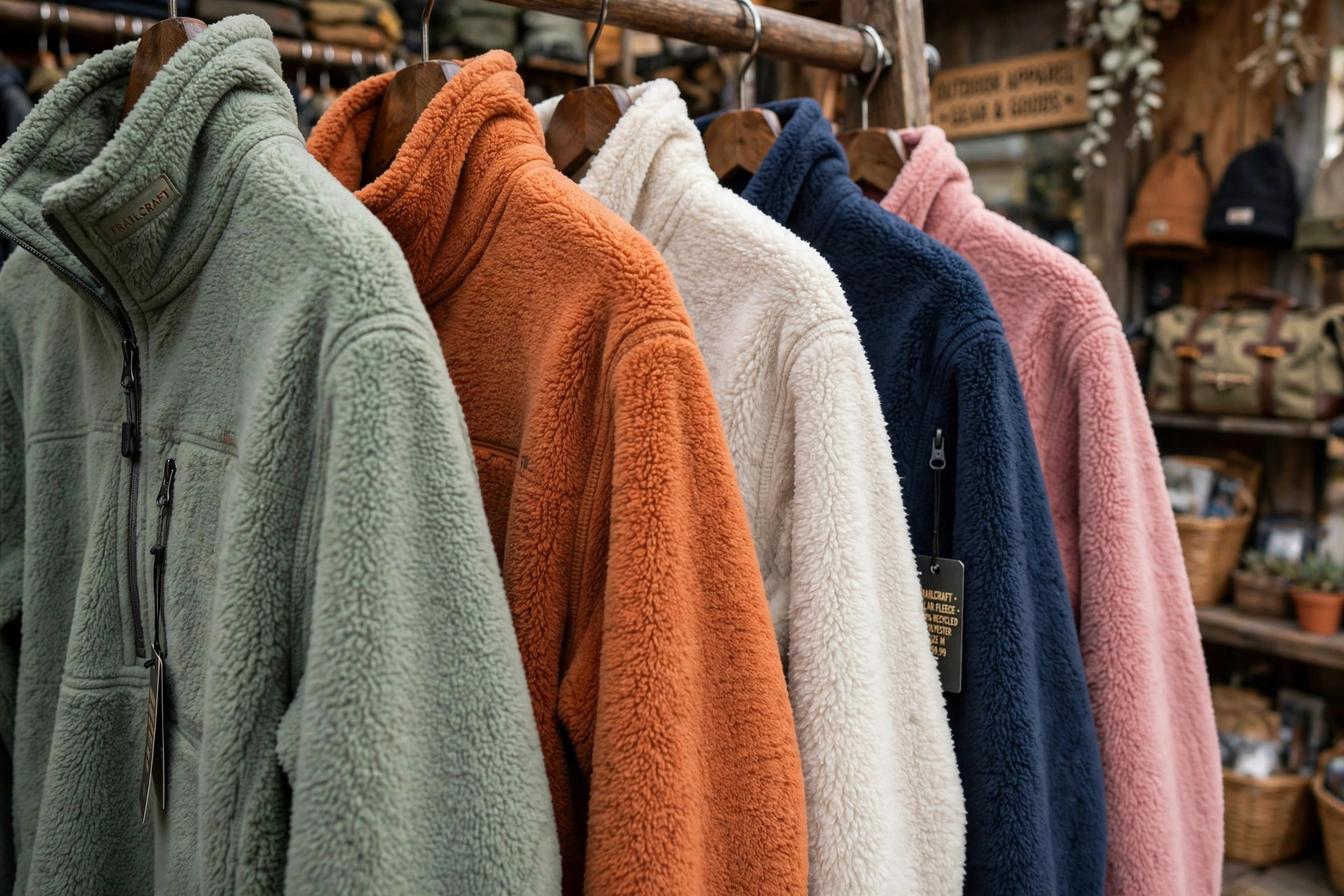
Fleece is a brushed knit prized for warmth without weight. The key buying decision is quality: cheap fleece pills into a rough mat within a season, while good fleece stays soft for years.
Types of Fleece
- Polar fleece - the classic midweight; warm, breathable, widely available.
- Microfleece - thinner and lighter; good for linings and light layers.
- French terry - smooth outside, looped inside; often mistaken for fleece but lighter and less warm.
- Bonded / softshell fleece - fleece laminated to a wind-resistant face for outerwear.
- Berber / sherpa fleece - deep, loopy pile with a cozy, wool-like look.
Choosing Fleece
Look for "anti-pill" on the label - it means the fibers are treated to resist matting. Heavier weights (measured in GSM or simply light/mid/heavy) give more warmth; 200-weight is the versatile middle ground. Stretch it and check recovery, and rub the surface firmly with your palm: if it pills in the store, it will pill at home.
Best Uses
Jackets and pullovers, vests, blankets and throws, children's outerwear, pet beds, and mid-layers for hiking and skiing.
Sewing Tips
- Fleece does not fray, so seam finishes are optional - a straight stitch works.
- Seams get bulky fast; trim and grade seam allowances, and consider flat-felled or overlapped seams.
- Use a ballpoint needle and lengthen the stitch slightly to avoid skipped stitches.
- Mark with chalk or clips rather than pins, which disappear into the pile.
- Reduce presser-foot pressure to keep the feed from stretching the knit.
Care
Wash in cool water and tumble dry low. Skip fabric softener - it coats the fibers and reduces warmth. Wash fleece separately from lint-shedding fabrics like towels, and turn garments inside out to protect the outer face.
Also see the Fleece in the Fashion Glossary and the fleece definition.
Explore more: Fabric Directory | Fabric Industry Guide