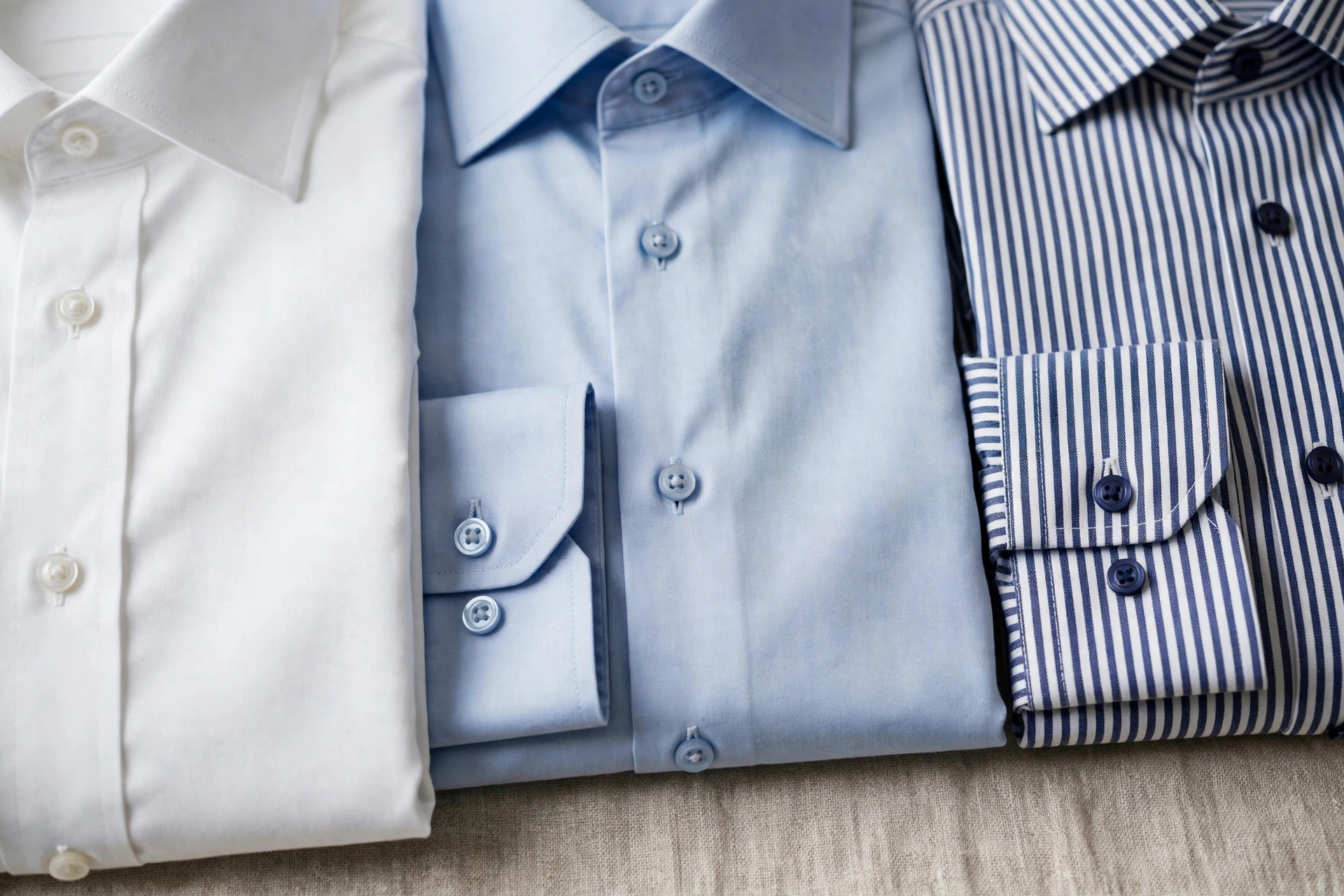
Poplin is a smooth plain weave with a fine crosswise rib - the classic dress-shirt fabric. It is easy to buy badly: thin poplin goes sheer and wrinkles relentlessly, while good poplin presses crisp and lasts.
Types of Poplin
- Cotton poplin - breathable and crisp; the standard for quality shirting.
- Poly-cotton poplin - wrinkle-resistant and durable; common in uniforms and work shirts.
- Stretch poplin - with a touch of elastane for comfort in fitted shirts and dresses.
- Shirting-weight poplin - light and fine for blouses and dress shirts.
- Bottom-weight poplin - heavier for trousers, skirts, and structured dresses.
Choosing Poplin
Hold it to the light - quality shirting poplin should not be see-through. Feel for a smooth, even rib with no slubs. For shirts, look for a tight weave that will hold a crease; for bottoms, choose the heavier weight so it does not cling. Check the fiber content: 100% cotton breathes best, poly blends stay neater through the day.
Best Uses
Dress shirts and blouses, summer dresses, uniforms, children's clothing, quilting, and lightweight trousers and skirts in bottom weights.
Sewing Tips
- Press crisply - poplin rewards a hot iron and rewards it again; use steam for sharp creases.
- Interface collars, cuffs, and plackets with a compatible fusible interfacing.
- Use a sharp universal needle; topstitch at 3mm for a professional shirt finish.
- Pre-wash cotton poplin - it can shrink on the first wash.
- Cut pattern pieces on-grain so the fine rib runs straight.
Care
Machine wash warm and remove promptly. Iron while slightly damp for the crispest finish, or use a steam iron. Poly-cotton blends need less ironing; 100% cotton poplin wrinkles and simply needs the iron - that is the trade-off for the crisp hand.
Also see the Poplin in the Fashion Glossary and the poplin definition.
Explore more: Fabric Directory | Fabric Industry Guide