Apparel Search · Fabric Construction Guide
Woven Fabric Types by Structure
Fabric names are not random — most of them are structure names. Here are the woven cloths of apparel, each mapped to the weave that creates it, so a fabric name tells you how the cloth will behave.
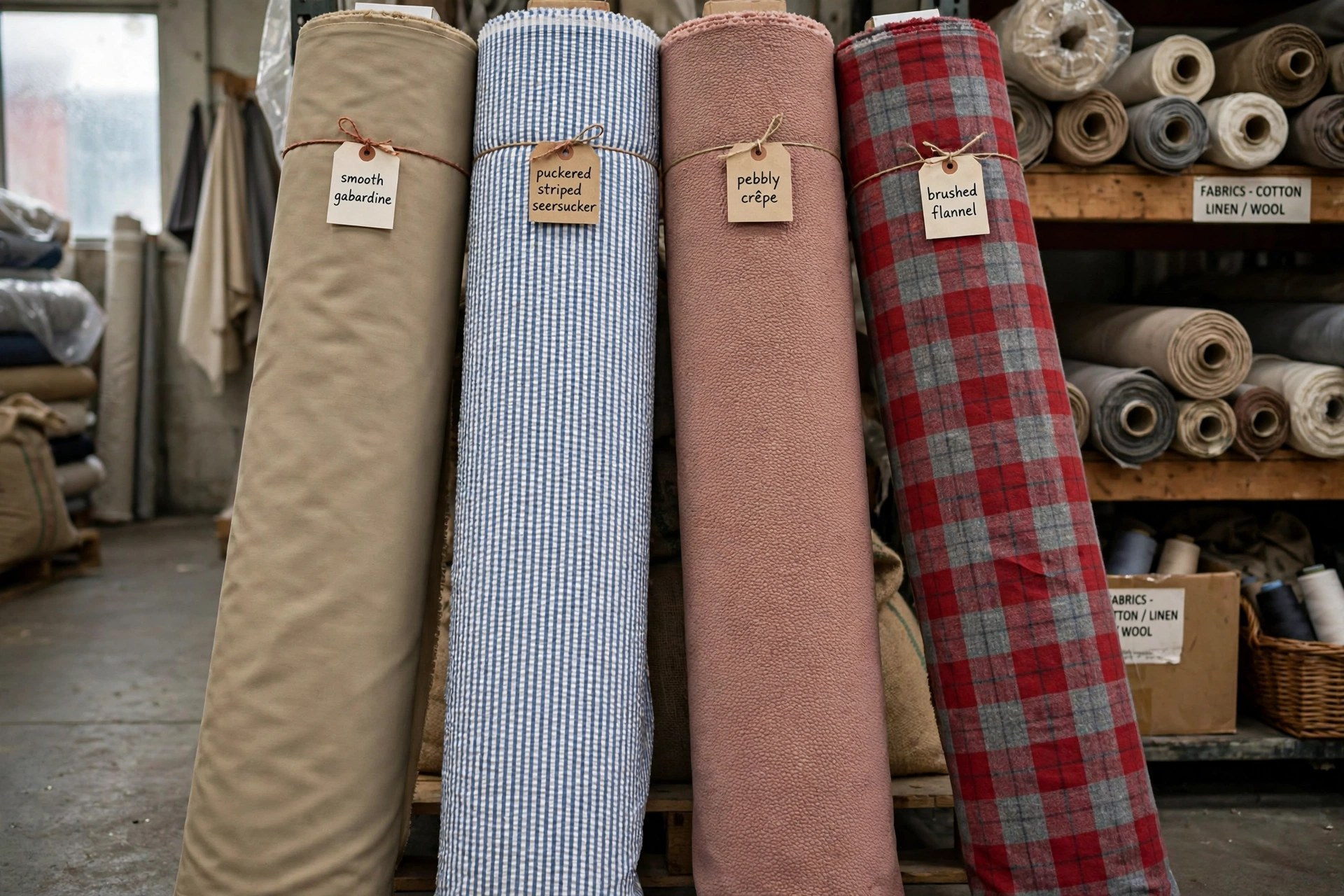
Ask a fabric store for poplin, gabardine or seersucker and you are really asking for a structure: each of those names describes a specific combination of weave, yarn and balance that mills reproduce worldwide. This spoke of the Weaving & Woven Fabric Construction guide maps the apparel fabrics shoppers and product developers meet most often onto the basic weave structures that create them. For shopping-level depth on individual cloths — fiber options, weights, prices and care — follow the links into the Fabric Guides series, which devotes a full guide to each fabric.
Plain-Weave Fabrics
Poplin is plain weave with a fine, dense warp and a slightly heavier weft, which raises a subtle crosswise rib — the crisp hand of dress shirts; the poplin fabric guide covers weights and buying. Lawn, cambric and batiste are fine, light plain weaves with a smooth, almost papery finish for blouses and handkerchiefs. Muslin is the loose, inexpensive plain weave of test garments and sheeting. Voile and organdy push plain weave toward sheer: voile soft and flowing, organdy stiffened to crisp transparency. Canvas and duck sit at the opposite extreme — heavy plain weaves, often with doubled warp yarns, for workwear and bags. Same structure throughout; yarn and density do all the differentiating.
One plain weave deserves a warning of its own: chambray. It is a lightweight plain weave with a colored warp and a white weft, which gives it a mottled, denim-like appearance — but it is not denim, because denim's diagonal twill line and warp-faced depth are absent. Chambray shirts are lighter, softer and smoother than denim shirts, and confusing the two in a product listing is the most common fabric-name error in casual shirting. The comparison is the perfect illustration of this spoke's premise: identical fibers and similar colors, entirely different clothes, decided wholly by structure.
Twill-Weave Fabrics
Denim is the definitive twill: a warp-faced 3/1 twill whose indigo warp dominates the face, treated in depth in the Denim Fabric Guide. Gabardine is a warp-faced twill with a steep, fine diagonal and a hard, smooth finish — the classic raincoat and suiting cloth. Chino is a lighter mercerized twill for trousers; drill a heavier one for workwear. Cavalry twill shows a pronounced double diagonal, and herringbone breaks the twill line into zigzags for suitings and coatings. Wherever a fabric needs drape plus durability — uniforms, bottoms, outerwear — a twill is usually underneath.
Satin-Weave and Pile Fabrics
Sateen is weft-faced satin weave in spun cotton, smooth with a muted sheen, used for shirting, linings and sheeting. Charmeuse is a lightweight satin — traditionally silk, now often polyester — with a liquid drape for blouses, lingerie and bridal wear; the silk fabric guide covers the silk family in full. Pile weaves add a third dimension: velvet raises a dense cut pile over a plain or twill ground (see the velvet fabric guide), velveteen does the same with short cotton pile, and corduroy weaves extra weft that is cut into the familiar lengthwise ribs or wales.
Fabrics Whose Structure Is the Special Effect
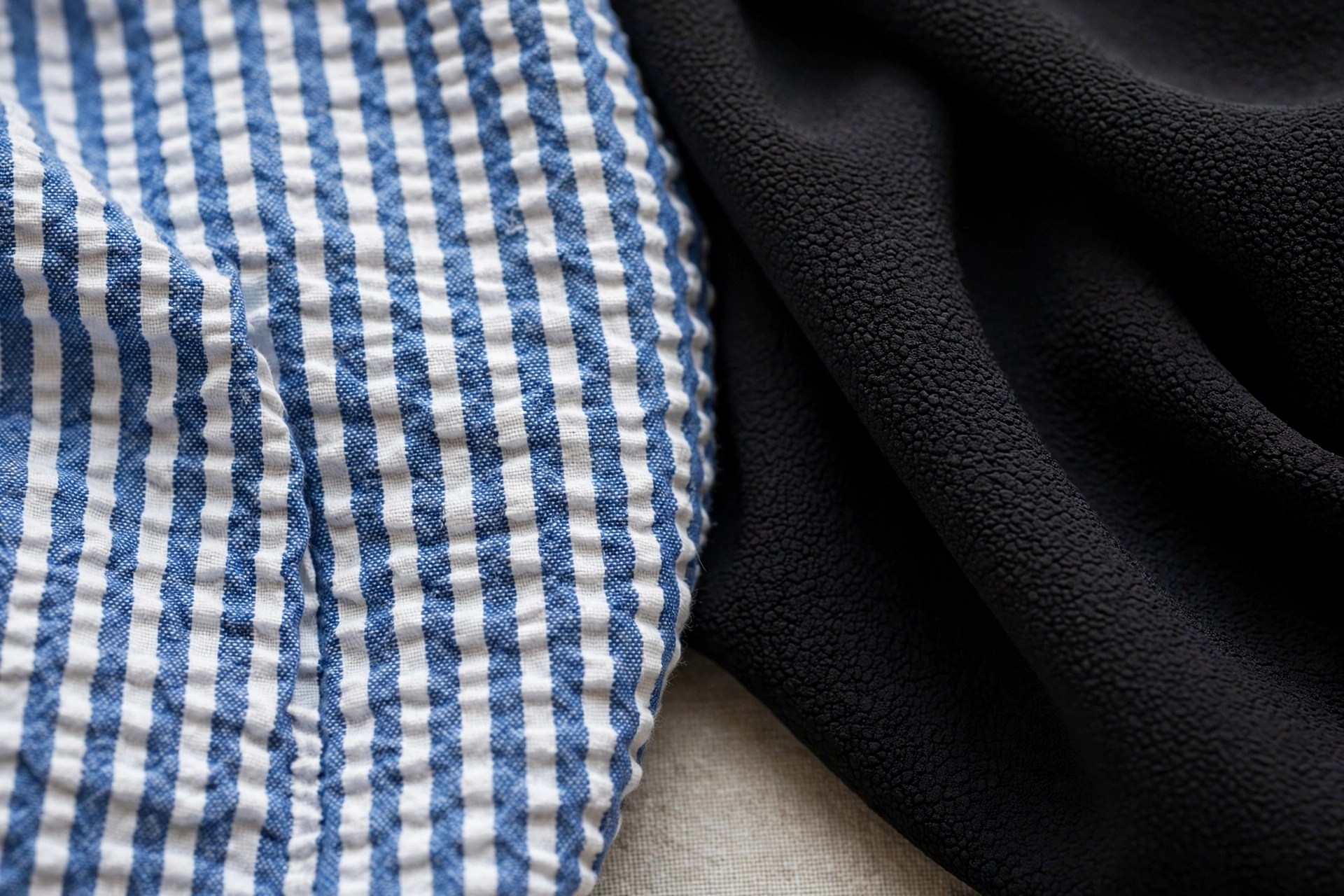
Seersucker is woven with alternating groups of warp yarns held at normal and slack tension; the slack stripes pucker into permanent blisters, holding cloth off the skin in summer suits and shirts — though some modern seersucker imitates the effect with finishing instead. Crêpe uses hard-twisted yarns whose stored torque kinks the surface into its pebbly grain, in plain or satin weave. Flannel begins as a plain or twill weave and becomes flannel only when a napping finish raises a soft fiber layer over the structure — a reminder that names can describe a finish rather than a weave. Linen, finally, is a fiber name, not a structure: most linen apparel cloth is plain weave, and the linen fabric guide explains its slubbed, breathable character. Holding the two systems apart — what a fabric is made of versus how it is built — is the whole discipline this cluster teaches.
Structure Names vs Fiber Names
Poplin, gabardine, denim, sateen and seersucker name constructions — each can be woven from several fibers. Cotton, linen, silk and wool name fibers — each can be woven into many constructions. A complete fabric description needs one of each: “cotton poplin” and “silk charmeuse” tell you the material and the architecture, and together they predict hand, drape, care and price.
One name that belongs to neither list is jersey — it is a knit, not a weave, and appears here only as the standard contrast: the jersey fabric guide covers the knit side, and the final spoke of this cluster, Woven vs Knit Fabrics, compares the two constructions directly.
Common Questions
Is poplin a fiber or a weave?
Poplin is a weave — a plain weave built with a fine, dense warp and a slightly heavier weft, producing a subtle crosswise rib and a crisp hand. It is most often cotton or a cotton blend for shirting, but the name describes the construction, not the fiber, so wool and silk poplins also exist.
What weave is gabardine?
Gabardine is a warp-faced twill weave, woven with many more warp ends than weft picks so the diagonal rib is steep and fine. Traditionally worsted wool with a hard, water-shedding finish for raincoats, it is now also made in cotton and blends for suits and trousers.
How does seersucker get its puckers?
True seersucker is woven with stripes of warp yarn held at two different tensions — normal and slack. The slack stripes have extra length, so they buckle into permanent puckers when the cloth relaxes off the loom. The raised stripes hold the fabric away from the skin, which is why seersucker suits and shirts feel cool in summer.
Is flannel a weave?
Not exactly. Flannel starts as a plain weave or a twill weave, usually in wool or cotton, and becomes flannel when a napping finish raises a soft layer of fiber ends over the surface. The name describes the finish applied to the cloth rather than the structure underneath it.
Back to the Weaving & Woven Fabrics Guide
The Weaving & Woven Fabrics hub maps the whole construction story — the loom cycle, loom types, the three basic structures and patterned weaving.