Apparel Search · Fabric Construction Guide
Weaving & Woven Fabric Construction
How two sets of yarn become cloth — the loom cycle, the machines that run it, the plain, twill and satin structures underneath almost every woven fabric, and the named cloths those structures create.
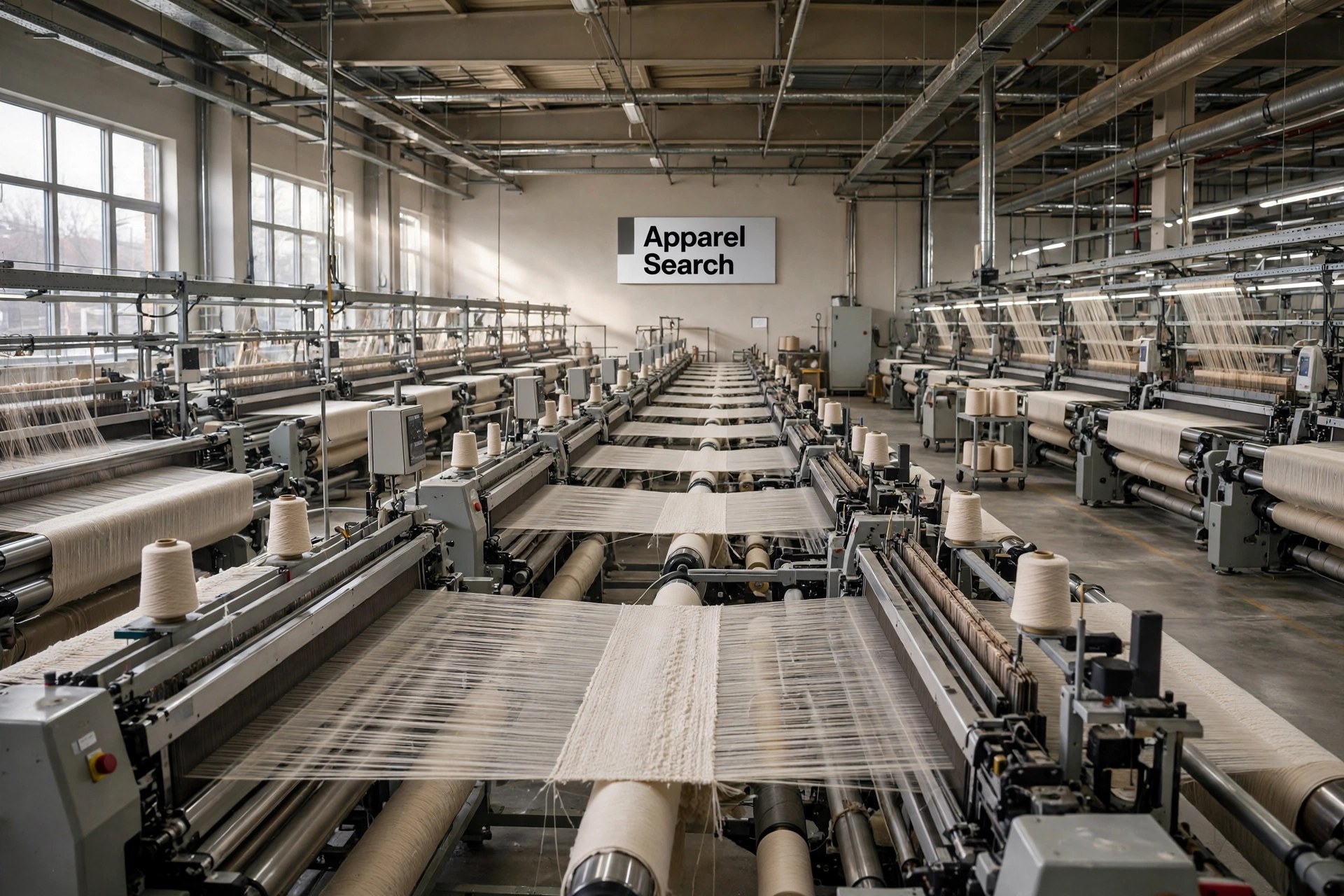
Almost every garment starts as one of two constructions: yarns interlaced at right angles on a loom, or yarns looped through each other by needles. This guide covers the first of them — weaving — the construction behind dress shirts, denim, suiting, sheeting and most of the structured clothing in any wardrobe. Its companion, the Knitwear Construction Guide, covers the looped side of the fabric world; together the two guides explain how nearly all apparel fabric is made.
Woven fabric looks simple — a grid of threads — but that grid is engineered. The choice of weave structure decides whether a cloth is crisp or fluid, matte or lustrous, stable or supple, long before fiber, color or finish enter the picture. A product developer who cannot read a weave will misjudge a fabric from its swatch; a shopper who can read one understands why two cotton shirts behave completely differently. The six guides in this cluster build that literacy from the loom up.
Woven Fabric, Defined
A woven fabric is made by interlacing two sets of yarns at right angles on a loom: the warp, held lengthwise under tension, and the weft (or filling), inserted crosswise one row — one pick — at a time. The pattern of over-and-under interlacing is the weave structure, and it is fixed the moment the cloth leaves the loom. See the full glossary entry for weaving and woven fabric in the Apparel Search definitions.
The Six Guides in This Cluster
Start with how a loom works, then move through the machines, the three fundamental structures, patterned weaving, and the named fabrics those structures produce. The final guide puts wovens side by side with knits so you can choose between them deliberately.
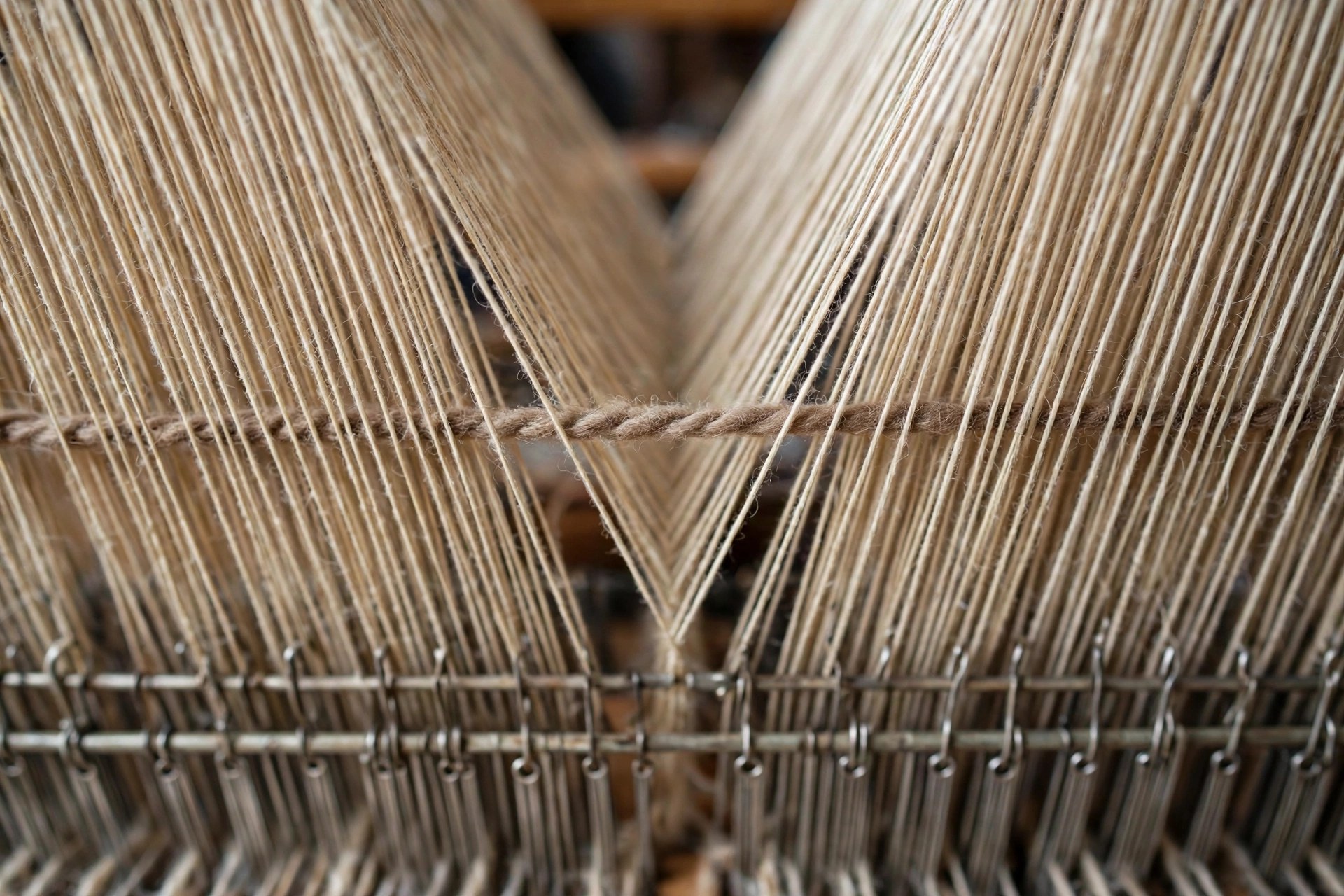 How Weaving WorksWarp and weft, the shed, the pick and the beat-up — the loom cycle that turns two sets of yarns into one cloth, explained step by step.
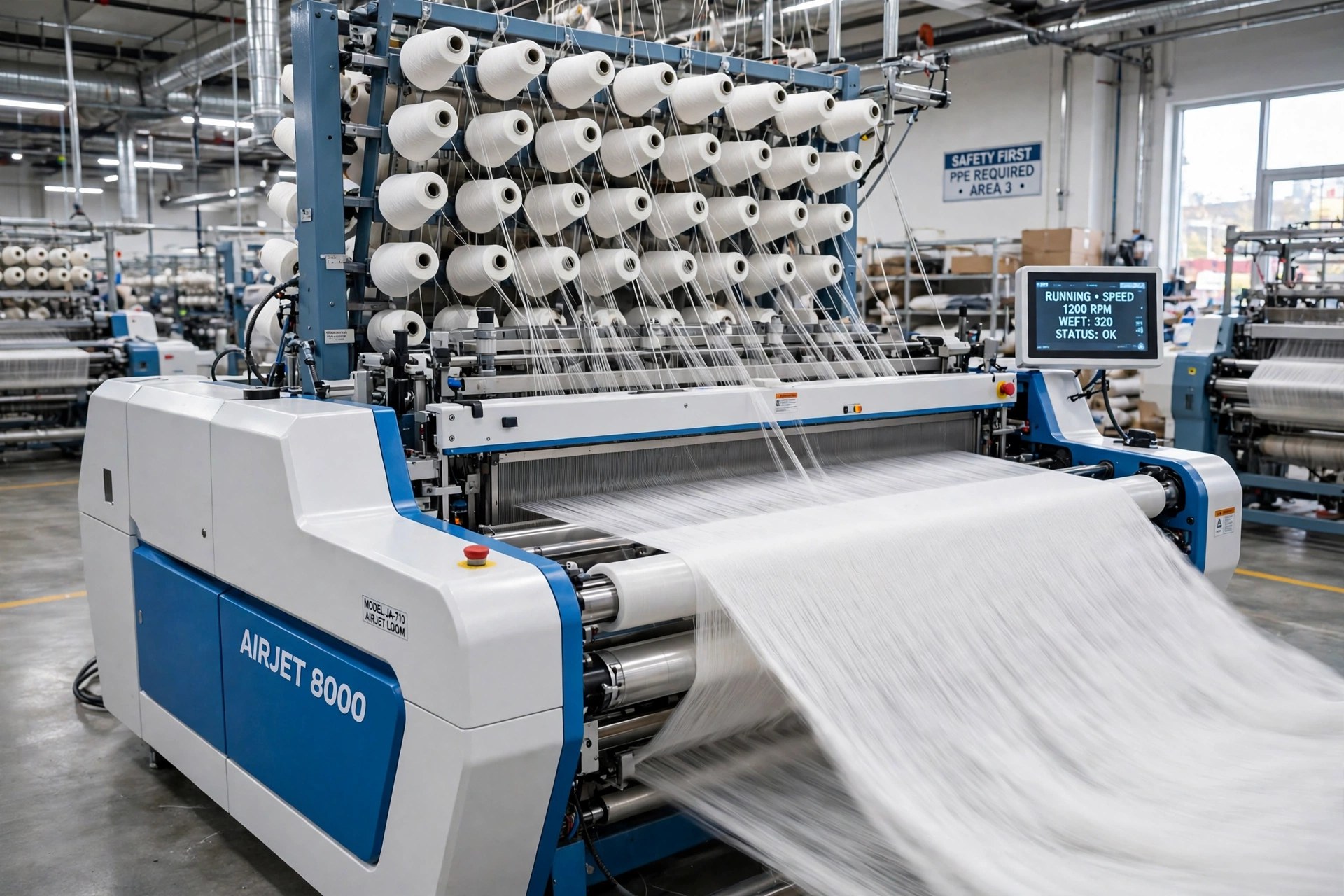 Types of LoomsShuttle, projectile, rapier, air-jet and water-jet looms — how each one carries the weft, how fast it runs, and what it weaves best.
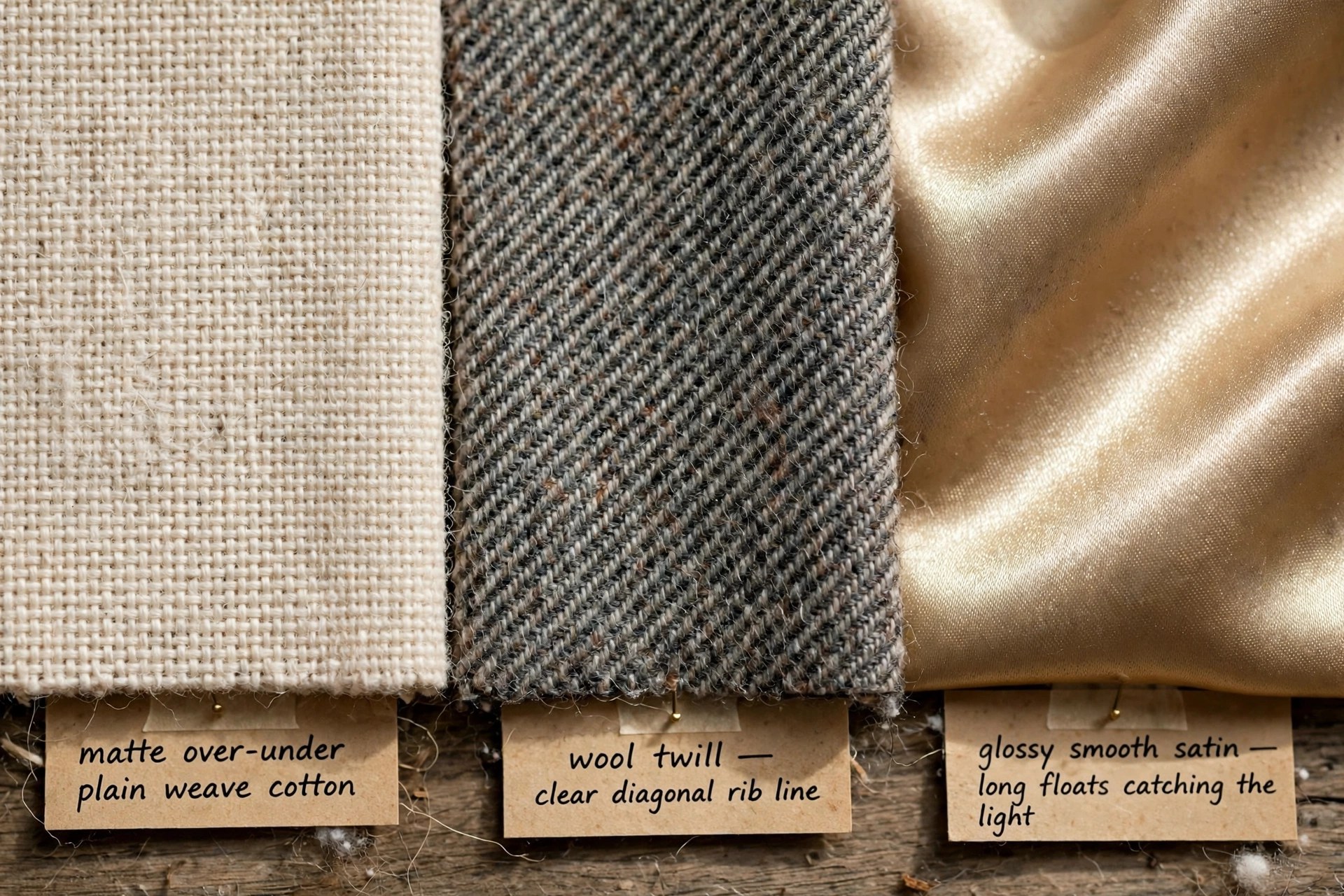 Basic Weave StructuresPlain weave, twill and satin are the three structures almost every woven fabric is built on — plus basket, rib and herringbone derivatives.
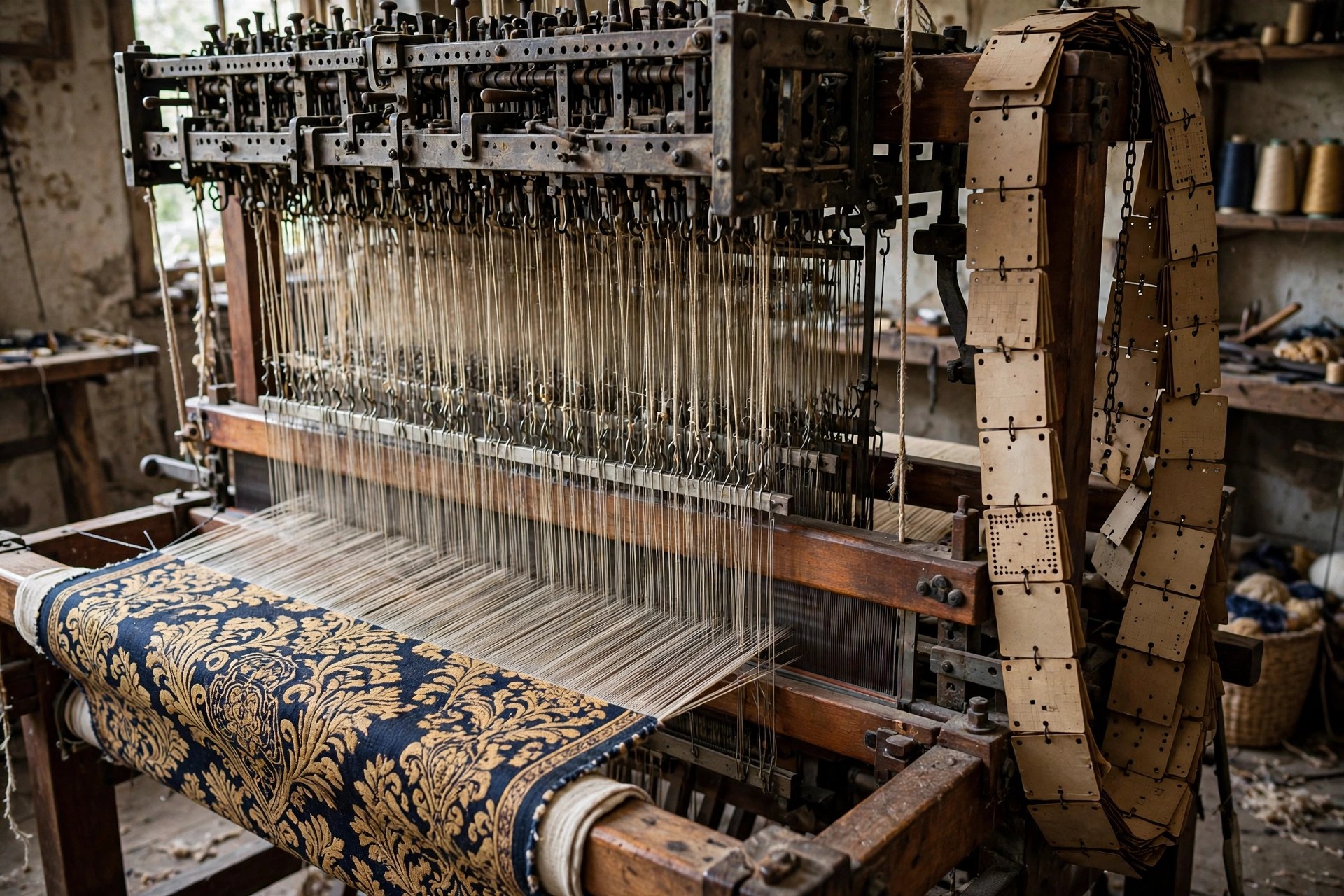 Dobby & Jacquard WeavingHow looms weave pattern into the cloth itself — dobby shafts for small geometry, jacquard control of every warp thread for damask and brocade.
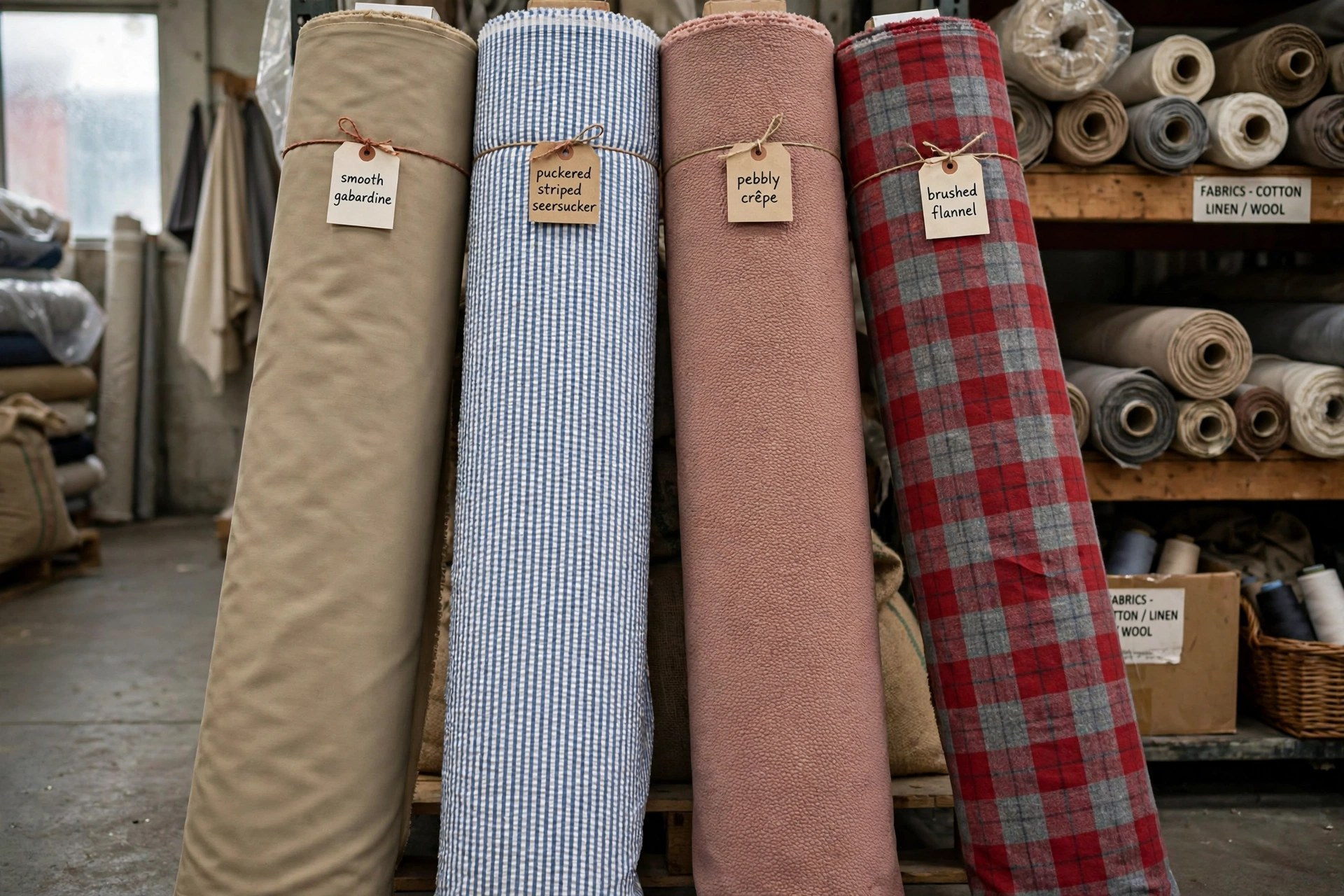 Woven Fabric Types by StructurePoplin, gabardine, seersucker, crêpe, flannel and more — the named fabrics in the store, mapped to the weave structures that create them.
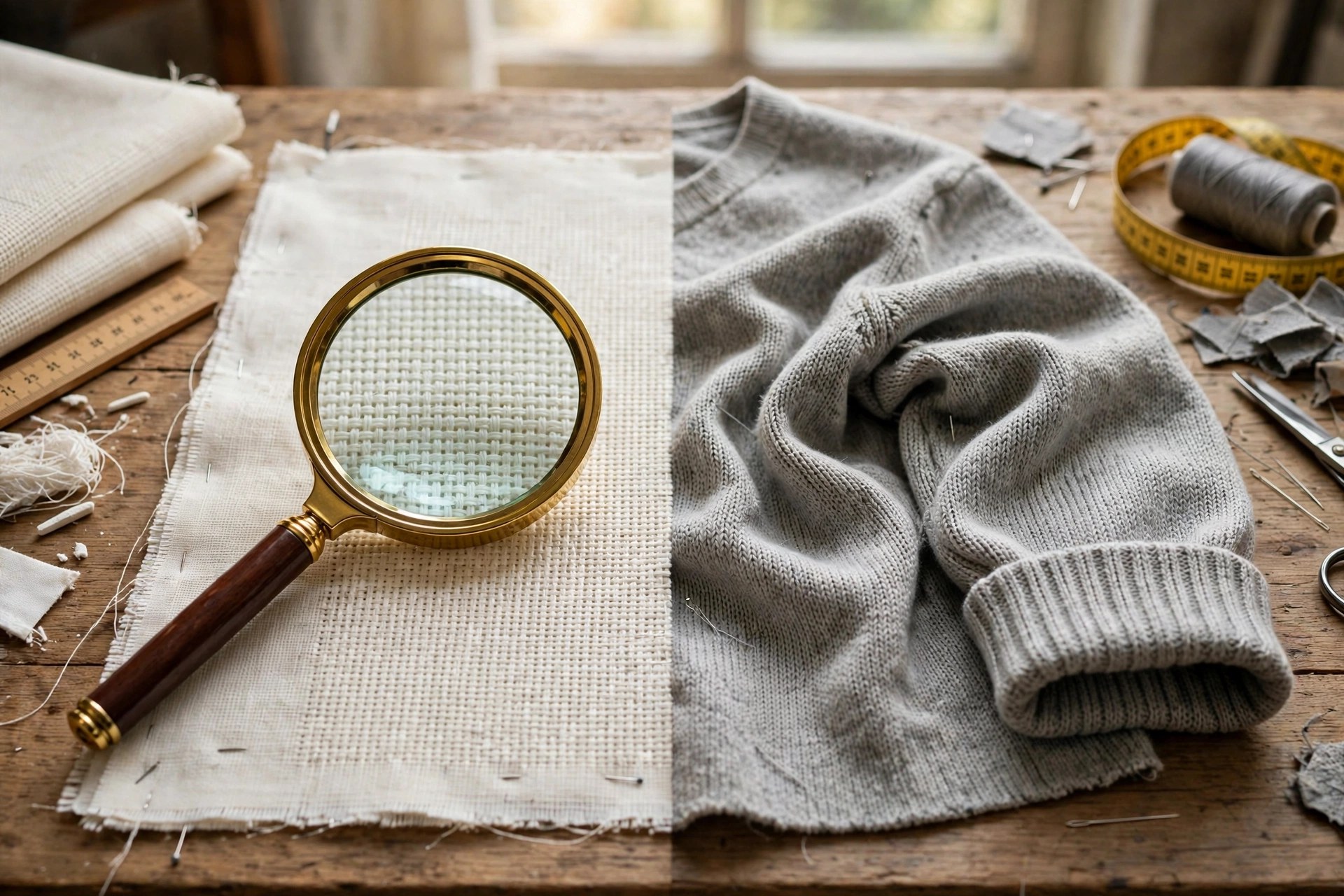 Woven vs Knit FabricsInterlaced yarns or interlooped yarn — the structural difference behind stretch, drape and stability, and how to choose between them.
Two Yarn Systems, One Cloth
Everything in weaving follows from the warp-and-weft arrangement. Warp yarns run the length of the fabric and are prepared first, wound onto a beam and threaded through the loom under tension; they must be strong and smooth enough to survive thousands of abrasion cycles during weaving, so warp yarns are typically harder-twisted and sometimes sized with a protective coating. Weft yarns travel across, one pick at a time, and can afford to be softer, bulkier or more decorative, because the loom treats them gently. This is why so many fabrics are warp-faced or weft-faced by design — denim shows its indigo warp on the surface while the undyed weft hides beneath, and sateen lets the weft float on top for a smooth, lustrous face. The yarns themselves — their fiber, count and twist — are covered by the Yarn & Spinning Guide, the upstream companion to this cluster.
The edges of the cloth matter too. As the weft turns at each side it forms the selvedge, a self-finished edge that keeps the fabric from unraveling on the roll. Shuttle looms produce the continuous, tightly woven selvedges prized in selvedge denim; shuttleless looms trim or tuck their edges instead. Roll goods are sold by these full widths, and cutting rooms plan markers around them — one of many places where weaving decisions surface later as garment cost.
Where Weaving Sits in the Bigger Picture
Weaving is the middle of the fabric story. Before it come fibers and yarns; after it come dyeing, printing and finishing, which can transform a plain grey cloth (mills call loom-state fabric greige goods) beyond recognition. What finishing cannot do is change the structure: a plain weave stays a plain weave under any print. That is why this cluster treats structure as the foundation and links outward — to the Textile Testing & Quality Standards guide for how woven constructions are measured and graded, and to the fabric-by-fabric guides in the Fabric Guides series, which look at individual cloths such as poplin, denim, linen and silk in shopping depth.
One structure deserves a pointer of its own. Twill is the weave of workwear, and its most famous fabric gets a dedicated treatment in the Denim Fabric Guide — including a spoke on types of denim weave that follows twill into right-hand, left-hand and broken variations. This cluster covers twill as a general structure and leaves the denim-specific story there.
Related Guides
Common Questions
What is woven fabric?
Woven fabric is cloth made by interlacing two sets of yarns at right angles on a loom. The lengthwise set is the warp, held under tension, and the crosswise set is the weft, inserted one row at a time. The over-and-under pattern the yarns follow is called the weave structure, and it is set permanently as the cloth is woven.
What are the three basic weave structures?
Plain weave, twill and satin. Plain weave interlaces one-over, one-under and is the simplest and most common structure. Twill steps the interlacing sideways each row to form diagonal lines, as in denim and gabardine. Satin floats yarns over several threads before binding them down, producing a smooth, lustrous surface.
What is the difference between warp and weft?
Warp yarns run lengthwise, are wound on the loom beam and held under tension throughout weaving, so they are usually stronger and more tightly twisted. Weft yarns (also called filling or picks) run crosswise and are inserted one at a time through the opened warp. Many fabrics are designed to show one set on the face: denim is warp-faced, sateen is weft-faced.
How is woven fabric different from knit fabric?
Woven fabric is interlaced on a grid, which makes it stable, strong and low in stretch unless elastic yarns are added. Knit fabric is made of interlocking loops from a single yarn system, which makes it naturally stretchy, softer-draping and more wrinkle-resistant, but prone to running or laddering if a loop breaks. The woven versus knit guide in this cluster compares them property by property.
New to Fabric Construction?
Start one step upstream with the fiber library — the Fibers Guide explains the raw materials every warp and weft yarn begins as.