Apparel Search Guide · The Upstream Series
Yarn & Spinning Guide
Every fabric begins as yarn. This guide explains what yarn is, how spinning makes it, how its fineness is counted, and how twist and preparation decide what the finished cloth will feel like.
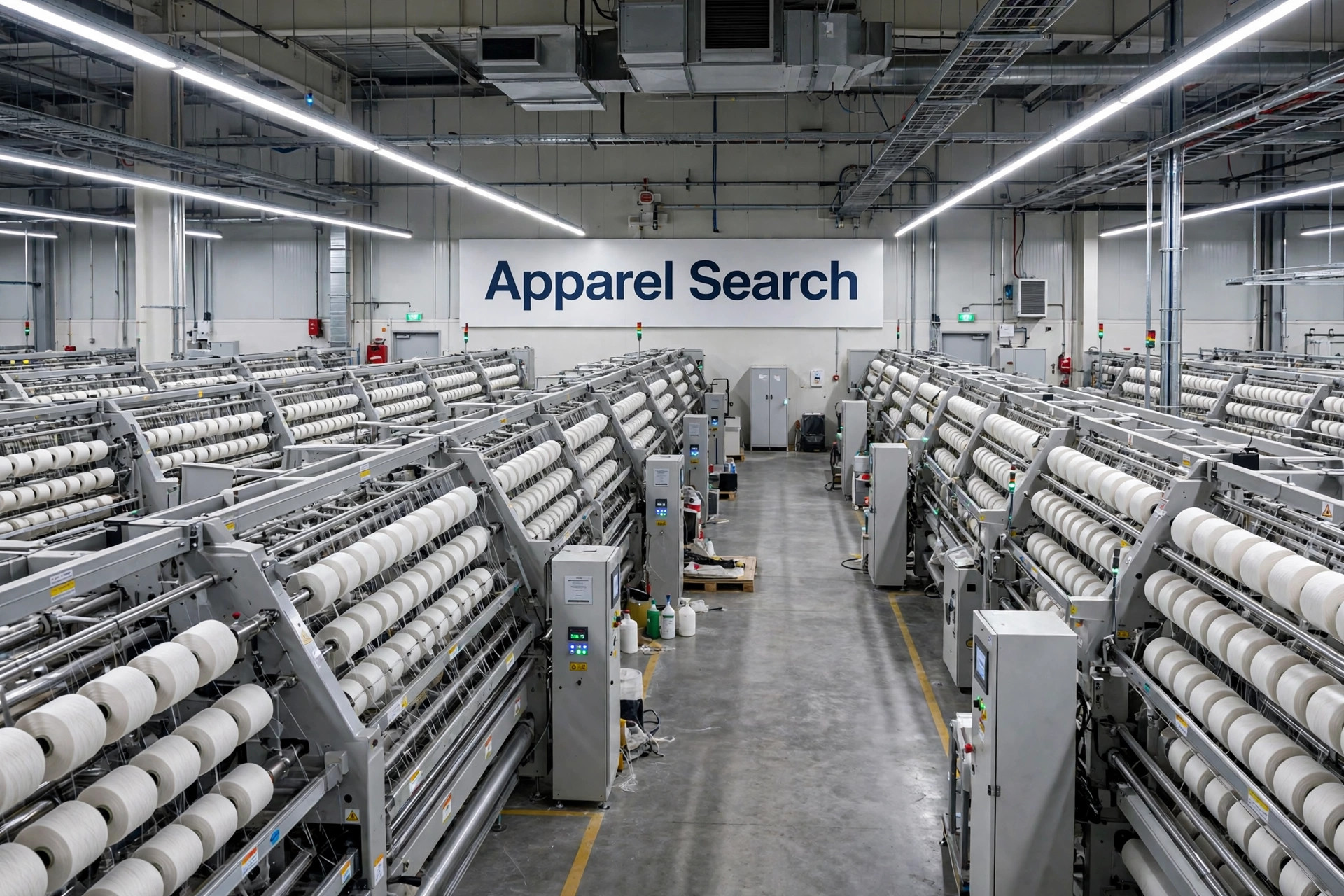
Between the fiber and the fabric stands the yarn. A cotton boll, a wool fleece or a bale of polyester staple cannot be woven or knitted until it has been opened, cleaned, aligned, drawn out and twisted into a continuous strand of a chosen thickness — and almost everything a finished fabric does, from its softness and strength to its tendency to pill, is substantially decided in that transformation. Buyers feel it when a t-shirt loses its surface after ten washes; knitters feel it when one ball of wool stitches crisply and the next feels like rope. The difference is usually in the yarn: its fiber, its count, its twist, and the way it was prepared and spun.
This hub gathers the complete Apparel Search treatment of yarn in six guides. They run in the order a mill thinks: first the types of yarn you can make, then the spinning methods that make them, then the count systems that specify fineness, the twist that gives yarn its character, the preparation routes — carded, combed, woolen and worsted — and finally how to choose yarns for knitted and woven fabrics. Each guide also works as a standalone reference, so you can enter at the question you actually have.
Yarn, Defined
Yarn is a continuous strand composed of textile fibers or filaments, twisted or otherwise held together, suitable for use in weaving, knitting, sewing, embroidery or rope making. A spun yarn is made from short staple fibers held together by twist; a filament yarn is made from one or more long continuous filaments, with little or no twist. Yarn is the intermediate product between fiber and fabric — and the point in the chain where quality is most quietly decided.
From Fiber to Yarn: The Journey
Whatever the spinning system, the journey has the same shape. Bales are opened and the fiber is cleaned and blended; carding disentangles it into a soft rope called a sliver; drawing pulls several slivers together and drafts them thinner and more even; on some routes a combing step removes the short fibers for a smoother yarn; the sliver becomes a finer, slightly twisted roving; and the spinning frame draws the roving out to its final count and inserts the twist that locks it together. Winding then clears defects and puts the yarn on the cones and cheeses the weaving and knitting mills buy.
Opening & Carding
Bales are opened, trash and dust are removed, and the card disentangles the fibers into a uniform web condensed into sliver.
Drawing
Several slivers are combined and drafted between roller pairs, evening out irregularities and straightening the fibers.
Combing (Optional)
For finer, smoother yarns, a comber removes the short fibers and leaves the long ones parallel. Carded-only yarns skip this step.
Roving
The sliver is drawn finer still and given a slight protective twist, producing the roving that feeds the spinning frame.
Spinning
The frame drafts the roving to the target count and inserts the working twist — by ring and traveler, rotor, air jet or compact system.
Winding
Yarn is wound onto cones, weak places and faults are cut out and the ends spliced, ready for the loom or knitting machine.
The Six Guides in This Cluster
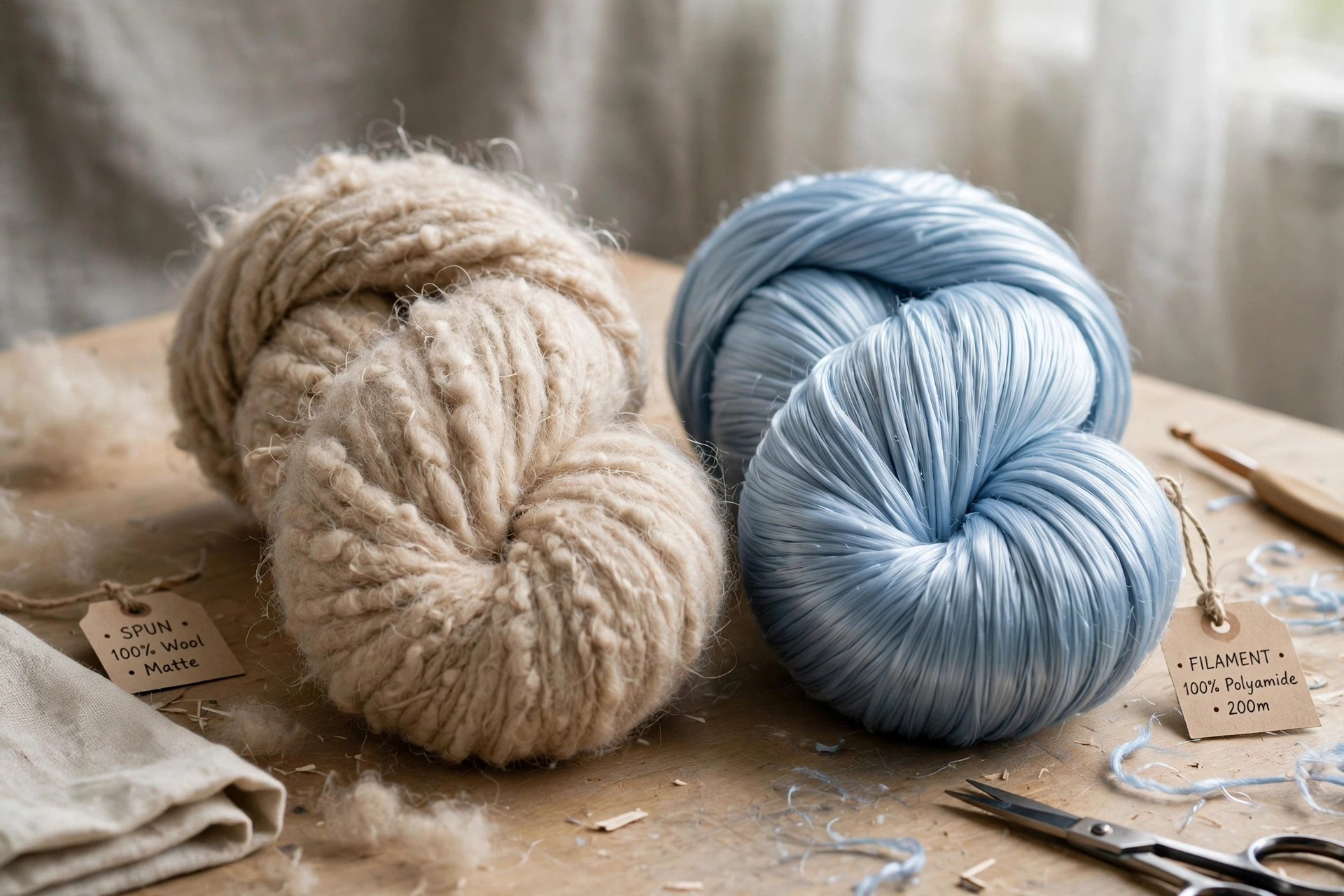 Types of Yarn ExplainedSpun versus filament, single, ply and cord yarns, core-spun yarns, and the novelty family — slub, bouclé, chenille and more.
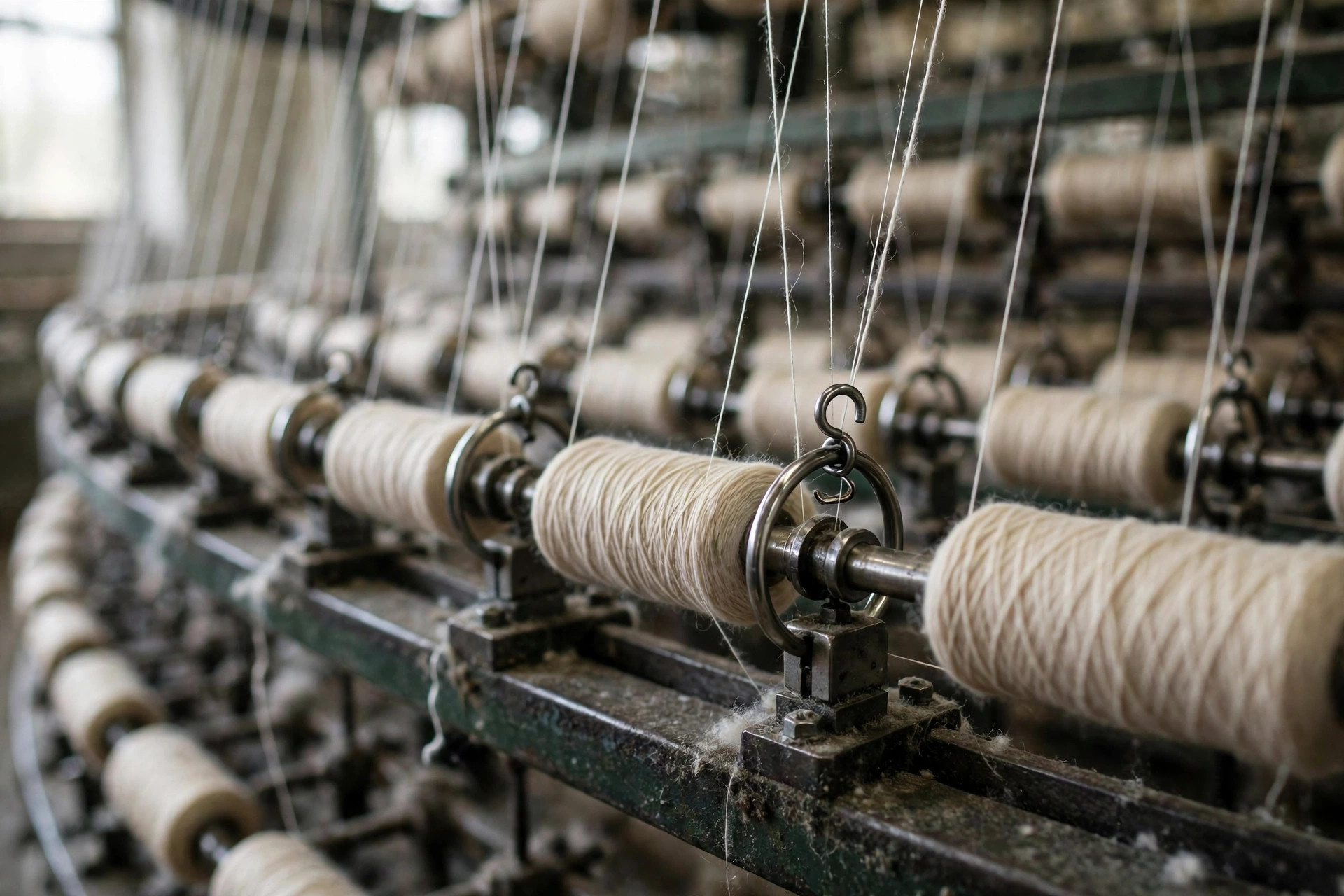 Spinning Methods ExplainedRing, rotor (open-end), air-jet and vortex, and compact spinning compared — speed, strength, hairiness, cost and typical uses.
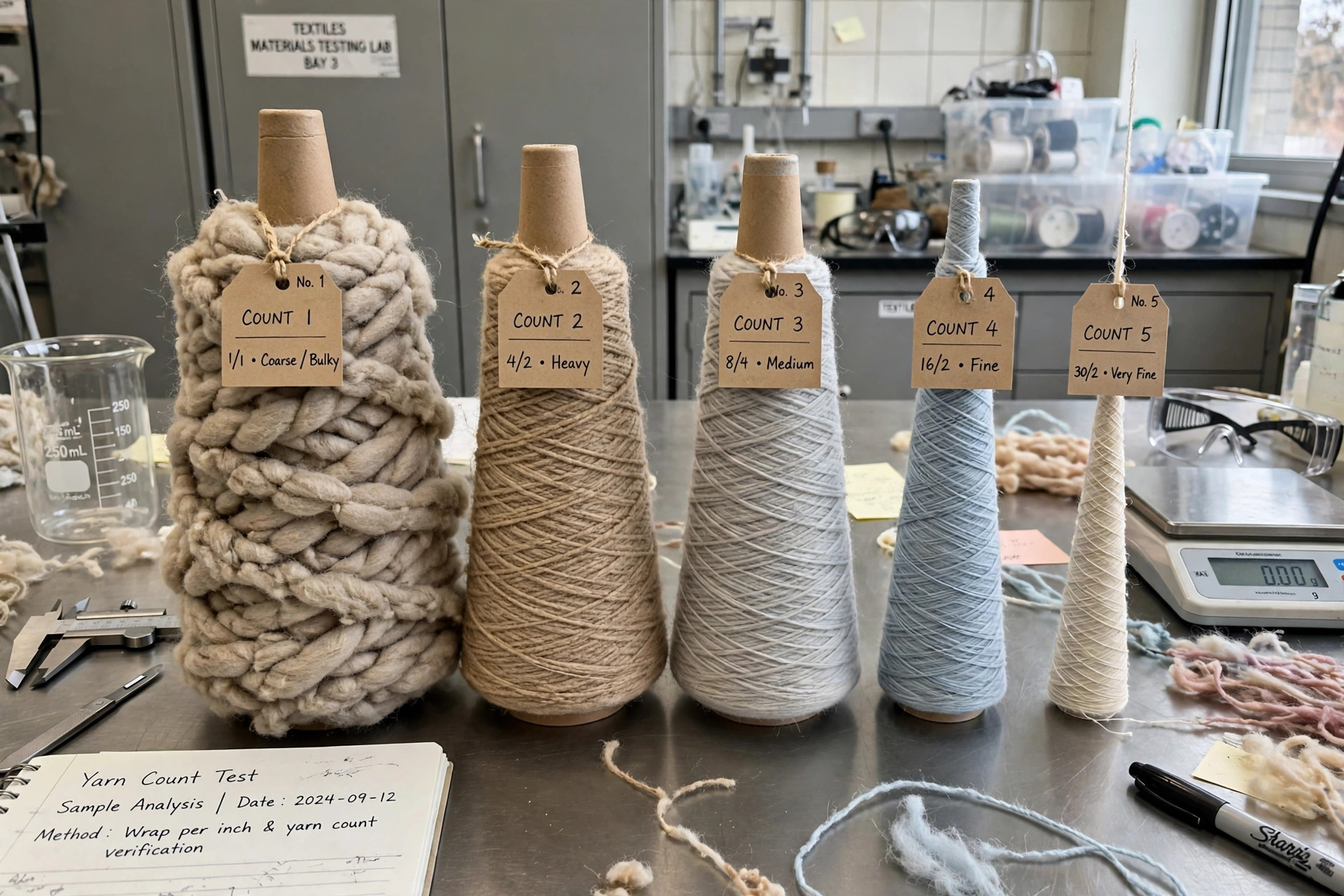 Yarn Count SystemsNe, Nm, tex and denier explained, with the conversion formulas, a worked example and a full conversion table.
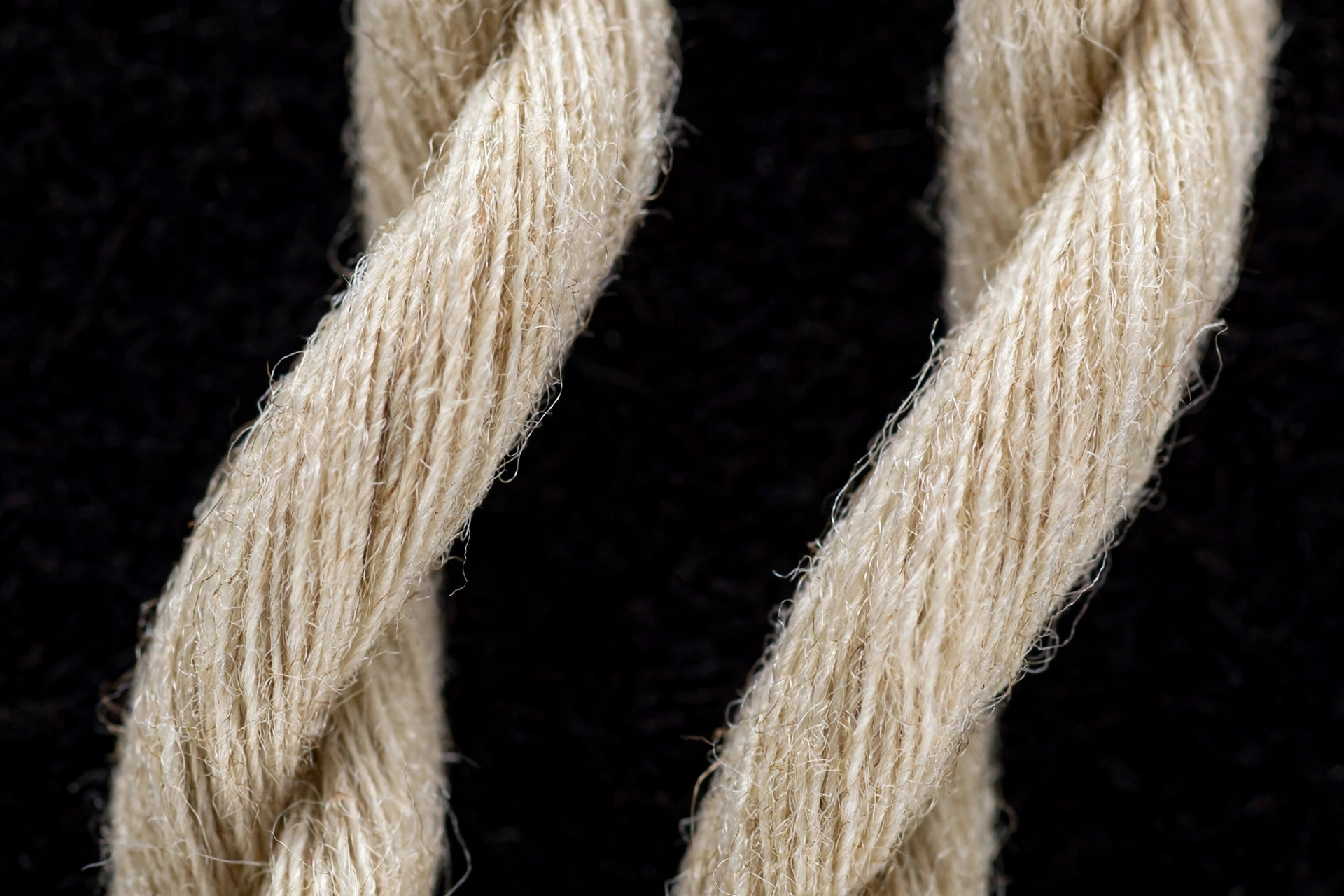 Yarn Twist ExplainedS twist and Z twist, turns per inch, the twist multiplier, and how twist level changes a fabric's hand, strength and surface.
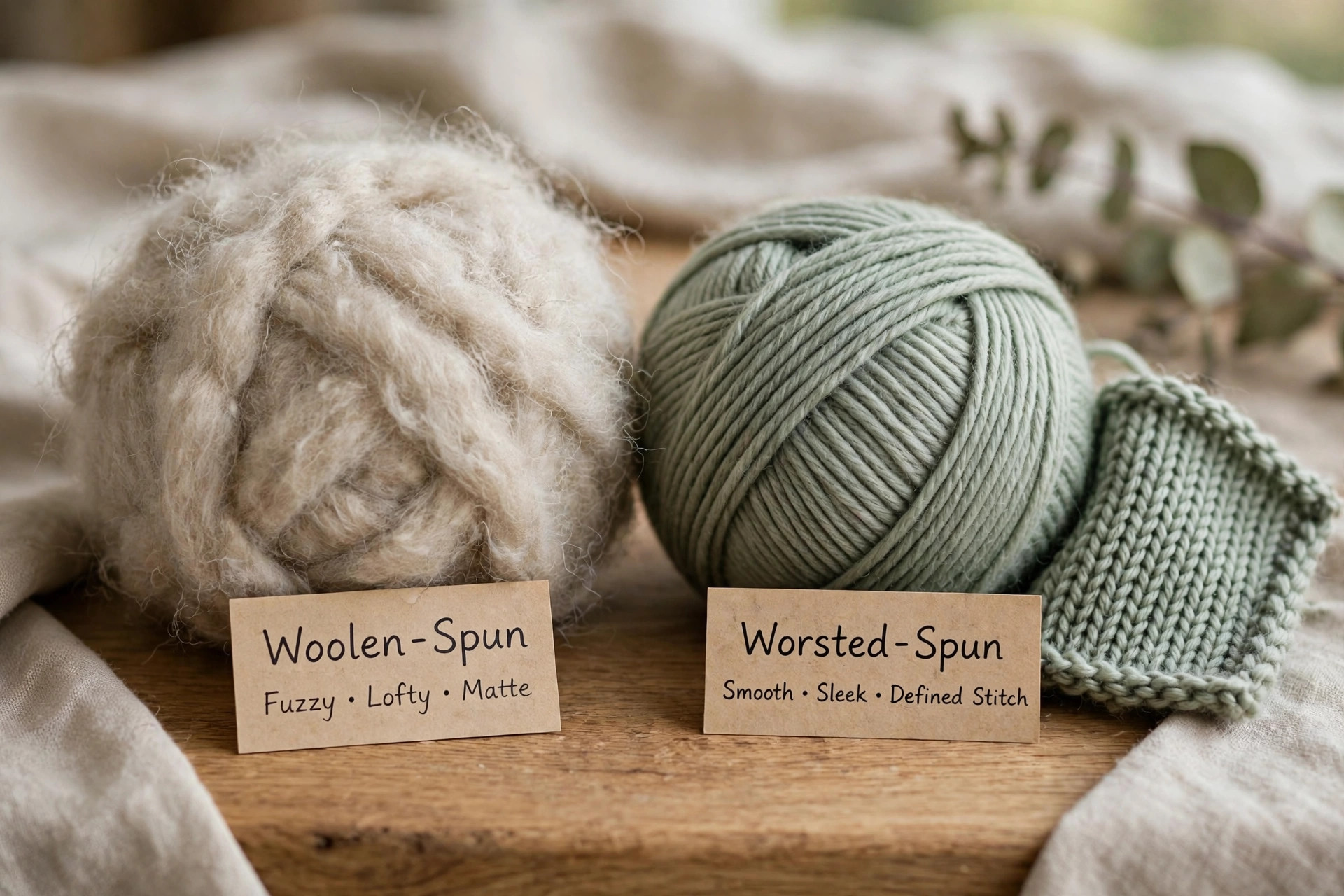 Carded vs. Combed, Woolen vs. WorstedThe preparation routes behind yarn character — why combed and worsted yarns are smooth, and carded and woolen yarns are lofty.
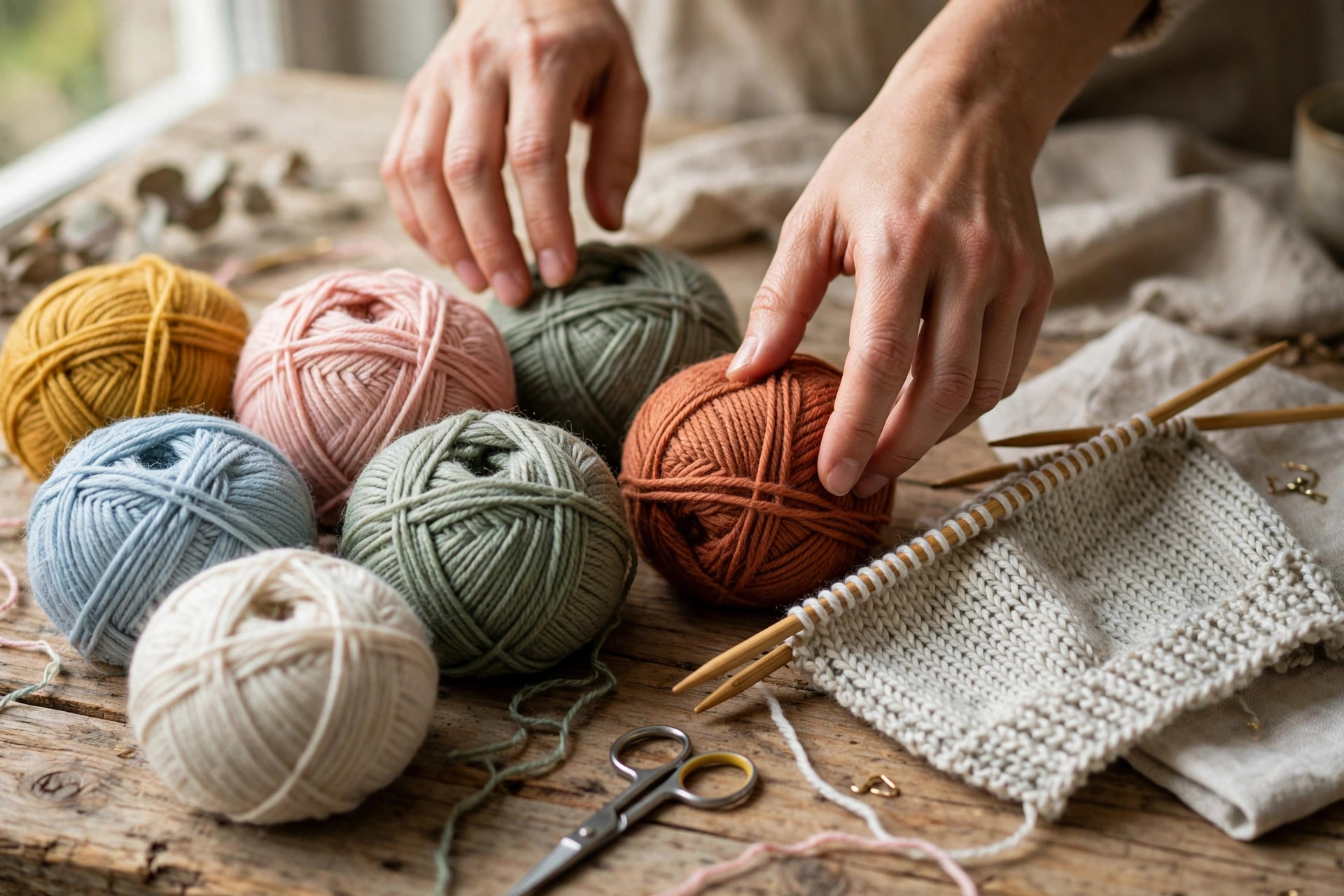 Choosing Yarns for Knits & WovensMatching fiber, count, twist and ply to the fabric: soft low-twist yarns for knits, strong even yarns for warps, and the classic pairings.
Reading a Yarn Specification
Yarn is bought and sold in shorthand, and a full specification compresses most of this guide into one line. Take Ne 30/1 combed ring-spun cotton, Z twist: the fiber is cotton; Ne 30 is the count — a medium-fine single yarn in the English cotton system; /1 says it is a single, not a ply; combed records the preparation route, promising a smoother, stronger, more lustrous yarn than a carded equivalent; ring-spun names the spinning system; and Z twist gives the twist direction. Read the six guides and a line like that stops being code — it becomes a prediction of how the fabric will look, feel and wear.
Yarn also sits in the middle of the site’s wider fabric story. It starts in the fiber library, becomes fabric in the knitwear and weaving guides linked below, and is judged in the laboratory by the testing guide. This hub is the connective tissue between them.
The Classic Count References
Common Questions
What is yarn?
Yarn is a continuous strand of textile fibers or filaments, twisted or otherwise held together, that is made to be knitted, woven or otherwise converted into fabric. Short staple fibers are spun into spun yarn; long continuous filaments form filament yarn.
What is spinning in textiles?
Spinning is the process that turns prepared fibers into yarn: the fiber strand is drawn out to the required fineness and twist is inserted to give it strength. The main modern systems are ring spinning, rotor (open-end) spinning, air-jet or vortex spinning and compact spinning.
What does yarn count mean?
Yarn count is the number that states how fine or coarse a yarn is. Indirect systems such as English cotton count (Ne) and metric count (Nm) give a higher number for a finer yarn; direct systems such as tex and denier give a higher number for a heavier, coarser yarn.
Why does yarn choice matter for fabric?
The yarn decides much of the finished fabric before weaving or knitting begins: its fiber, count, twist and preparation route set the fabric’s weight, softness, strength, surface texture, pilling behaviour and cost. Two fabrics woven the same way from different yarns can feel and perform completely differently.
Start One Step Earlier: The Fibers
Yarn begins as fiber, and the fiber sets the ceiling on everything the spinner can achieve. The Apparel Search Fibers Guide covers cotton, wool, silk, linen and the manufactured fibers that feed the spinning frames in this guide.