Yarn & Spinning Guide · Choosing
Choosing Yarns for Knits & Wovens
The same fiber can become a sweater or a sailcloth. The choice of yarn — fiber, count, twist, ply and preparation — is what steers it.
Every earlier guide in this cluster named a decision — type, spinning method, count, twist, preparation. Choosing a yarn means making all five decisions at once, against the demands of the fabric the yarn will become. This closing guide of the Yarn & Spinning Guide works through those demands, structure by structure: what knitting asks, what weaving asks, and why the warp asks most of all.
The Five Levers, in the Order Buyers Pull Them
Fiber comes first, because it sets the ceiling: warmth, moisture behaviour, luster and price are all substantially fiber properties, surveyed in the Fibers Guide. Count comes second, because it sets the fabric’s weight class and fineness. Twist follows: the same count spun soft becomes a knitting yarn, spun hard becomes a warp yarn. Construction — single or ply, plain or core-spun — tunes strength, roundness and function. And preparation — carded or combed, woolen or worsted — sets the surface the customer will see and feel. A yarn specification is simply these five decisions written in shorthand.
What Knitting Asks of a Yarn
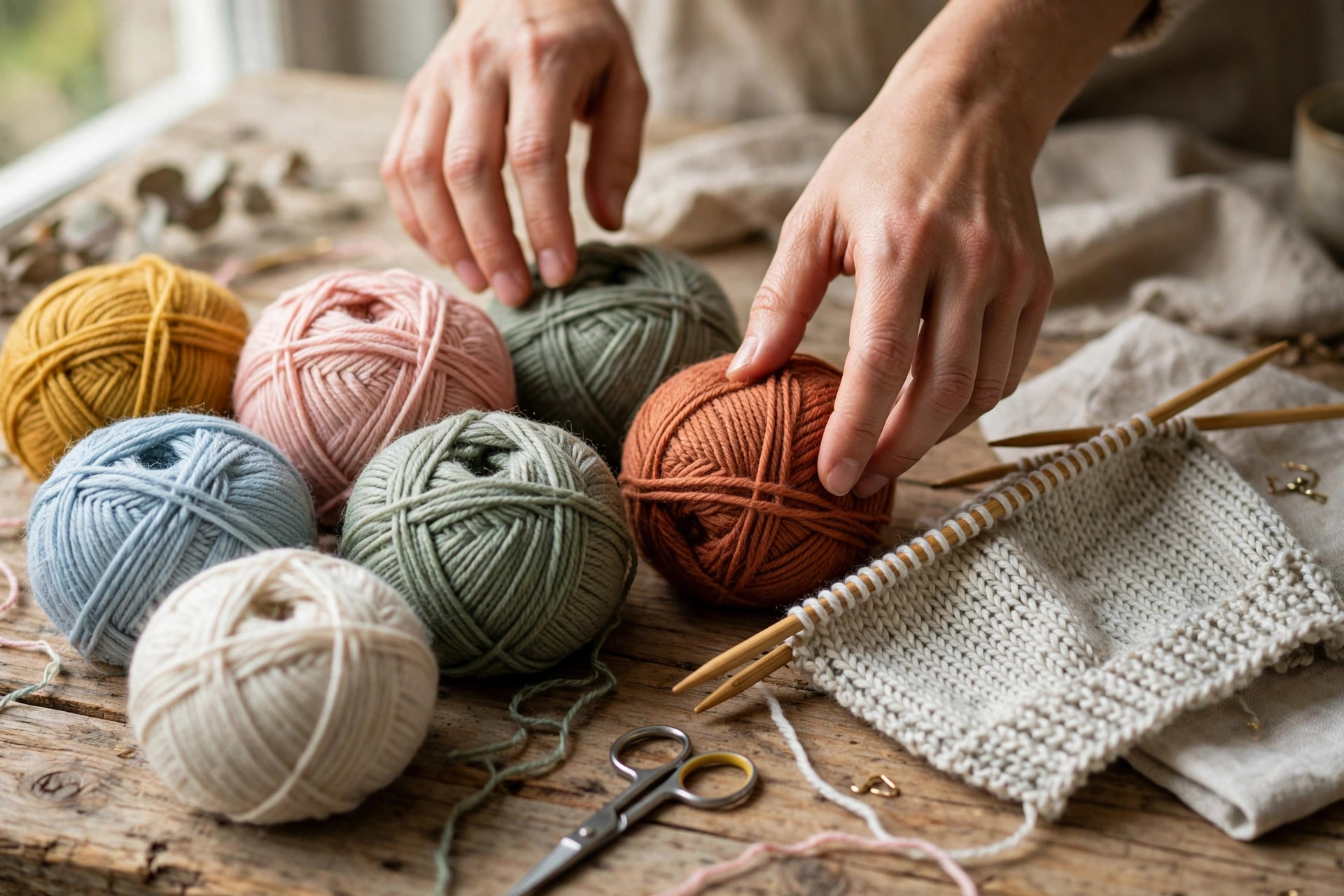
A knitting yarn is bent into loops thousands of times, so it must be flexible, even and — above all — pleasant: knits are worn against skin and judged by softness. Twist is therefore kept low (a low twist multiplier), favouring bulk and a soft hand over maximum strength, and woolen-spun and carded yarns find their natural home here. Evenness matters because a thin place becomes a weak stitch and a visible bar in the fabric. The one structural trap is balance: a lively singles yarn torques single jersey into skew, so quality jersey yarns are plied, twist-set, or used in constructions that cancel the torque. How those loops are then formed into fabric — weft and warp knitting, stitches and gauges — is the subject of the Knitwear Construction Guide; the yarn choices above are what that guide’s machines are fed.
What Weaving Asks: Warp Is Not Weft
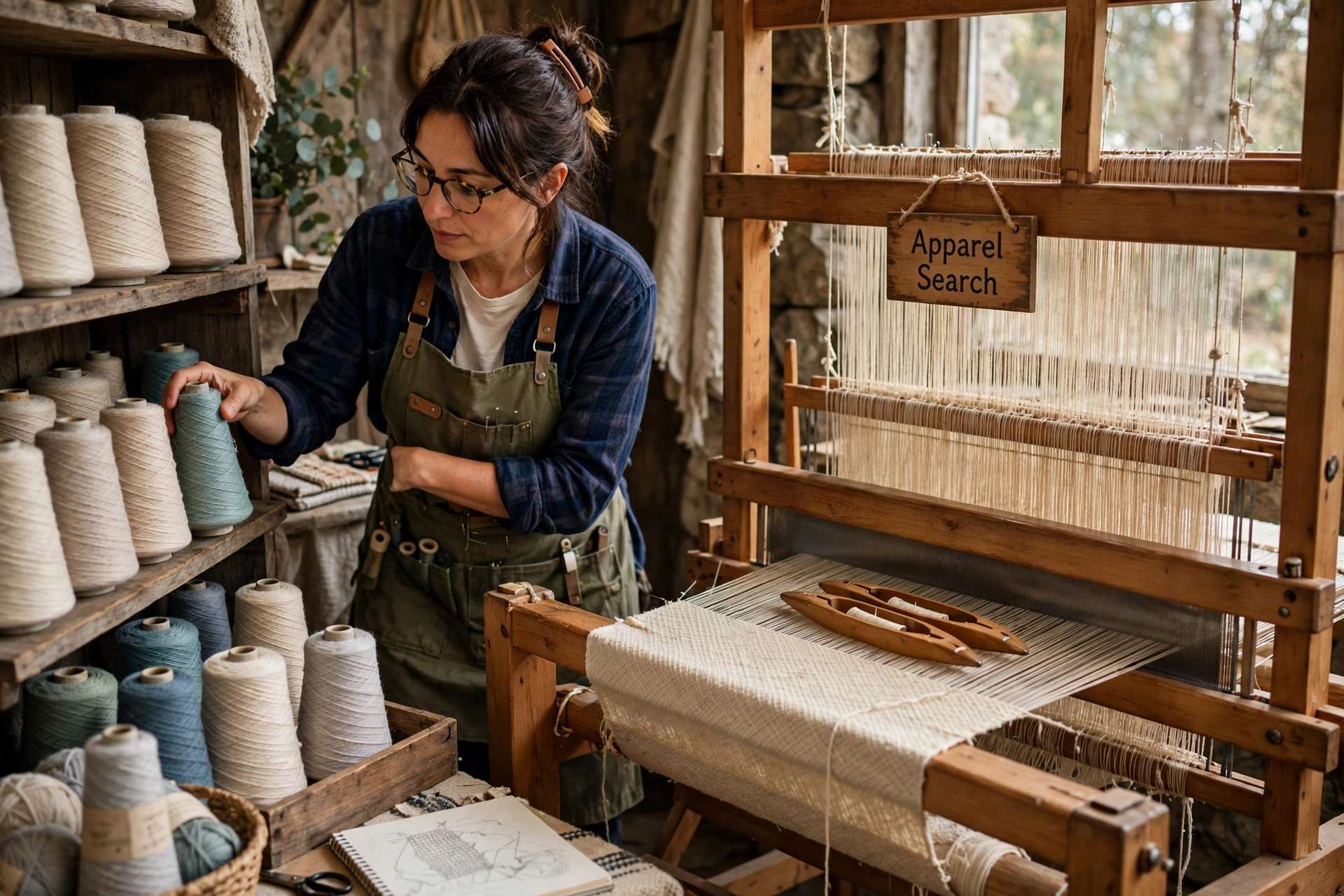
A woven fabric is really two yarn specifications. The warp runs the length of the loom under tension, is abraded by reed and heddles at every pick, and must not break — a single end down stops production. Warp yarns are consequently the hardest-worked yarns in textiles: higher twist for strength and abrasion resistance, frequently plied, often combed or worsted-prepared for smoothness, and usually coated with size for the weaving itself. The weft (or filling) is laid in under little stress, so it can be everything the warp cannot: softer, bulkier, lower-twist, carded or woolen-spun, even slubbed or novelty-textured for effect — which is why so many fabrics pair an invisible, hardworking warp with a characterful weft, from denim’s dyed warp and white weft to flannel’s plain warp and brushed woolen weft. The weaves those yarns interlace in are covered by the Weaving & Woven Fabrics guide; choosing the warp and weft is the decision that comes just before it.
Classic Pairings: Reading Familiar Fabrics as Yarn Choices
Single jersey t-shirt: carded or combed cotton single, Ne 20–30, low twist — softness and drape first, cost watched. Premium piqué and shirting: combed, ring-spun or compact yarns, finer counts, plied where the surface must stay crisp. Denim: coarse carded rotor-spun warp, rope-dyed, against a softer weft — strength and economy in the workhorse positions. Flannel and tweed: woolen-spun yarns both ways, loft and fuzz doing the warming. Gabardine suiting: worsted singles or plies, hard twist, steep twill — smoothness and recovery. Stretch jeans and shirting: core-spun elastane yarns wherever recovery is needed. Each pairing is the five levers set to a fabric’s priorities; change one lever — combed for carded, ply for single — and the fabric’s price and performance move with it.
The Chooser’s Rule of Thumb
Specify for the hardest job the yarn must do. If a yarn must survive a loom, choose for the loom and let the hand follow; if it must please skin in a knit, choose for softness and manage strength with construction. Most yarn mistakes are a warp-strength yarn in a softness job, or the reverse.
More in the Yarn & Spinning Guide
Common Questions
What yarns are best for knitting?
Knitting yarns are generally softer and lower in twist than weaving yarns, because the loop structure of a knit asks the yarn to bend rather than to resist abrasion, and softness and loft are usually the goal. Balanced twist matters more than raw strength: an unbalanced singles yarn will make single jersey skew, so plied or twist-set yarns are common choices.
Why do warp yarns need to be stronger than weft yarns?
Warp yarns are held under tension on the loom and are rubbed repeatedly by the reed, heddles and the shuttle or other insertion system as the shed opens and closes thousands of times. Weft yarns are laid in with far less stress. Warps are therefore spun with more twist, often plied, and are usually sized for protection, while wefts can be softer, bulkier and cheaper.
Does yarn count decide fabric weight?
It is the main lever, together with how closely the yarns are set. A fabric woven or knitted from fine yarns at a fine gauge will be light; the same construction in coarse yarns will be heavy. Fabric weight specifications are normally met by choosing the count first and then adjusting the thread density or knitting gauge.
What yarn is stretch fabric made from?
Usually a core-spun yarn: an elastane filament core wrapped in cotton or another staple fiber. The sheath gives the fabric its familiar surface and the core gives it stretch and recovery. Stretch denim, stretch shirting and most body-conscious knits are built this way.
Back to the Yarn & Spinning Guide
The Yarn & Spinning Guide hub maps the whole cluster — types, spinning methods, counts, twist, preparation and choosing yarns — in the order a mill thinks about them.