Yarn & Spinning Guide · Preparation
Carded vs. Combed, Woolen vs. Worsted
Before any yarn is spun, its fibers take a route — and the route decides whether the yarn will be lofty or sleek, rustic or refined.
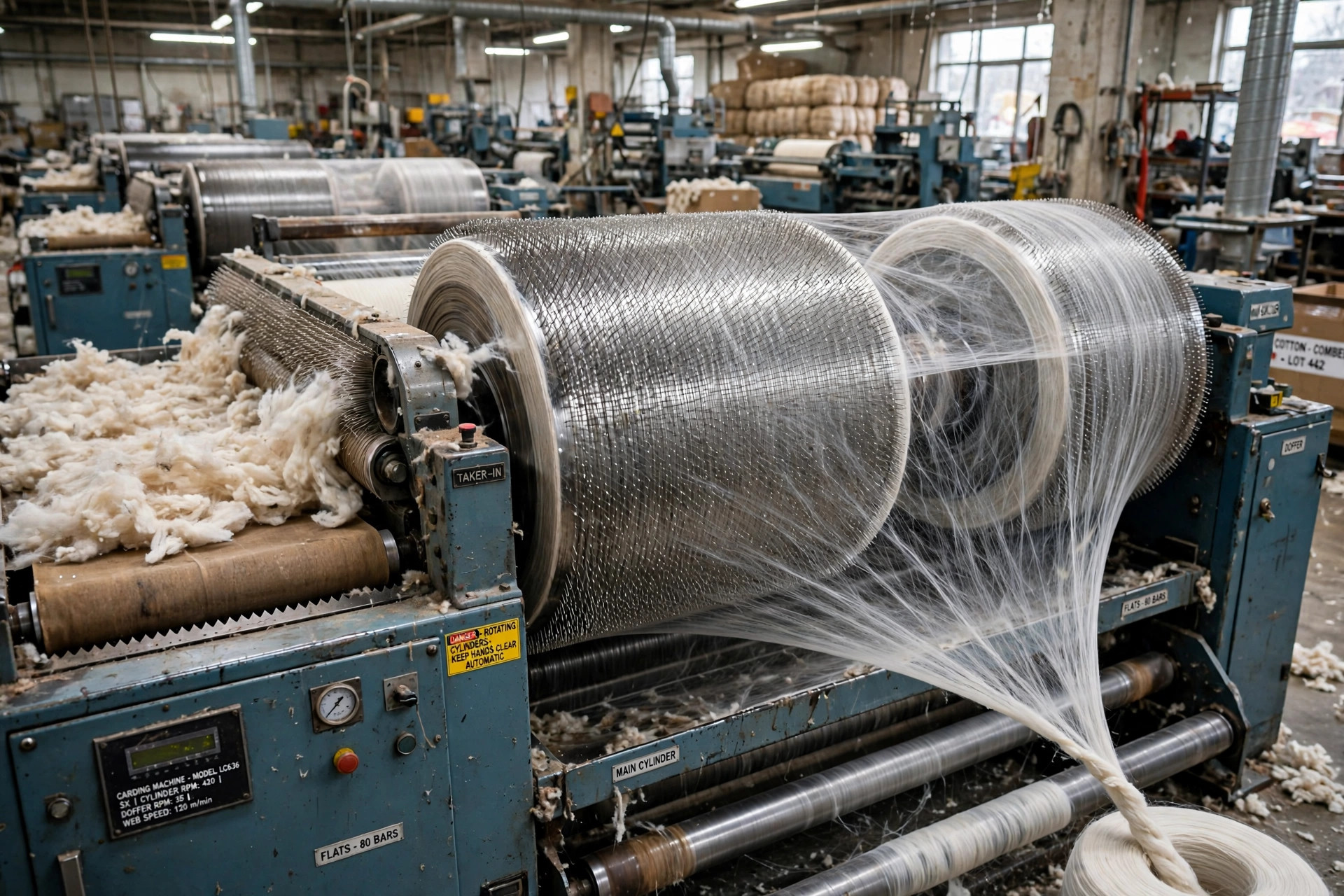
The spinning frame gets the credit, but the character of a yarn is largely fixed before the frame ever sees the fiber — by how that fiber was prepared. Two pairs of words on a specification describe the preparation route, and they predict the finished fabric with remarkable accuracy. This guide, part of the Yarn & Spinning Guide, explains both: carded versus combed in the cotton world, and woolen versus worsted in the wool world.
Carding: The Step Every Spun Yarn Takes
Carding is the universal first preparation. The card is a machine of large cylinders clothed in fine wire teeth; fiber passes between surfaces moving at different speeds, and the teeth tease the tangled mass apart into individual fibers, remove a share of trash and short fiber, and deliver the fiber as a soft, continuous rope — the carded sliver. Fibers in carded sliver point roughly in the same direction but retain a healthy randomness, and the full length mix of the original staple is still present, long and short together. Yarn spun from carded sliver is called a carded yarn: adequately strong, soft and slightly hairy, with a matte, informal surface. Most commodity cotton yarn — standard t-shirts, denim, towelling — is carded, and for coarse and medium counts it is entirely fit for purpose.
Combing: The Extra Pass That Changes Everything
A combed yarn takes one more journey. The carded sliver is prepared and fed to a comber, whose needles pass through the fiber fringe and draw out the short fibers, which are stripped away as waste called noil. What remains is the long fraction of the staple, laid closely parallel. Spun up, that parallel, short-free strand gives a yarn that is visibly different: smoother and cleaner in appearance, stronger at the same count (so it can also be spun finer), more lustrous, less hairy, and far less prone to pilling, because there are few loose short ends to work free. The costs are real — the extra machinery, and the discarded noil, mean a mill buys noticeably more raw fiber for every kilo of combed yarn. “Combed cotton” on a premium t-shirt or a fine shirting specification is this route being advertised, and the fabric genuinely feels it: denser, silkier, and longer-keeping.
Woolen: Carded, Lofty and Warm
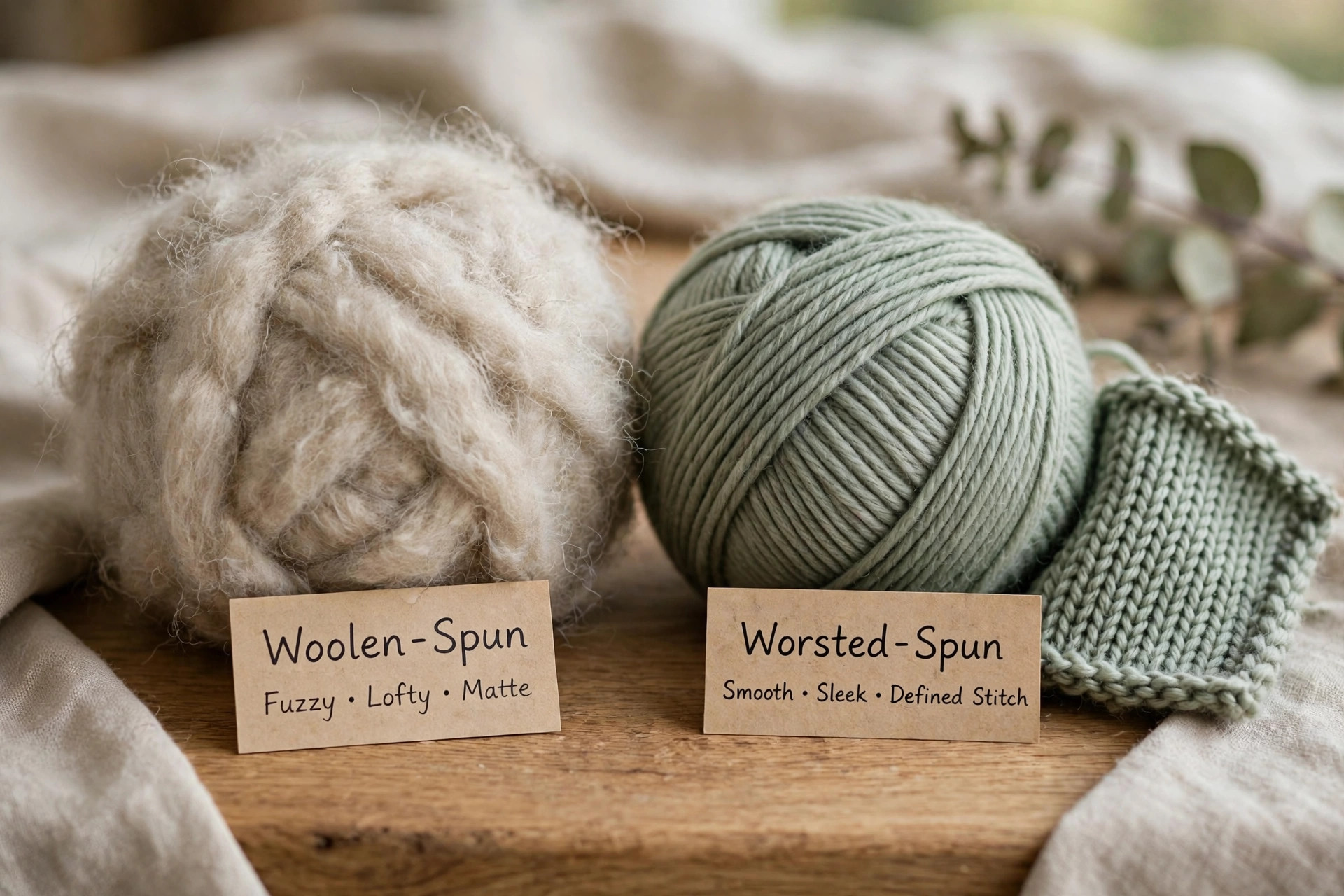
The wool industry names its two routes outright. The woolen system uses shorter wool fibers, cards them — on a condenser card that also divides the web into soft rovings — and spins without any combing. The fibers keep a partly random arrangement, trapping air in the yarn’s bulk. Woolen yarns are therefore lofty, soft, fuzzy and warm for their weight, with a matte, slightly rustic surface and modest strength. They are the yarns of flannel shirts, tweeds, blankets and classic Shetland knitwear, where the raised, fuzzy surface is the whole point and is often enhanced by brushing the fabric afterwards. The wool fiber itself is covered in the Wool Guide; the woolen route is what turns it into those characterful, insulating yarns.
Worsted: Combed, Parallel and Sleek
The worsted system starts with longer wool, cards it, then passes the sliver repeatedly through gill boxes that pin-draft the fibers straighter, and finally combs it — removing short fiber as noil and leaving a combed top of long, parallel fibers. Drawing and roving stages follow, and the spun worsted yarn is the opposite of its woolen cousin: smooth, compact, strong and lustrous, with a crisp, defined surface that shows stitch and weave structure sharply. Gabardine, fine suiting, smooth dress fabrics and quality hand-knitting yarns with clear stitch definition are worsted products. Between the two systems sits semi-worsted: gilled and drawn for alignment but never combed, a middle route in smoothness and price used for many knitting yarns and mid-range cloths.
One Divide, Two Vocabularies
Cotton’s carded/combed and wool’s woolen/worsted are the same engineering decision — spin the fiber as it comes, or pay to remove the short fibers and align the long ones first. Short-free and parallel means smoother, stronger, finer and dearer, in any fiber. The fabric names give it away: flannel and tweed announce woolen yarns; gabardine and fine poplin announce combed, worsted-style preparation.
More in the Yarn & Spinning Guide
Common Questions
What is the difference between carded and combed yarn?
A carded yarn is spun from fiber that has been carded only: the fibers are disentangled and formed into sliver, but short fibers remain in the mix. A combed yarn passes through an additional combing stage that removes the short fibers (comber noil) and leaves the long fibers parallel, producing a smoother, stronger, finer and more lustrous — and more expensive — yarn.
What is the difference between woolen and worsted yarn?
Woolen yarns are carded only, from shorter wool fibers left in a somewhat random arrangement, and are lofty, soft, fuzzy and warm — the yarns of flannel, tweed and Shetland knitwear. Worsted yarns are carded, gilled and combed so the longer fibers lie parallel; they are smooth, strong, sleek and more lustrous — the yarns of gabardine and fine suitings.
Why does combed cotton cost more?
Combing is an extra process and it throws material away: the comber removes the short-fiber fraction as noil, so a mill needs more raw cotton per kilo of yarn, and the yarn that remains is smoother, stronger, less hairy and less prone to pilling. Premium t-shirts and fine shirting pay for that difference.
What is semi-worsted yarn?
Semi-worsted yarn is prepared on a worsted-style route but without the combing stage: the fibers are gilled and drawn to improve alignment, but not combed. It sits between woolen and worsted in smoothness, strength and price, and is used for many knitting yarns and mid-range fabrics.
Back to the Yarn & Spinning Guide
The Yarn & Spinning Guide hub maps the whole cluster — types, spinning methods, counts, twist, preparation and choosing yarns — in the order a mill thinks about them.