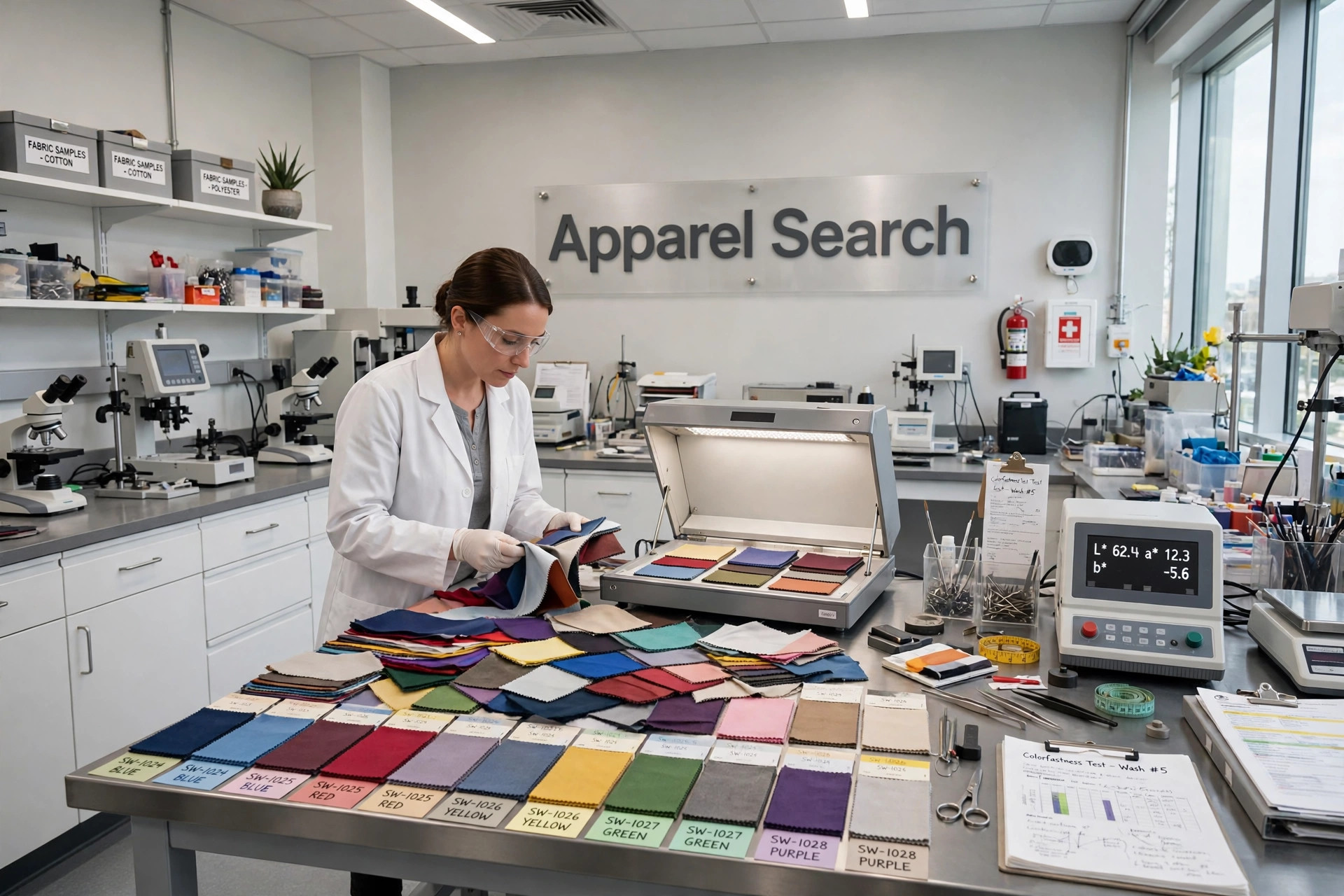
Textile testing is the laboratory measurement of what a fabric or garment actually does — whether its color survives washing, whether it shrinks, how soon its surface pills, how much force tears it, and whether it meets flammability law. Instead of arguing about whether a fabric is "good," buyer and supplier agree in advance on named test methods and minimum results, and the lab's numbers settle the question.
Almost every garment on a store rack passed through a laboratory at least once on its way there. Testing is where the fashion business quietly becomes an engineering discipline: the same standard methods, run the same way, in labs on different continents, are supposed to produce the same answer. This guide explains the system end to end — the main families of tests, when each one is run, and how to read the report that comes back. Each section below links to a full guide on that family of tests.
When Testing Happens in Production
Testing is not a single event at the end of production. It is a series of gates, and failing an early gate is far cheaper than failing a late one.
- Development and fabric approval. Before a style is costed, the mill's fabric is tested to confirm it can meet the buyer's standards at all. A fabric that fails colorfastness at this stage gets re-dyed or replaced — on paper, where changes are still cheap.
- Pre-production and bulk fabric. The actual bulk fabric is tested again before cutting, because production dye lots differ from lab dips. Passing bulk fabric results release the fabric for cutting; failing results stop the line before thousands of garments exist.
- Finished garment testing. Completed garments are checked for appearance after washing, dimensional stability, seam performance and labeling claims — the product the consumer will actually experience.
- Compliance testing. Some tests are not optional. Flammability for general apparel and children's sleepwear, and fiber-content and care-label accuracy, are legal requirements in the United States, and products that fail cannot legally be sold.
Laboratory testing works alongside — not instead of — factory inspection. Inspectors sample finished goods against an acceptable quality level; our AQL inspection guide explains how that sampling works, and our inspections directory covers inspection services.
The Main Families of Tests
Nearly every test package a brand orders is drawn from six families. Each has its own guide in this series:
Colorfastness Testing
Will the color stay put through washing, light, rubbing and perspiration? Graded on the 1–5 grey scales.
Shrinkage & Dimensional Stability
How much a fabric or garment changes size in laundering, and how skew and spirality twist a garment out of shape.
Pilling & Abrasion Testing
How a surface wears: the little fiber balls of pilling, and how many rub cycles a fabric survives before it breaks down.
Fabric Strength Testing
Tensile and tear strength, and the seam strength and slippage that decide whether a garment holds together in use.
Flammability Testing
The legal side of testing: the U.S. standard for general wearing apparel and the stricter rules for children's sleepwear.
AATCC & ASTM Test Methods
The standards bodies behind the numbers, and the most-cited method numbers you will see on lab reports.
Choosing a Testing Lab
Accreditation, scope, turnaround and price — and what a complete, trustworthy test report should contain.
Fabric Inspection
Before lab testing, fabric rolls are inspected for visible defects. See the 4-point system and piece goods inspection.
How to Read a Lab Report
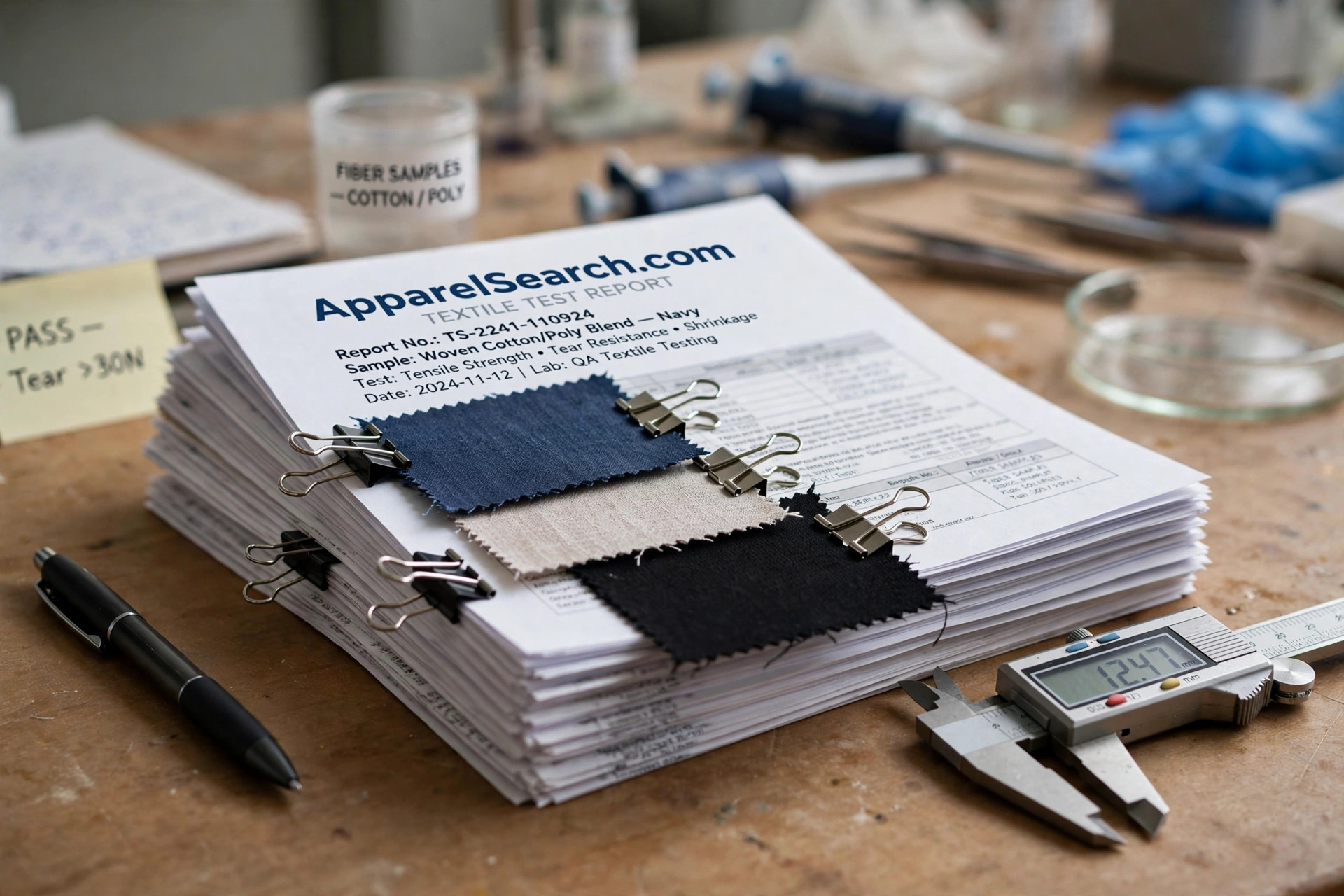
A textile lab report looks intimidating, but every line answers the same four questions:
- What was tested? The report identifies the sample — style, color, fabric — and the property measured, such as colorfastness to washing.
- How was it tested? A named standard method (for example an AATCC or ASTM method number) plus any conditions that matter, such as the wash procedure used. If the method is not named, the result cannot be reproduced or challenged.
- What was required? The buyer's minimum — a grade, a percentage, a force value. This comes from the brand's quality manual, not from the standard itself. Standards describe how to measure; buyers decide what passes.
- What was the result, and did it pass? The measured value next to the requirement, with a pass/fail conclusion. Borderline results deserve attention: a fabric that passes at exactly the minimum in the lab may fail after a different dye lot or a harder wash at home.
Two habits separate experienced quality managers from everyone else. First, they read the method and conditions before the result, because a good number from the wrong method is worthless. Second, they keep reports by dye lot, so a fabric that drifts over a season shows up in the paperwork before it shows up in customer returns. Our guide to choosing a testing laboratory explains what else a complete report should contain, including accreditation details.
Testing Is Part of the Cost of a Garment
Lab fees, inspection time and the cost of failing — re-dyeing, re-making, air-freighting replacements — all live inside the final price of clothing. Our Garment Costing & Production Economics Guide shows where quality and inspection costs sit in a cost sheet. And when a fabric claims performance — wicking, waterproofing, stretch — those claims are proven by tests like the ones in this guide; see the Performance Fabrics Guide for how those fabrics work.
Common Questions
- What is textile testing?
- Textile testing is the laboratory measurement of fabric and garment properties — colorfastness, shrinkage, strength, pilling, flammability and more — against published standard methods and the buyer's requirements. It turns opinions about quality into numbers that a mill, factory and brand can all agree on.
- When does textile testing happen in production?
- Testing happens at several gates: fabric development and approval before bulk production, bulk fabric before cutting, and finished garments before shipment. Flammability and other legally required tests must pass before regulated products can be sold at all.
- Who sets the pass and fail limits in a lab report?
- The buyer does. Standard methods from AATCC and ASTM define how a test is performed, but the minimum acceptable result — the requirement — comes from the brand's or retailer's quality manual and the purchase order specifications.
- What does it cost to test a fabric?
- Individual routine tests are usually priced per test and are modest; a full package of colorfastness, physical and flammability tests for one style and color costs more. Testing is almost always far cheaper than a rejected shipment, a chargeback or a recall.