Apparel Search Fabric Guides
Performance Fabrics Guide
How technical fabrics manage moisture, weather, movement and temperature — explained technology by technology.
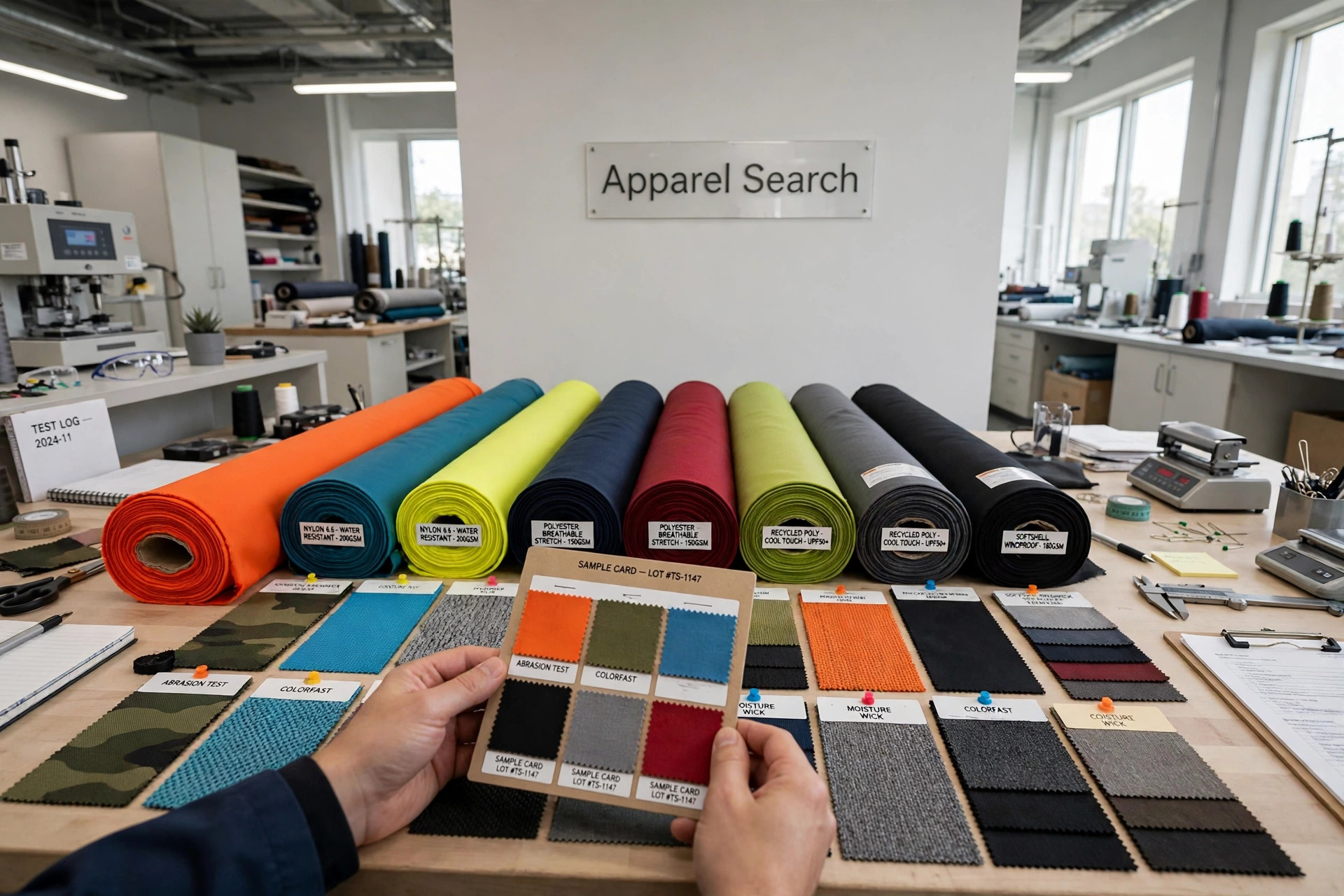
Most clothing fabric has one job: cover the body, take a color and hold a shape. A performance fabric is asked to do much more. It has to move sweat off skin before it chills the wearer, stop rain at the surface while still letting heat escape, stretch in every direction a joint can bend and then snap back, trap warm air in freezing wind, and survive sun, salt, chlorine and hundreds of washes. When a fabric is engineered, constructed and finished to deliver one or more of those functions in a way that can be measured, it has crossed the line from ordinary cloth to technical textile.
That measurability is the real dividing line. A hang tag that says "high performance" means nothing; a fabric rated at a 15,000 mm hydrostatic head, a moisture vapor transmission rate of 15,000 g/m²/24h, or a UPF 50+ sun rating is making a claim that a laboratory can check. This guide explains how each of the major performance technologies works — the fiber science, the fabric construction and the finishes — so that buyers, designers, product developers and curious wearers can read specifications instead of slogans.
The Four Jobs of a Performance Fabric
- Moisture management. Liquid sweat has to be pulled from the skin, spread across the fabric and evaporated. Channel-shaped fibers, capillary knits and push-pull constructions do this work, and they are the subject of our moisture-wicking fabrics guide.
- Weather protection. Rain and wind are kept out by membranes, coatings and water-repellent finishes, while body vapor still needs a way through. The balance between the two is covered under waterproof breathable fabrics.
- Movement and support. Elastane and engineered knit structures give garments their stretch, recovery and, in compression fabrics, a measured level of pressure on the body. The mechanics are explained in stretch fabrics and recovery.
- Temperature control. Warmth comes from trapped still air in fleece, lofted insulation and down, while phase-change finishes buffer temperature swings. See thermal and insulation fabrics for how each system works.
On top of those four jobs sits a fifth layer: the technical finishes applied after the fabric is made — antimicrobial odor control, ultraviolet protection, water repellency and durability treatments that turn a good base fabric into a specialized one.
Explore the Performance Fabric Topics
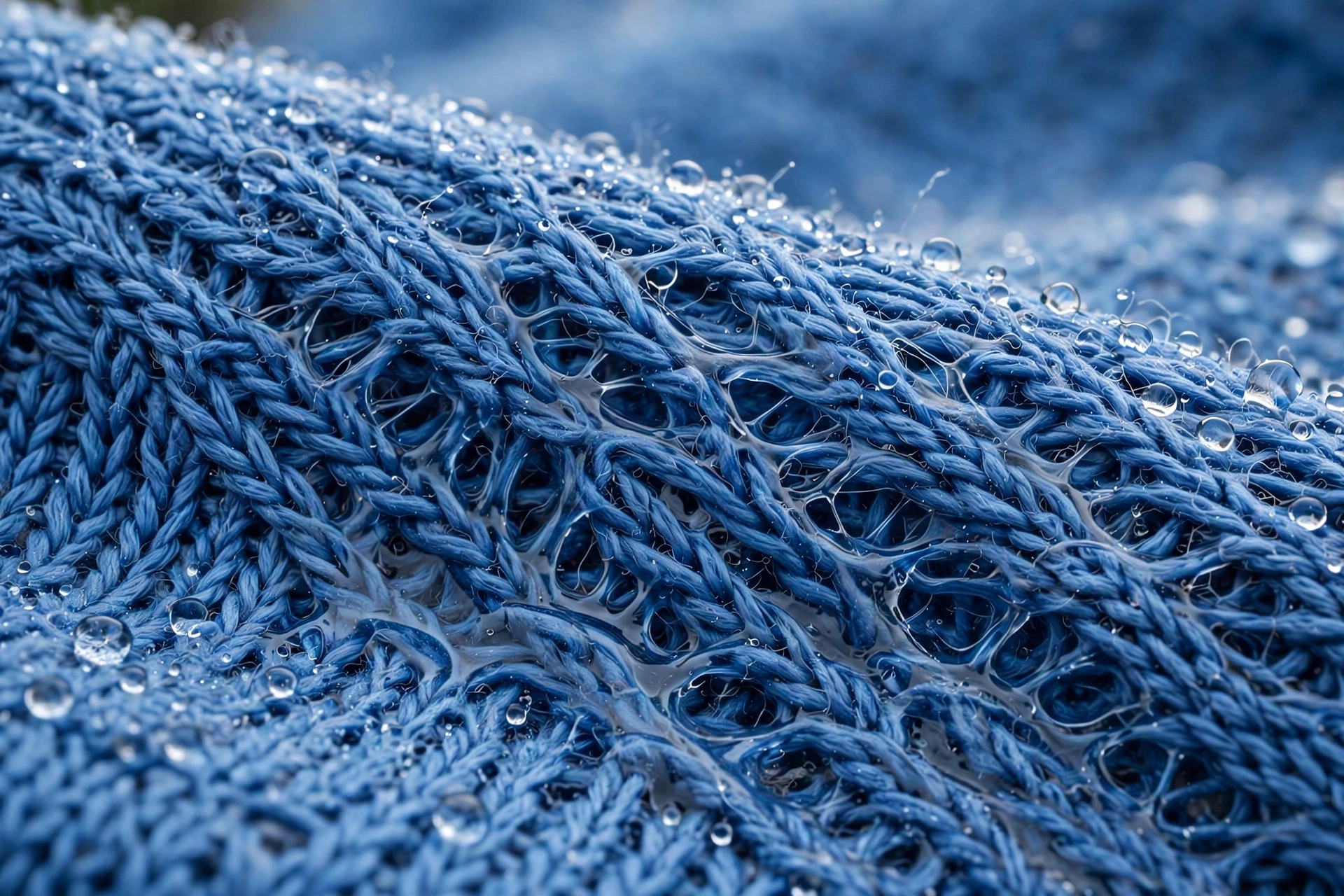 Moisture-Wicking FabricsCapillary action, channel-shaped fibers and push-pull knits — how wicking works, and why a cotton shirt stays wet.
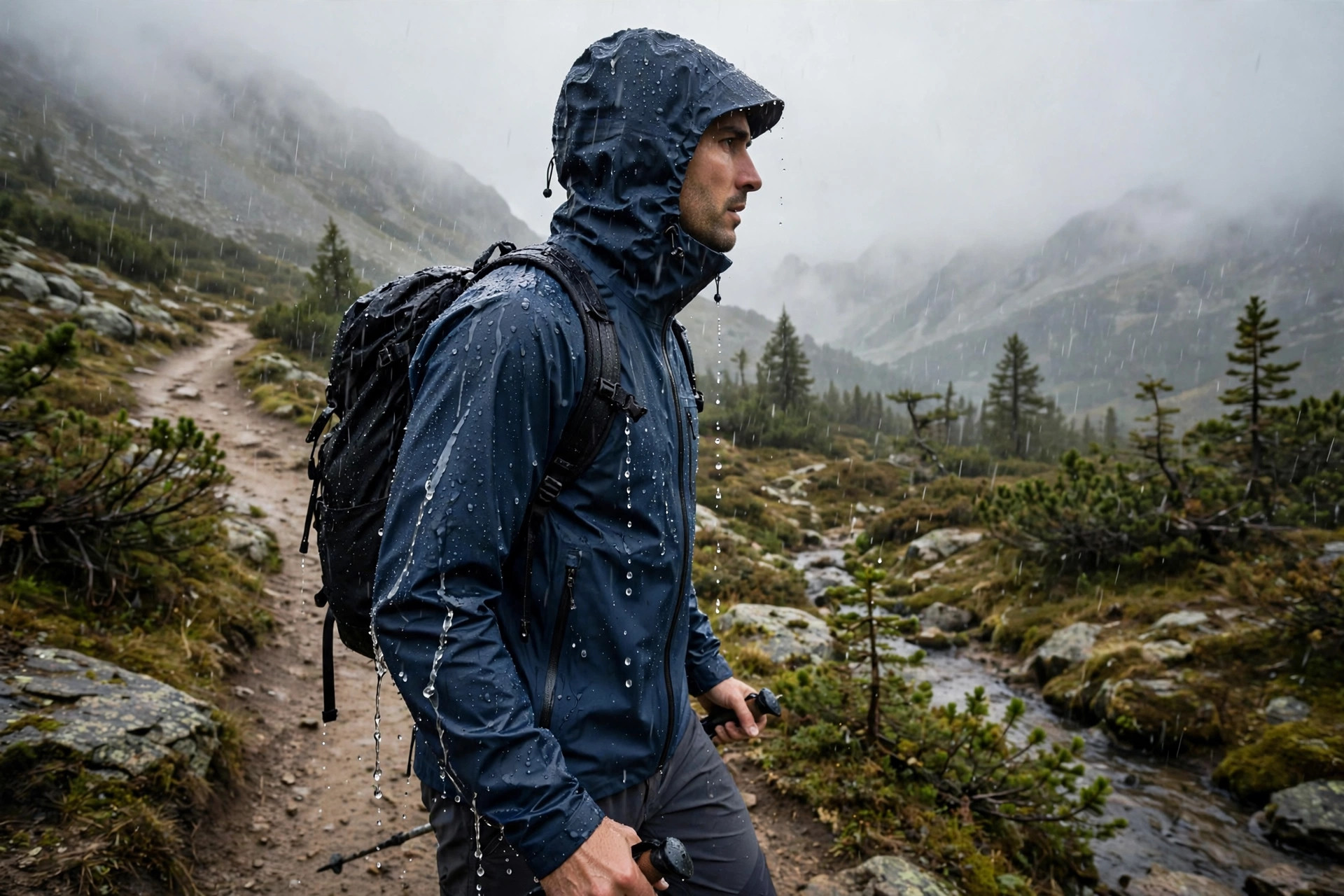 Waterproof Breathable FabricsMembranes, 2-layer and 3-layer shells, DWR finishes, and how to read hydrostatic head and breathability ratings.
 Compression FabricsGraduated pressure, millimeters of mercury, elastane content, and the honest difference between training and recovery wear.
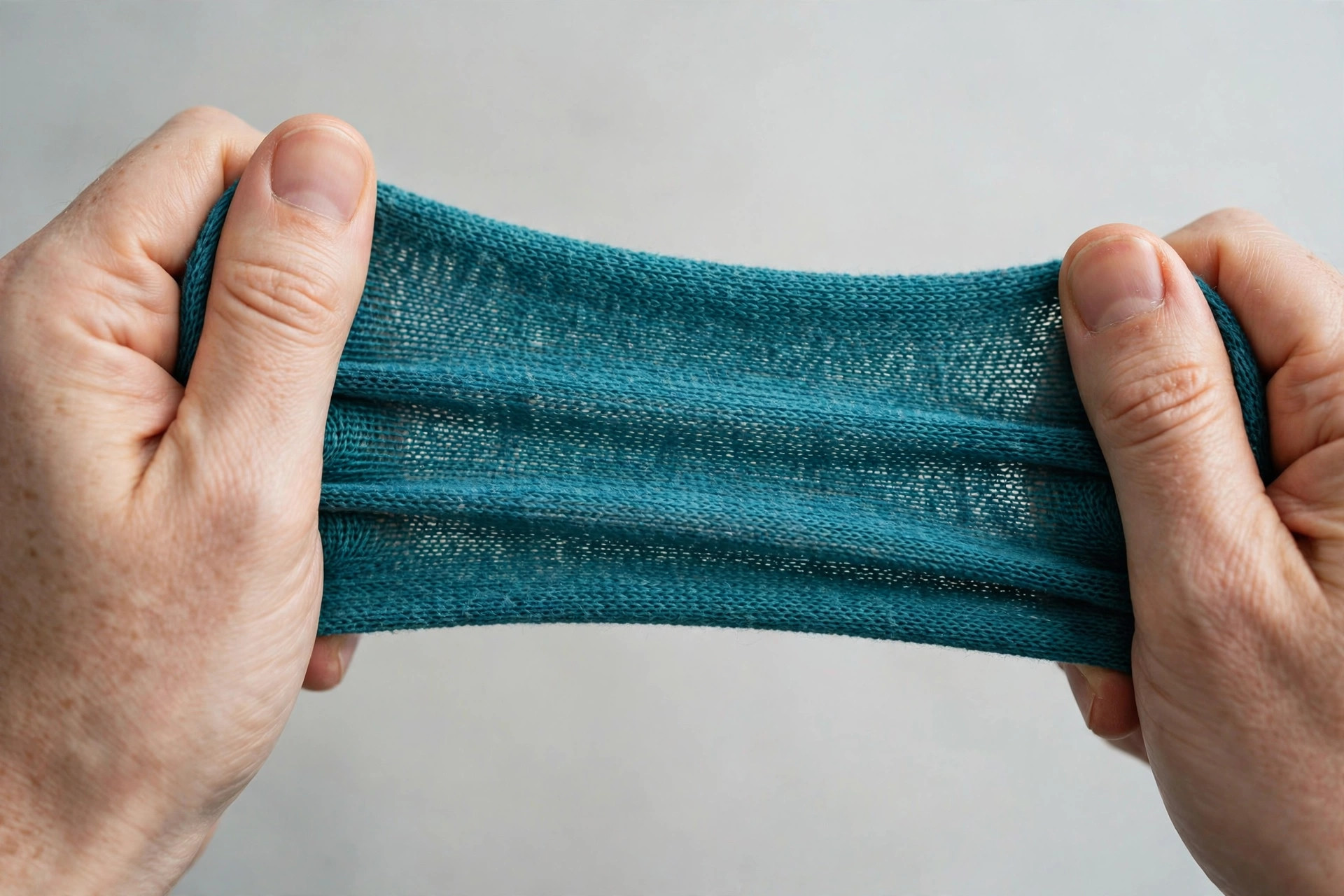 Stretch Fabrics & RecoveryTwo-way and four-way stretch, elastane percentages, mechanical stretch, and why some garments bag out at the knees.
 Thermal & Insulation FabricsFleece weights, synthetic and down insulation, fill power, and phase-change finishes that buffer temperature.
 Technical Fabric FinishesAntimicrobial odor control, UPF sun protection, water repellency and abrasion resistance — and how long each one lasts.
It Starts With the Knit or Weave
Before any finish is applied, the fabric's structure sets its ceiling. Most performance fabrics are knits, because a knitted loop structure stretches, drapes and can be engineered zone by zone: mesh where heat builds, denser channels where sweat needs to travel, brushed faces where air must be trapped. Woven fabrics dominate hard shells, where a tight, stable weave carries the membrane and sheds weather. Understanding how those structures are built is the foundation under everything in this guide, and our companion Knitwear Construction Guide explains knit structures, gauges and machine knitting in depth.

Blends are where much of the current development sits. Polyester gives a knit its wicking channels and abrasion life; nylon adds softness and toughness; merino wool contributes odor control and temperature buffering; elastane supplies the fit. A well-designed performance fabric is rarely a single fiber doing everything — it is a negotiated settlement between fibers, each covering the others' weaknesses, and the topic guides below repeatedly return to those trade-offs.
Reading the Numbers
Performance claims can be checked because standard tests exist for nearly all of them: hydrostatic head for waterproofness, MVTR or RET for breathability, UPF for sun protection, millimeters of mercury for compression, and Martindale cycles for abrasion. The numbers are only comparable when the same test method produced them, which is why serious product developers always ask "tested how?" before they ask "how much?" Our Textile Testing & Quality Standards Guide walks through the common test methods and what their results do and do not prove.
A textile engineered at the fiber, construction or finish level to deliver a measurable function — moisture management, weather protection, stretch and recovery, thermal regulation or protection — beyond the basic jobs of coverage and appearance.
From Fabric to Finished Garment
Fabric technology only pays off when the garment is designed around it: seams placed away from pack straps, ventilation mapped to where the body overheats, and care instructions that protect the finishes. Readers shopping for finished clothing can see these technologies applied in the Apparel Search Men's Performance Apparel Guide and Women's Performance Apparel Guide, and makers can follow the production side in our guide to manufacturing activewear. For readers who want the deeper industry treatment of moisture management research, our textiles intelligence library carries a technical overview of moisture management fabrics, and the fabric directories list suppliers of stretch fabrics and waterproof fabric mills.
Every technology in this guide can be tested, rated and compared. Start with the function you actually need — a drier skin surface, a dry hour in the rain, support on a long run, or warmth that survives a wet day — then use the topic guides above to choose the fabric system that delivers it.
Common Questions
What is a performance fabric?
A performance fabric is a textile engineered to do a measurable job beyond covering the body: moving sweat away from the skin, blocking rain while letting vapor escape, stretching and recovering with movement, trapping warmth, or resisting sun, odor and abrasion. The difference from an ordinary fabric is that the function is designed into the fiber, construction and finish, and it can be tested and rated.
Are performance fabrics always synthetic?
No. Polyester and nylon dominate because they are strong, light and do not absorb much water, but merino wool is a genuine performance fiber for temperature and odor management, and modern blends combine natural and synthetic fibers to balance comfort, durability and moisture behavior.
What do waterproof ratings like 10,000 mm mean?
The number is the hydrostatic head: the height of a column of water, in millimeters, that the fabric can support before water pushes through. Around 10,000 mm handles steady rain for general outdoor use, while 20,000 mm and above is aimed at heavy, prolonged rain. Breathability is rated separately, usually as MVTR in grams of vapor per square meter per 24 hours.
Do performance features wear out?
Some do. Water-repellent finishes gradually lose strength with washing and abrasion, and elastane slowly tires with heat and chlorine. The fiber-level functions, such as the wicking channels in a polyester knit or the loft of a fleece, last much longer. Correct washing and occasional re-proofing keep technical garments working far longer.